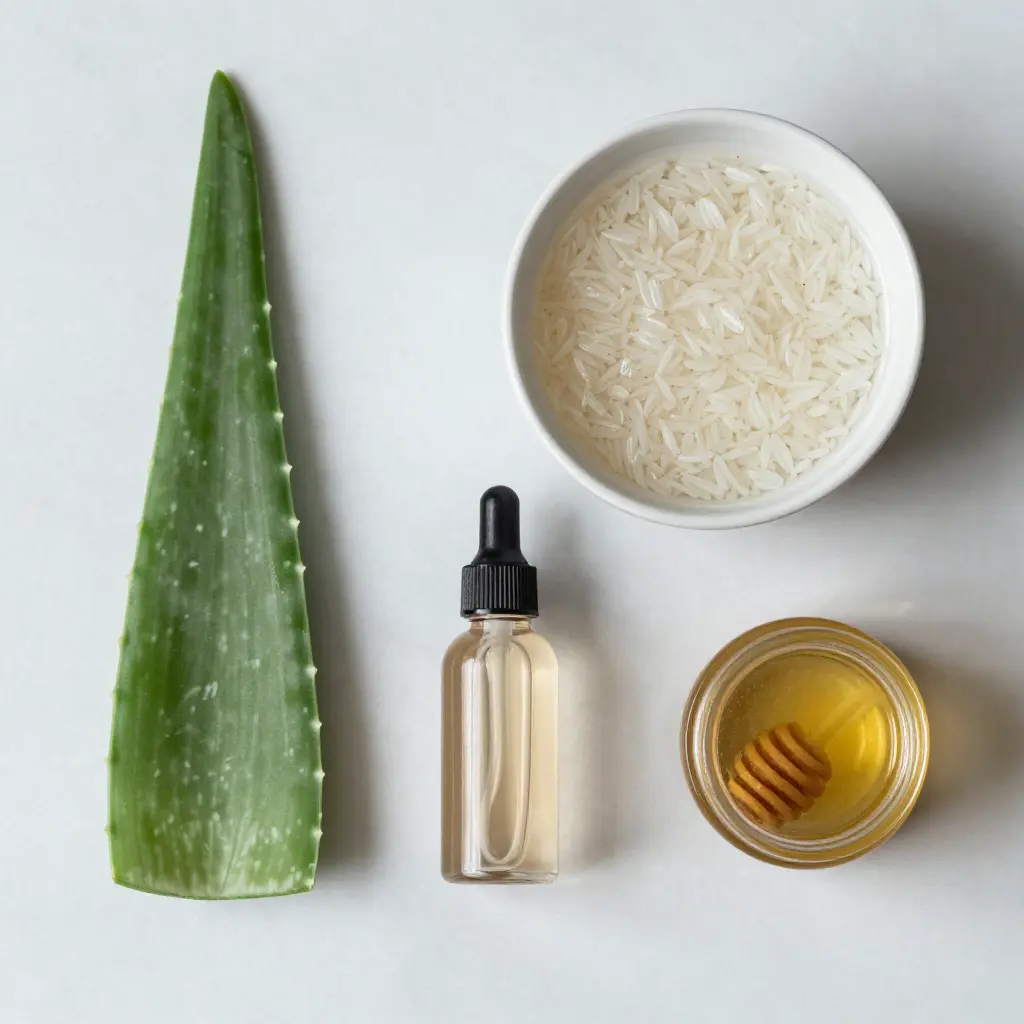
I spent almost a year chasing “glass skin” before I understood what I was actually chasing. I bought the 10-step Korean routine, I bought the essences, I bought a sheet mask for every day of the week. My skin got more reactive, not more radiant. It wasn’t until I stripped everything back to basics — and started accounting for things no international guide ever mentions, like my tap water and Lucknow’s humidity — that I actually saw a difference.
This guide is not a copy-paste of what Korean beauty blogs tell you. It’s built specifically for Indian skin: hard water, monsoon humidity, pollution, and diets that don’t look like a Seoul grocery list. If you have sensitive or acne-prone skin and you’re tired of routines that assume you live somewhere with soft water and 40% humidity, this is for you.

What Is Glass Skin, Really? (Beyond the Instagram Filter)
Glass skin gets reduced to “shiny and poreless” on Instagram, which is honestly a bit misleading. Real glass skin isn’t about shine — it’s about how light behaves on well-hydrated, even-toned skin. Think of two glasses of water: one still and cloudy, one clear and settled. Light passes through the clear one smoothly. That’s closer to what’s actually happening on your skin’s surface when it “glows.”
There are three things doing the work: hydration in the outer skin layer, an even melanin distribution (no patchy dark spots pulling focus), and a healthy collagen structure underneath giving the skin some bounce. None of this happens overnight, and none of it requires ten products.
| Myth | Reality |
|---|---|
| Glass skin means oily, shiny skin | It’s light reflecting off hydrated, smooth skin — not oil |
| You need 10+ products | 4-5 consistent products outperform a crowded shelf |
| Only certain skin types can get it | Any skin type can work toward it with the right routine |
| Results show up in days | Realistically, 8-12 weeks of consistency |
I want to be upfront about that last point, because it’s the one most guides gloss over. If a product promises glass skin in a week, that’s a red flag, not a shortcut.
Read more: Pilgrim vs Minimalist: Why 73% of Indians Regret Buying the Wrong One
Why Most Glass Skin Guides Don’t Work for Indian Skin
The first time I tried a routine straight off a Korean beauty blog, it took about ten days for my skin to start breaking out along my jawline. It wasn’t the products — it was the mismatch. Most popular guides are written for a different climate, different water, and honestly, a different diet.
Here’s what those guides consistently leave out:
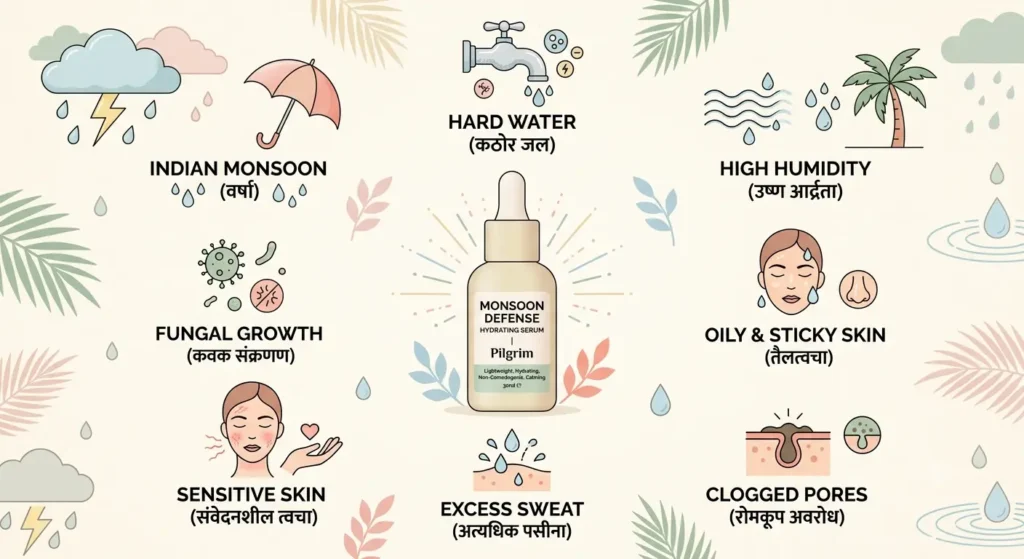
- Hard water: Most Indian cities have high mineral content in tap water, which disrupts your skin’s natural pH and leaves a residue that can dull skin over time.
- Humidity extremes: Monsoon humidity plus summer heat creates conditions for fungal acne that a “hydrating” Korean routine can actually make worse.
- Pollution load: Higher particulate exposure in most Indian cities means more free-radical damage than the average Western skincare guide accounts for.
- UV intensity: India’s UV index runs consistently higher, which speeds up pigmentation — something a lot of “brightening” routines ignore while they’re busy adding actives.
- Diet and lifestyle: Spicier, oilier food and less predictable sleep schedules change how your skin responds to any routine, no matter how well-formulated.
| Factor | Typical Western Routine | Indian Skin Reality |
|---|---|---|
| Water | Soft | Hard, in most cities |
| Climate | Cold/dry, stable | Hot, humid, monsoon swings |
| Sun exposure | Moderate UV | High UV index year-round |
| Diet | Dairy-heavy, milder spice | Spicier, oilier, more irregular |
This is also why the 10-step K-beauty routine tends to backfire here. It was designed for cooler, drier air — layering that many products in Indian humidity usually just clogs pores faster than it hydrates them.
Read more: Salicylic Acid vs Benzoyl Peroxide for Pimples: Which One Is Actually Better for Indian Skin?
The Science Behind Skin That Actually Glows
Once I understood what was happening under the surface, the whole “natural glass skin” approach stopped feeling like a trend and started feeling like basic biology. There are four things working together:
- Surface hydration: The outermost layer of skin (stratum corneum) reflects light more evenly when it’s well-hydrated. Dehydrated skin scatters light unevenly, which reads as dull.
- Even melanin distribution: Dark spots and patchiness break up light reflection. Uniform tone, even without being “fair,” reflects light more consistently.
- Collagen density: This is what gives skin its bounce and firmness. A stronger dermal structure literally changes how the surface looks under light.
- Microcirculation: Healthy blood flow gives skin a natural undertone of pink or warmth, rather than a flat, grey look.
Underneath all four of these is one thing: your skin barrier. Healthy skin sits at a slightly acidic pH, usually between 4.5 and 5.5. When that barrier is compromised — by harsh cleansers, hard water, or over-exfoliation — you get inflammation, and inflammation is the opposite of glow. It shows up as redness, dullness, and often more breakouts.
This is exactly why so many “brightening” routines backfire. Piling on brightening actives without repairing the barrier first just adds more irritation, which can actually make pigmentation worse instead of better.
Read more: Ultimate Guide to Natural Skincare Routine for Sensitive & Acne-Prone Skin in 2026
The 5-Step Natural Glass Skin Routine
I’ve broken this into two versions, because not everyone has 20 minutes twice a day, and forcing a heavy routine onto someone with sensitive skin usually backfires anyway.
Option A: Minimal Routine (4 Steps, 8-10 Minutes)
This is where I’d tell anyone with reactive or acne-prone skin to start. It’s also what I personally went back to after my K-beauty phase went wrong.
Step Morning Night 1. Cleanse Rice water or a gentle cleanser Oil cleanse, then rice water rinse 2. Hydrate Rose water mist Same 3. Treat Aloe vera gel Aloe, or honey + turmeric mask 2x/week 4. Protect Mineral SPF 30+ — Option B: Full Routine (7 Steps, 15-20 Minutes)
For days when your skin is tolerating actives well, or if you’ve been consistent for a few weeks and want to build on it.
Step Morning Night 1. Cleanse Gentle water-based cleanser Oil cleanse → water cleanse 2. Tone Fermented rice water Same 3. Essence Green tea essence Same 4. Treat Niacinamide 2-4% Cica serum 5. Moisturize Gel-cream Richer cream 6. Eye care Lightweight eye gel Same 7. Protect Broad-spectrum SPF 30+ — One thing that made a bigger difference for me than any product: application technique. Pat products in instead of rubbing — rubbing creates friction that sensitive skin doesn’t need. And give each layer 30-60 seconds to sink in before the next one, or you’ll just end up with everything pilling on your fingertips instead of your face.
Weekly Treatments
- Rice flour + yogurt mask — once a week, for gentle brightening
- Aloe + honey mask — once a week, for calming and soothing
- Green tea ice facial — great during monsoon for oil control
Read more: Skincare Routine for Oily Acne Prone Skin India: What Actually Worked for Me (2026)
Best Natural Ingredients for Glass Skin: What Actually Works
If you’re figuring out how to achieve glass skin glow naturally, the ingredient list matters far less than most product pages want you to believe. A handful of well-understood natural actives, used consistently, do more than a shelf full of trending products. Here’s what I’ve actually tested, and what the science behind each one says.
Ingredient What It Does Best For Caution Aloe Vera Hydrates and calms using natural polysaccharides All skin types, especially sensitive skin Virtually none; safest option here Rice Water Brightens tone and gently refines texture Dullness, uneven skin tone Overuse can dry skin out; once or twice daily is enough Centella Asiatica (Cica) Reduces redness and supports barrier repair Redness, acne marks, sensitive skin Very safe; reactions are rare Niacinamide Regulates oil and strengthens the skin barrier Enlarged pores, oil control Higher concentrations (5%+) can irritate sensitive skin Honey + Turmeric Antibacterial and anti-inflammatory combination Acne-prone skin, dullness Turmeric can stain; always patch test first Rose Water Balances pH and has a mild calming effect Hydration, setting toner Choose pure rose water with no added fragrance Green Tea Antioxidant protection against pollution damage Oily skin, environmental stress Rare caffeine sensitivity Which Ingredients Work Well Together
Something I learned the hard way: not every “natural” combination is a safe one. Here’s a quick reference before you start layering things.
Combination Verdict Aloe + Rice water Safe — hydration and brightening together Cica + Niacinamide Safe — barrier repair with oil control Honey mask + strong acids (same day) Use separately — higher irritation risk together Turmeric + undiluted lemon Avoid entirely — real risk of chemical burns Baking soda + anything Avoid entirely — too alkaline, damages the barrier I want to flag that last one specifically, because I tried a baking soda scrub in my first year of experimenting with skincare, and it set my acne-prone skin back weeks. If you’ve seen it suggested somewhere as a “natural exfoliant,” skip it.
Quick Reference by Skin Concern
Concern Best Ingredients Avoid Sensitive, reactive skin Aloe, cica, rose water Fragrance, alcohol, high-percentage acids Acne-prone, oily skin Niacinamide, green tea, honey Coconut oil, heavy butters, pore-clogging silicones Both together (most common) Aloe, cica, rice water All of the above, plus over-exfoliating Read more: How to Remove Pimples: Complete Guide for Indian Skin (2026)
Indian Climate Challenges: Hard Water, Humidity, and Pollution
This is the part of achieving natural glass skin that almost nobody outside India talks about, and it’s often the actual reason a routine “isn’t working” even when you’re doing everything right.
Hard Water Skin Damage
If you’ve noticed a filmy residue on your skin after washing your face, that’s likely mineral buildup from hard water — common in a lot of Indian cities. Over time, this disrupts your skin’s natural pH and can leave it looking duller than it should.
What’s actually helped me:
- A basic shower filter — inexpensive, one-time investment
- Doing a final rinse with filtered or RO water when possible
- Sticking to pH-balanced cleansers instead of heavily fragranced ones
- A weekly rice flour and diluted apple cider vinegar mask to help clear mineral buildup
Humidity and Monsoon Skincare
Humid air doesn’t automatically mean hydrated skin — that’s a common misconception. Monsoon humidity actually increases the risk of fungal acne, and heavier products tend to pill rather than absorb.
Adjustments that make a real difference during monsoon:
- Switching to lightweight, gel-based moisturizers
- Using green tea ice cubes to manage excess oil
- Never skipping a proper cleanse if you’ve worn sunscreen, even on cloudy days
- Avoiding heavy oils; squalane is a lighter alternative if you need extra hydration
Pollution and Skin
Higher pollution exposure in many Indian cities means more free-radical damage, which speeds up dullness and fine lines. An antioxidant-rich routine isn’t optional here — it’s one of the more important defenses you have.
- Prioritize antioxidants like green tea and vitamin C in your routine
- Never skip your evening cleanse, no matter how tired you are
- A weekly multani mitti and rose water mask helps draw out surface impurities
Managing Intense UV Exposure
India’s UV index runs high for most of the year, which speeds up pigmentation and breaks down collagen faster than in milder climates.
- Use a mineral sunscreen with zinc oxide — generally gentler on sensitive skin
- Reapply every 3-4 hours if you’re outdoors
- An antioxidant serum in the morning adds an extra layer of protection alongside SPF
Read more: How to Get Rid of Pimples on Forehead Fast: I Tried 7 Methods in 48 Hours
Diet and Lifestyle: A Skin-Focused Indian Meal Plan
No natural glass skin routine works in isolation from what you’re eating and how you’re sleeping. There’s a real gut-skin connection: inflammation in the gut tends to show up as inflammation on the skin, and blood sugar spikes accelerate collagen breakdown through a process called glycation. None of this is exotic — it’s mostly about consistency with foods you probably already have in your kitchen.
Indian Superfoods for Skin
Food Key Nutrient Skin Benefit Amla Vitamin C Supports collagen production, brightens tone Turmeric Curcumin Anti-inflammatory, calms redness Coconut water Electrolytes Hydration support Papaya Papain, Vitamin A Gentle natural exfoliation, cell turnover Soaked almonds Vitamin E Moisture retention Spinach Iron, Vitamin A Supports skin repair Moong dal Protein, zinc Aids repair, helps regulate oil Curd Probiotics Supports gut balance, less inflammation A Sample Day of Eating for Glowing Skin
Time Meal Why It Helps 6:00 AM Warm water with soaked methi seeds or lemon Gentle detox, alkalizing 8:00 AM Turmeric milk, 5 soaked almonds, one seasonal fruit Anti-inflammatory, vitamin E 10:30 AM Green tea with a handful of makhana Antioxidants, low glycemic snack 1:00 PM Dal, rice, two seasonal sabzi, salad, papaya Balanced nutrition and digestive enzymes 4:00 PM Coconut water or buttermilk Hydration, probiotics 7:30 PM Light khichdi with cucumber raita and a little ghee Easy digestion, supports overnight repair 9:00 PM Warm water or chamomile tea Hydration, supports better sleep Worth Limiting, Not Banning
- Excess sugar and refined carbs
- Deep-fried food as a daily habit (occasional is fine)
- Excess dairy if you notice it triggers breakouts personally
- Heavily processed, packaged snacks
Lifestyle Habits That Support Glow
- Sleep: 7-8 hours, and keeping your phone away at least an hour before bed
- Movement: Even 30 minutes of daily activity improves circulation
- Stress management: A short daily breathing practice helps keep cortisol, and the oil production it triggers, in check
- Water intake: Around 2.5-3 litres a day, more in peak summer
Realistic Timeline: What to Expect, Week by Week
This is probably the most honest section of this guide, because most places selling you a “glass skin routine” won’t tell you it takes time. In my experience, and based on how skin cell turnover actually works, here’s a realistic breakdown.
Phase Timeline What You’ll Likely Notice Calm Week 1-2 Less tightness, reduced redness, barrier starting to settle Hydrate Week 3-4 Slight brightness, smoother texture, fewer new breakouts Brighten Week 5-8 More even tone, visible reduction in dullness Glow Week 9-12 Sustained radiance, stronger barrier, more resilient skin overall A tip that genuinely helped me stay consistent: take a photo in the same lighting, same spot, once a week. Week-to-week you won’t notice much, but comparing week 1 to week 8 side by side is usually what convinces people the routine is actually working.
Read more: 7-Day Glowing Skin Challenge: Get Natural Glow at Home in 1 Week
Troubleshooting: What If It’s Not Working?
This is the section I wish someone had written for me. Almost every guide assumes the routine will just work, and when it doesn’t, you’re left guessing. Here’s what’s usually actually going on.
Problem Likely Cause What to Try Breaking out more than before Too many new products at once, or purging Drop back to 3 core steps, add one product at a time Still dull after a month Hard water buildup, or gut health Try a shower filter, review your diet consistency Persistent redness Over-exfoliation or barrier disruption Pause all actives for a week, stick to aloe and cica only Skin feels oily but also tight Dehydration, not excess oil Add a hydration layer instead of skipping moisturizer Products pilling on the skin Layering too fast, or incompatible textures Wait a full 60 seconds between each layer No change despite doing everything right Possible hormonal factor (like PCOS or thyroid) See a dermatologist; a topical routine can’t fix an internal cause When to See a Dermatologist
A natural routine can do a lot, but it isn’t a substitute for medical care. It’s worth getting checked by a dermatologist if you notice:
- Acne that hasn’t improved at all after 8 consistent weeks
- Rashes or hives you can’t explain
- Sudden changes in your skin’s texture
- Signs that might point to a hormonal issue
I say this as someone who’s genuinely tried to fix everything with skincare alone at some point — sometimes the answer isn’t a better product, it’s a proper checkup.
Budget-Friendly Products for Glass Skin (Under ₹500)
You don’t need an expensive routine to get results. Here’s a simple way to decide between DIY and ready-made products, followed by budget picks that actually work for sensitive and acne-prone skin.
DIY or Ready-Made?
- If you’re consistent with prep and don’t mind a bit of kitchen time, DIY options like rice water and aloe gel are cheaper and fresher.
- If you travel often or have limited time, ready-made products are more practical and portable.
- Either way works — the ingredient matters more than the format.
Step DIY Option Ready-Made Option Price Range Cleanse Raw milk or rice water A gentle salicylic acid cleanser ₹300-400 Tone Fermented rice water A basic rose or green tea toner ₹80-350 Treat Fresh aloe and honey A niacinamide serum (2-5%) ₹350-500 Moisturize Pure aloe gel A lightweight gel-cream moisturizer ₹350-450 Sunscreen — A mineral SPF 50 ₹350-450 A full starter kit built this way usually comes to around ₹1,200-1,500 total — a fraction of what a full K-beauty setup would cost, and honestly more suited to what Indian skin actually needs.
Frequently Asked Questions
Can I get glass skin if I have active acne?
Yes, though the focus shifts slightly — you’ll want to prioritize barrier repair and gentle, non-comedogenic ingredients like aloe and niacinamide rather than heavy layering, which can worsen active breakouts.
How long does it actually take to see results?
Most people notice early changes like reduced redness within 1-2 weeks, but visible, sustained glow typically takes 8-12 weeks of consistent care.
Is rice water safe to use every day on sensitive skin?
Generally yes, but start with once daily and watch for any dryness. Fermented rice water can be slightly more potent, so patch test first if your skin reacts easily.
Can I follow this routine during monsoon?
Yes, though you’ll want to switch to lighter, gel-based products and be extra careful about double cleansing to avoid fungal acne triggered by humidity.
What if I have combination skin — oily T-zone, dry cheeks?
You can use the same core routine, but consider applying a slightly richer moisturizer only on the drier areas rather than treating your whole face the same way.
Are natural ingredients enough, or do I need chemical actives too?
Natural ingredients can take you quite far, especially for barrier repair and calming. Ingredients like niacinamide (used here at gentle percentages) blur the line between “natural” and “chemical” and are generally well-tolerated even by sensitive skin.
Can men follow this glass skin routine?
Absolutely — skin biology doesn’t differ by gender in a way that changes this routine. The steps and ingredients work the same way for anyone.
Is glass skin achievable for mature skin, 40 and above?
Yes, though collagen support becomes more important. The same routine works well, with extra attention to consistent SPF use and hydration.
How do I deal with hard water damage on my skin?
A shower filter is the most effective long-term fix. In the short term, a final rinse with filtered water and a weekly rice flour mask can help reduce mineral buildup.
Can I use this routine while on acne medication like benzoyl peroxide?
You can, but introduce natural actives slowly and avoid layering too many products at once, since medicated treatments already increase sensitivity. When in doubt, check with your dermatologist.
Is this routine safe during pregnancy?
Most of the ingredients here — aloe, rice water, cica, rose water — are considered safe, but always check with your doctor before introducing any new active, including niacinamide, during pregnancy.
Why is my skin purging after starting this routine?
Purging usually happens when you introduce an active that speeds up cell turnover, temporarily bringing existing congestion to the surface. It typically settles within 2-4 weeks if the product is actually right for your skin.
Can I wear makeup while following this routine?
Yes, there’s no conflict. Just make sure your skin has fully absorbed your skincare products before applying makeup, and double cleanse at night to remove both.
What’s the real difference between glass skin and just oily skin?
Glass skin comes from hydration and an even, smooth surface reflecting light. Oily skin often looks shiny in patches, particularly the T-zone, and can still look dull elsewhere due to uneven oil distribution.
Do I really need sunscreen indoors?
If you’re near windows or under strong indoor lighting for long periods, yes — UV and blue light exposure still occur indoors, just at lower levels than direct sun.
Final Thoughts
If there’s one thing I’d want you to take away from this, it’s that glass skin isn’t a fixed destination — it’s closer to a maintenance habit than a one-time achievement. Your skin will have good weeks and off weeks, especially with Indian weather doing what it does. That’s normal, not a sign that something’s wrong.
Perfect skin doesn’t really exist outside of filters and studio lighting. What does exist is healthier, calmer, more resilient skin — and that’s a genuinely achievable goal with consistency, not luck.
If you’re starting this routine, I’d love to know your skin type and what’s been the hardest part of your skincare journey so far — drop it in the comments. And if this guide helped, save it for later or share it with someone who’s been struggling with the same 10-step-routine burnout I went through.
Disclaimer:
This article is based on personal experience, general skincare knowledge, and publicly available research. It is intended for informational purposes only and is not a substitute for professional medical or dermatological advice. Every skin type reacts differently — always patch test new ingredients before full use, and consult a certified dermatologist for persistent, severe, or hormonal skin concerns before starting any new routine.
Written by Shivanshi
Founder of SkinDeepGlow.com, writing from Lucknow. I started this blog after years of dealing with oily, acne-prone skin myself and getting tired of generic advice that never accounted for Indian weather, water, or skin type. Everything I write comes from what I’ve personally tried, tested, and researched — no sponsored fluff, just honest experience.