

Table of Contents
ToggleIntroduction-
Here’s we know about skincare routine for sensitive acne-prone skin
If your skin gets red or irritated just by looking at a new product, this guide is for you.
I have been dealing with my own oily + acne-prone skin for the past 2 years. Finally, I have understood it and started managing it well. But today, I am going to talk about something different — the skin of people who have sensitive + acne-prone skin.
For the last 2 years, I have been getting many messages from people who have sensitive skin along with acne problems. They feel frustrated because most advice on Google and YouTube talks about these two issues separately.
They say: Use salicylic acid for acne and thick cream for sensitivity! But when you try both together, your face completely revolts — more redness, stinging, and new breakouts.
From running SkinDeepGlow and hearing from thousands of readers, I can say that this is one of the toughest skin combinations to manage. But it is not impossible. It just needs a different approach.
What this guide does NOT promise:
That natural skincare alone will fix severe cystic acne. There is no one-size-fits-all solution. Some people’s skin does not get better with just this — they need to see a dermatologist. I will clearly tell you exactly when that is needed.
Why Sensitive + Acne-Prone Skin Is the Hardest Combo
Most skincare articles don’t tell you this: sensitive skin and acne-prone skin are connected to each other. They are not two completely separate problems. Their issues are similar, and the right routines for them should also be similar.
Your skin has a protective outer layer called the stratum corneum — this is your skin barrier. When it is healthy, it keeps moisture inside and stops bacteria, pollution, and irritants from entering. When this barrier gets damaged (which is what sensitive skin really means), everything starts going inside. Bacteria grow faster, inflammation increases, and you get more breakouts.
That’s why when you try to treat acne with products like salicylic acid, benzoyl peroxide, or strong retinoids, things often get worse. These products exfoliate or dry out the skin. But if your skin barrier is already weak and damaged, they make it even weaker. This leads to more redness, more stinging, and even more acne. It becomes a vicious cycle.
Why most acne routines fail on sensitive skin?
Because they attack the acne first and completely ignore the skin barrier. The correct approach is the opposite — fix the barrier first.
Indian Skin Has Extra Challenges
If you have Indian skin (Fitzpatrick skin types III to V), you have more melanin. This gives you better natural protection from the sun, but it also creates some extra problems:
- Post-inflammatory hyperpigmentation (PIH) is very common and takes a long time to fade. The dark marks left after pimples can take 3 to 6 months to disappear naturally.
- The dermis layer is thicker, so deeper acne is harder to treat.
- Melanocytes (pigment cells) are more reactive, which means your skin is more likely to darken or leave scars after any inflammation.
This is why a gentle, barrier-first approach works much better for Indian skin than harsh or aggressive treatments.
6 Mistakes That Make Your Skin Worse
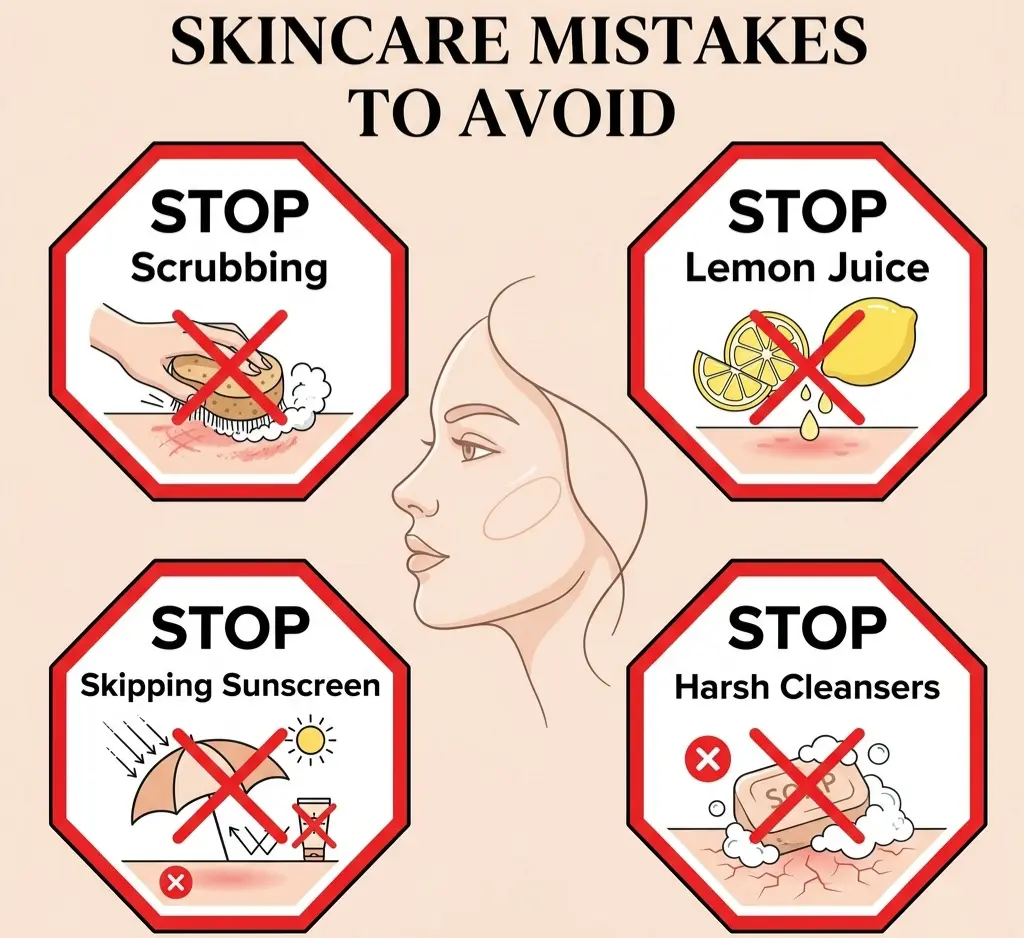
From my own experience, talking to readers, and doing research, these are the most common mistakes people make:
1. Washing your face too much
I used to think the same thing with my oily skin — the more I wash my face, the less oil it will produce. But that’s completely wrong. Washing your face 3 or more times a day removes the skin’s natural oils. As a result, your skin either starts producing a lot more oil to compensate, or it becomes so dry that the skin barrier starts cracking. In both cases, acne gets worse.
2. Using physical scrubs
Walnut shells, apricot scrubs, or sugar scrubs — these create tiny micro-tears in sensitive skin. This causes more inflammation and new breakouts. I used to use them too before I knew better.
3. Skipping moisturizer because your skin feels oily
Many people (including me earlier) make this mistake. Oily skin can still be dehydrated on the inside. When you don’t moisturize, your skin produces even more oil to protect itself. I always recommend using a lightweight, non-comedogenic moisturizer instead.
4. Using too many actives at the same time
A lot of people mix everything together — Niacinamide, Vitamin C, Salicylic acid, Retinol, AHA — all in one routine. This is one of the fastest ways to destroy your skin barrier.
5. Doing DIY experiments without patch testing
That popular Instagram turmeric-lemon-honey mask? If you use it without patch testing, you can end up with redness, burning, or even worse irritation. Lemon is phototoxic and can cause burns when exposed to sun, and turmeric can leave yellow stains for days.
6. Ignoring sunscreen
UV rays make PIH (dark marks) worse, break down collagen, and make your skin even more sensitive. You need sunscreen both indoors and outdoors because UVA rays can pass through windows.
The "Natural" Myth: What Labels Don't Tell You
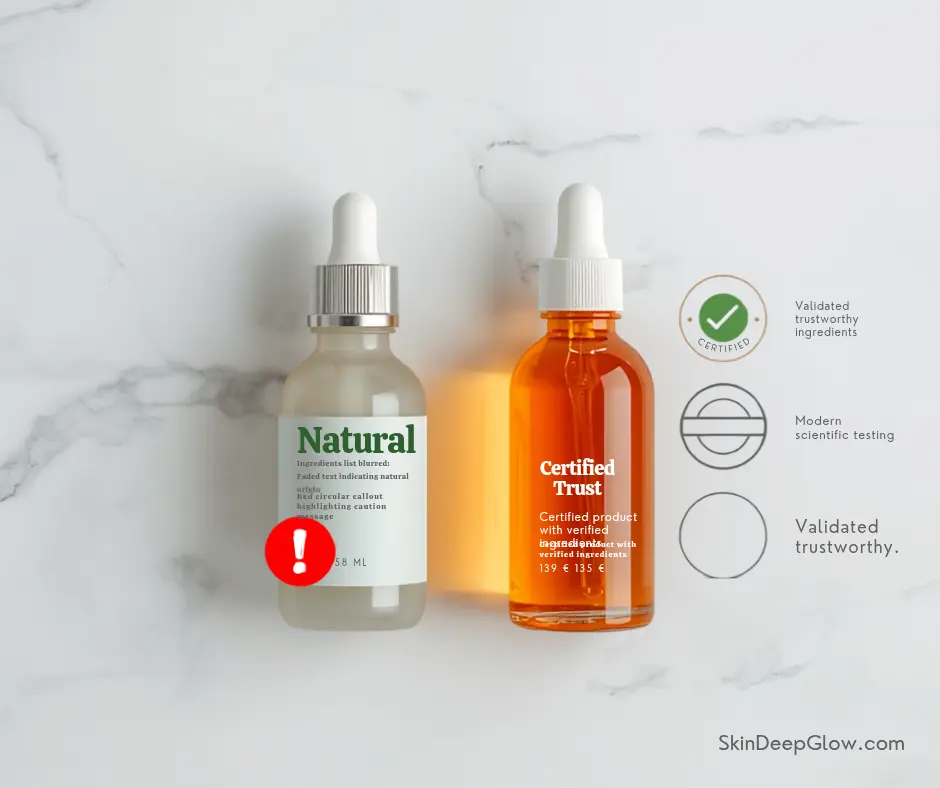
Let’s clear the biggest myth in skincare. If you are still confused thinking that natural always means safe or effective, then this is wrong. Natural products are not always beneficial.
In India and most countries, words like natural, organic, green, or clean are just marketing terms. They have no legal definition. Any brand can call their product “100% natural” even if it contains synthetic fragrances, harsh preservatives, or comedogenic oils that clog your pores.
Below, I am giving you a simple table of the difference between these terms so that you can easily understand their meanings without any confusion.:
| Term | What It Actually Means | Should You Trust It? |
|---|---|---|
| 100% Natural | No legal definition. Brand decides. | Not without checking ingredients. |
| Naturally Derived | Started from a natural source but processed chemically. | Often still contains synthetics. |
| Organic | 95%+ organic ingredients (if certified). | Yes, if USDA or Ecocert certified. |
| Clean Beauty | No standardized definition. | Varies by brand. |
| Fragrance-Free | No added fragrance (best for sensitive skin). | Yes, this one matters. |
Certifications That Actually Matter
| Certification | What It Means | Look For |
|---|---|---|
| Ecocert | At least 95% natural ingredients, no synthetic fragrances. | Ecocert logo on packaging. |
| EWG Verified | Free from chemicals of concern, full transparency. | EWG Verified mark. |
| USDA Organic | 95%+ organic ingredients, no synthetic pesticides. | USDA Organic seal. |
| PETA Cruelty-Free | No animal testing. | Leaping Bunny or PETA logo. |
Important: Even certified natural products can contain ingredients your specific skin doesn’t tolerate. Certifications are helpful, but they’re not everything. Always patch test.
Natural Ingredients That Can Actually Backfire
Look at the market — some ingredients are sold as natural and people think they are magic or will clear pimples in 7 days. But this is completely wrong. In reality, these can create problems for sensitive and acne-prone skin.
- Coconut Oil: This is highly comedogenic. Its rating is 4/5. It clogs pores for many people. It is good for the body but risky for the face.
- Essential Oils: Tea tree, lavender, peppermint, etc. Avoid applying them directly on the skin. They can cause very hard irritation or burns.
- Lemon Juice: Lemon has a pH of 2, while our skin’s natural pH is 4.5–5.5. It causes photosensitivity and can also cause burning or dark marks. That’s why you should avoid applying it directly on the face.
- Baking Soda: It is alkaline with a pH of 9. It disturbs the skin’s natural acid mantle and can increase dryness and sensitivity. So don’t use baking soda directly.
- Witch Hazel: The alcohol version strips the skin. Alcohol-free witch hazel is fine, but always check the label.
Note: Natural skincare doesn’t mean you can use every natural thing. So choose natural ingredients carefully — only those that actually work and don’t damage our skin.
5 Rules That Actually Work
| Rule | One-Line Summary | Why It Matters |
|---|---|---|
| 1. Barrier First | Repair before you treat. | A damaged barrier causes both sensitivity and acne. |
| 2. Less Is More | 4–5 steps max. | More products = more chance of irritation. |
| 3. Patch Test Always | 48-hour rule on the jawline or behind the ear. | Prevents full-face reactions. |
| 4. One Product at a Time | 2-week gap between new products. | You’ll know exactly what caused a reaction. |
| 5. Consistency Wins | 6–12 weeks minimum before judging. | Your skin’s renewal cycle is approximately 28 days. |
Rule 1: Your skin barrier is made of dead skin cells, lipids, and natural moisturizing factors. When it is healthy, it keeps moisture in and bacteria out. When it is damaged, acne-causing bacteria can get in more easily, and inflammation gets worse. Once your skin barrier becomes healthier, acne usually starts to reduce. That is why barrier first works better than trying to attack acne first.
Rule 3: Every new product should be patch tested. No exceptions. Put a small amount behind your ear or on your jawline and wait 48 hours. Check for redness, itching, burning, tiny bumps, or swelling. If nothing happens, try it on a small area of your face. If that also stays fine after 3–4 days, it is likely safe for your full face.
Rule 5: A simple routine used daily for 3 months works better than a complicated routine used only for 2 weeks. Do not keep changing products just because you do not see results in a week. That can damage your skin barrier even more.
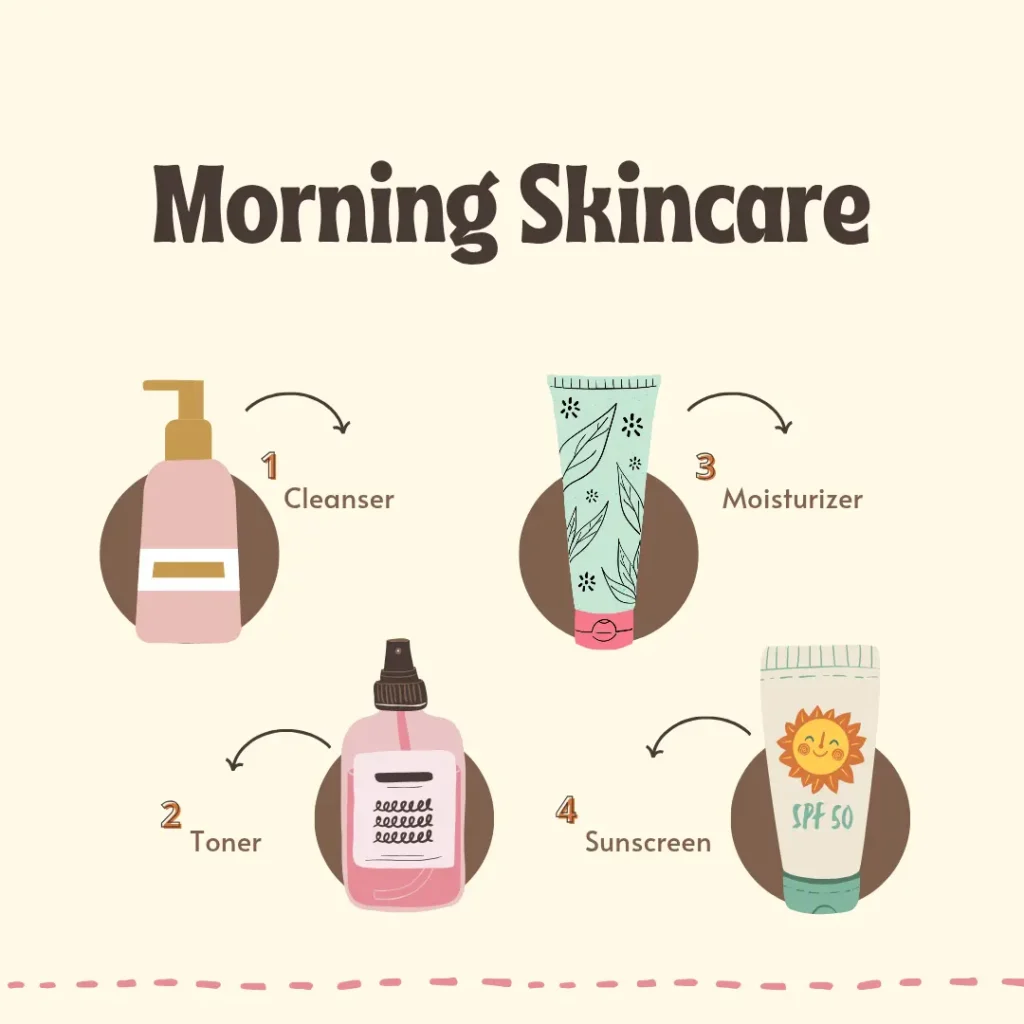
Your Morning Routine (4 Steps)
| Step | What to Do | Key Ingredients | What to Avoid |
|---|---|---|---|
| Cleanse | Gentle wash, 30 seconds. | Neem, aloe vera, turmeric. | SLS, SLES, artificial fragrance, hot water. |
| Tone | Balance pH, prep skin. | Rose water, green tea (cooled). | Alcohol-based toners, witch hazel with alcohol. |
| Moisturize | Lock in hydration. | Hyaluronic acid, squalane, glycerin. | Coconut oil, heavy butters, mineral oil. |
| Protect | Mineral sunscreen, SPF 30+. | Zinc oxide, titanium dioxide. | Chemical filters (oxybenzone, avobenzone). |
Step 1: Cleanse
Use lukewarm water — neither too hot nor too cold. Now whichever gentle cleanser you have, massage it for 30 seconds. And don’t rub the face too much, then pat dry. If you’ve done a double cleanse, that’s fine too, and even if you didn’t sweat much, so what — some people skip cleansing in the morning, but I recommend doing it because then your face stays clean throughout the day, otherwise you’ll already have to deal with a lot of sweat and dust.
Step 2: Tone
The next step after cleanse is applying toner — this is used to balance the skin’s pH. If you have sensitive skin, I’d recommend a rose water toner — it’s hydrating, soothing, and anti-inflammatory. If your skin is oily-sensitive, cooled green tea also works well because it helps reduce sebum production.
Step 3: Moisturize
Whatever your skin type — oily, acne-prone, or sensitive — everyone needs a moisturizer. Choosing the right moisturizer is the most important thing. Look for hyaluronic acid, which attracts moisture into the skin, or squalane, which works like natural oils and is non-comedogenic, or glycerin, which is a budget-friendly humectant. For oily skin, use a gel-based or lightweight lotion. If your skin is dry and sensitive, a slightly thicker cream is also fine.
Step 4 — Protect:
This is the most important step for preventing PIH and protecting your skin barrier. For sensitive, acne-prone skin, choose a mineral sunscreen with zinc oxide or titanium dioxide. Chemical sunscreens can sting sensitive skin. Mineral sunscreens stay on top of the skin and reflect UV rays. They may leave a little white cast, but tinted mineral sunscreens can help with that.
Use about 1/4 teaspoon for your full face. If you are outdoors, reapply every 2–3 hours. Do not skip this step — UV exposure can make dark marks darker and slow down healing.
Optional treatment:
Only add this when your skin barrier is stable — meaning there is no stinging and less redness, usually after Week 3. Then you can add niacinamide 2–5%, which helps reduce inflammation, control oil, and fade PIH. You can also use diluted tea tree oil 1–2% as a spot treatment only. Never use undiluted tea tree oil.
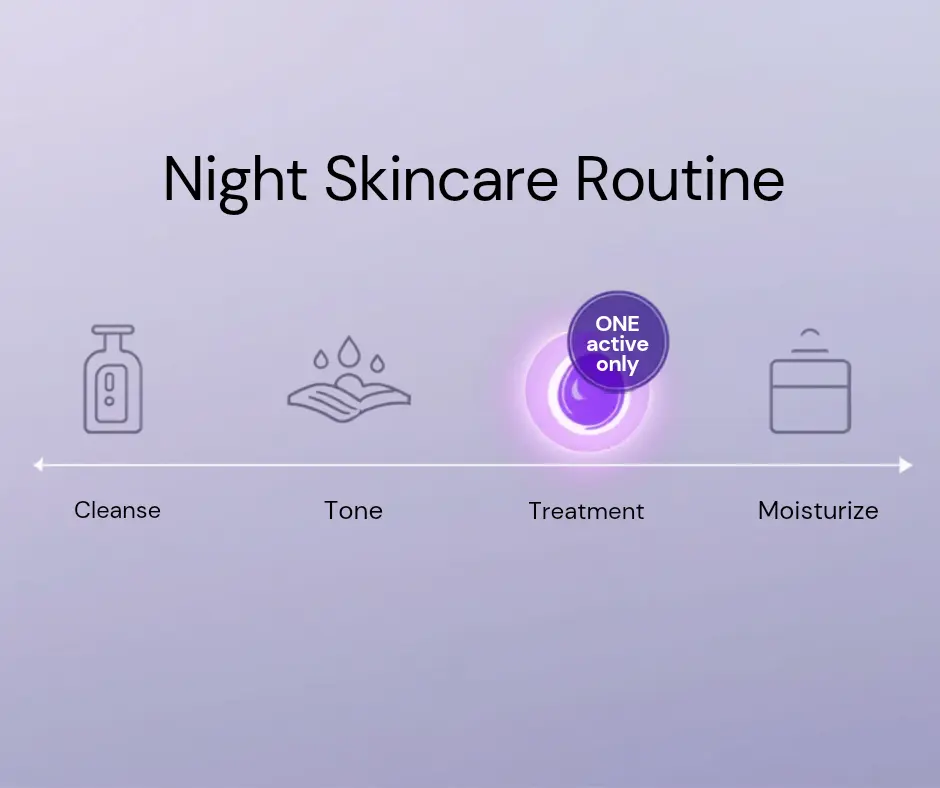
Your Night Routine (4 Steps)
Night is when your skin repairs itself. Your PM routine should focus on cleansing thoroughly and supporting that repair.
| Step | What to Do | Key Ingredients | What to Avoid |
|---|---|---|---|
| Cleanse | Oil + water (if wearing makeup/SPF). | Jojoba oil, hemp seed oil. | Leaving makeup or sunscreen on. |
| Tone | Same as morning. | Rose water, green tea. | — |
| Treat | Use ONE active ingredient only. | Bakuchiol, willow bark, azelaic acid. | Mixing multiple actives together. |
| Moisturize | Slightly richer than the morning routine. | Squalane, ceramides, shea butter (small amount). | Heavy oils, thick silicones. |
Step 1 — Double Cleanse (if you wore makeup or sunscreen):
If you wore makeup or sunscreen during the day, one cleanse may not remove everything. First, use an oil-based cleanser. Jojoba oil is close to your skin’s natural oil and usually does not clog pores. Hemp seed oil is also light and calming. Massage the oil on your dry face for 1 minute, add a little water to emulsify it, then rinse. After that, use your regular water-based cleanser.
If you did not wear makeup or sunscreen, you can skip the oil cleanse. One gentle cleanse is enough.
Step 3 — Treat:
This is where you add an active ingredient, but only after your skin barrier feels stable.
Week 1–2: Use only moisturizer. Let your skin settle.
Week 3–4 and after: Add one of these:
- Bakuchiol — A plant-based retinol alternative. It can help with fine lines, uneven tone, and acne. It is gentler than retinol and usually better for sensitive skin.
- Willow bark extract — A natural source of salicylic acid. It helps clear pores and reduce inflammation. Start with 1–2 times a week.
- Azelaic acid — Helps with acne, fades PIH, and calms redness. It is usually well tolerated by sensitive skin.
Apply a thin layer after toner. Wait 2–3 minutes before using moisturizer. Do not use bakuchiol, willow bark, and azelaic acid together. Pick just one and start slowly.
Step 4 — Moisturize:
Your night moisturizer can be a little richer than your morning one. You can add a few drops of squalane oil to your regular moisturizer, or choose one with plant-based ceramides. If your skin is very dry, a small amount of shea butter can help, but patch test first.
Apply moisturizer while your skin is still a little damp from toner. This helps lock in hydration better.
Eye care (optional):
The skin around your eyes is very thin. For puffiness, you can use cold cucumber slices for 10 minutes. For dark circles, a tiny drop of pure cold-pressed almond oil at night can help if you gently pat it on. Keep acne products away from your eyes.
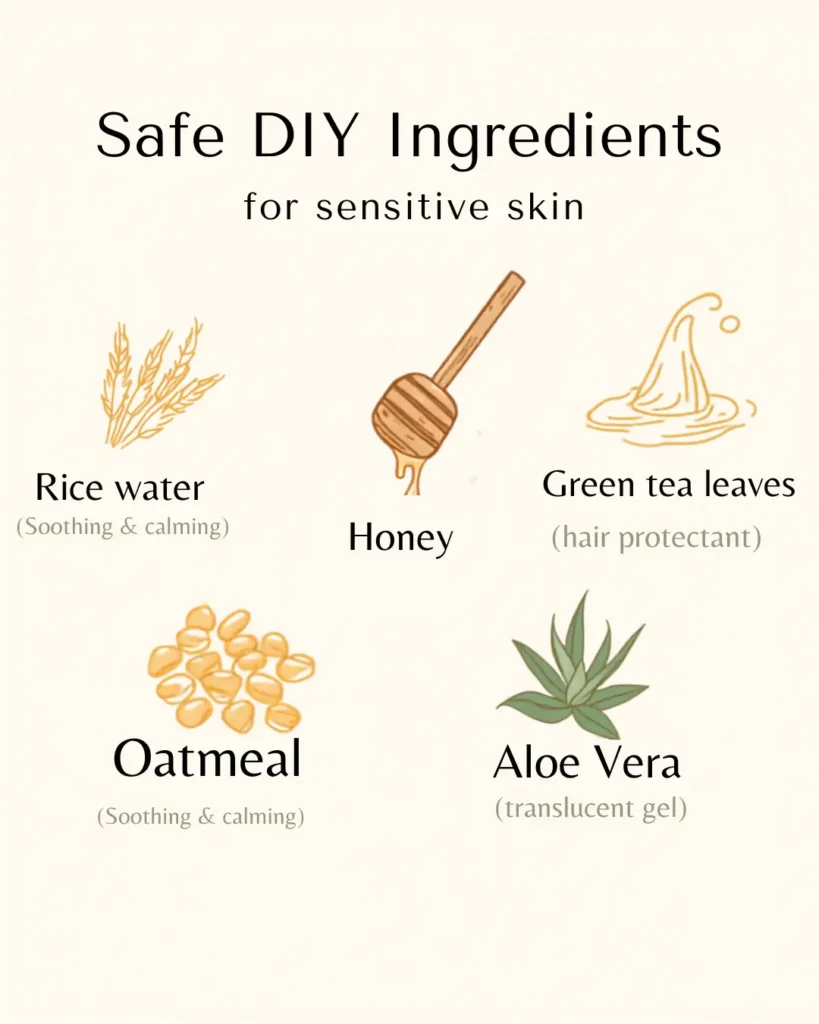
Ingredients That Work (And Why)
Here’s a quick-reference guide to ingredients that actually work for sensitive, acne-prone skin — and why:
| Ingredient | Best For | How It Helps | Find It In |
|---|---|---|---|
| Aloe Vera | All sensitive skin types. | Anti-inflammatory, hydrates, and promotes healing. | Fresh plant gel, pure aloe products. |
| Oatmeal (Colloidal) | Very sensitive, eczema-prone skin. | Soothes itching, repairs the skin barrier, and reduces inflammation. | Oatmeal masks, oat-based cleansers. |
| Chamomile | Reactive, rosacea-prone skin. | Reduces redness and calms irritation. | Chamomile tea (cooled), chamomile extracts. |
| Centella Asiatica (Gotu Kola) | Damaged skin barrier, acne scars. | Supports wound healing, boosts collagen, and reduces inflammation. | Serums and creams. |
| Licorice Root | Dark marks and sensitive skin. | Fades post-inflammatory hyperpigmentation (PIH), reduces redness, and soothes inflammation. | Natural serums, brightening products. |
Gentle Acne Fighters
| Ingredient | Best For | Caution | Find It In |
|---|---|---|---|
| Tea Tree Oil | Active pimples. | Always dilute to 1–2%. Undiluted use may cause burns. | Diluted in carrier oils, spot treatments. |
| Neem | Oily, acne-prone skin. | Strong smell. Patch test before use. | Neem face wash, diluted neem oil. |
| Willow Bark Extract | Clogged pores. | Start 1–2 times per week. Overuse may dry out the skin. | Natural exfoliating products. |
| Green Tea | Oil control, antioxidant support. | Very safe. Use only after cooling to room temperature. | DIY toner, green tea extracts. |
| Turmeric | Inflammation, post-inflammatory hyperpigmentation (PIH). | May temporarily stain the skin yellow. Best used at night. | Face masks (with yogurt or honey), serums. |
| Bakuchiol | Anti-aging and acne. | Very gentle, but introduce it slowly into your routine. | Bakuchiol serums, natural retinol products. |
Hydration Without Clogging Pores
| Ingredient | Best For | How It Helps | Find It In |
|---|---|---|---|
| Hyaluronic Acid | All skin types, especially dehydrated skin. | Holds up to 1,000 times its weight in water and helps plump the skin. | Serums, moisturizers. |
| Squalane | Oily, sensitive skin. | Mimics natural skin oils, feels lightweight, and is non-comedogenic. | Facial oils, moisturizers. |
| Glycerin | Budget-friendly hydration for all skin types. | Draws moisture from the air into the skin to keep it hydrated. | Most moisturizers, DIY toners. |
| Rose Water | Sensitive, reactive skin. | Hydrates, helps balance skin pH, and soothes irritation. | Pure rose water (check for additives). |
Ingredients to Skip (No Exceptions)
| Ingredient | Why Skip | What Happens |
|---|---|---|
| Coconut Oil | Highly comedogenic (4/5 rating). | May clog pores and contribute to breakouts on the face. |
| Undiluted Essential Oils | Too concentrated and may irritate the skin. | Can cause redness, blistering, or long-lasting sensitivity. |
| Lemon Juice | Very acidic (around pH 2) and may increase sun sensitivity. | Can cause irritation, burns, and dark marks after sun exposure. |
| Baking Soda | Too alkaline (around pH 9). | May disrupt the skin barrier, leading to dryness and sensitivity. |
| Physical Scrubs (Walnut, Apricot, Sugar) | Can be too abrasive for facial skin. | May increase irritation and damage the skin barrier. |
| Alcohol (Denatured/SD Alcohol) | Removes natural oils from the skin. | Can cause dryness, irritation, and increased oil production. |
| Synthetic Fragrance | A common trigger for skin irritation. | May cause redness, itching, or allergic reactions. |
| SLS/SLES | Harsh cleansing agents. | May weaken the skin barrier, causing dryness and tightness. |
| Heavy Silicones | May trap oil and impurities on some skin types. | Can contribute to clogged pores and breakouts in susceptible individuals. |
DIY: Safe vs Risky
DIY skincare is very popular in India, but not everything is safe. Here are some simple DIYs that can work well if you use them the right way.
1. Oatmeal + Honey Soothing Mask
Take 2 tablespoons of colloidal oatmeal and 1 tablespoon of raw honey. Mix them into a paste. Apply it on a clean face and leave it for 10 minutes. Then rinse with lukewarm water. Oatmeal helps calm irritation, and honey is hydrating and antibacterial. Use this 1–2 times a week.
2. Green Tea Toner
Brew 2 green tea bags in 1 cup of water. Let it cool completely. Pour it into a spray bottle. Spray it after cleansing. Keep it in the fridge and use it within 3 days. Green tea antioxidants help reduce inflammation and control oil. You can use it daily, in the morning and at night.
3. Aloe Vera Spot Treatment
Take fresh gel from an aloe leaf. Do not use the green store-bought gels that contain alcohol and color. Apply a small amount on an active pimple and leave it overnight. Rinse in the morning. It helps reduce redness, supports healing, and is anti-inflammatory. Use it nightly on active breakouts.
4. Rice Water Toner
Rinse half a cup of rice, then soak it in 1 cup of water for 30 minutes. Strain it and store it in the fridge. Use it as a toner after cleansing. Use it within 5 days. Rice water has vitamins and mild brightening ingredients that can help the skin. You can use it daily.
DIYs to Skip (Damage Risk)
| DIY Remedy | Why Skip | What Can Happen |
|---|---|---|
| Turmeric + Lemon Mask | Lemon can increase sun sensitivity, and turmeric may temporarily stain the skin. | Skin irritation, dark marks after sun exposure, and temporary yellow staining. |
| Toothpaste on Pimples | Contains ingredients such as menthol, fluoride, and SLS that may irritate the skin. | Skin irritation, dryness, and a higher risk of post-inflammatory marks. |
| Apple Cider Vinegar (Undiluted) | Highly acidic (pH around 2–3). | Can cause skin irritation or chemical burns and may damage the skin barrier. |
| Cinnamon Face Mask | Can be highly irritating for many skin types. | May cause severe redness, burning, or allergic reactions. |
| Garlic on Pimples | Strong natural irritant when applied directly to the skin. | May lead to irritation, blistering, or chemical burns. |
| Baking Soda Scrub | Too alkaline and physically abrasive for facial skin. | Can weaken the skin barrier, leading to dryness, irritation, and increased breakouts. |
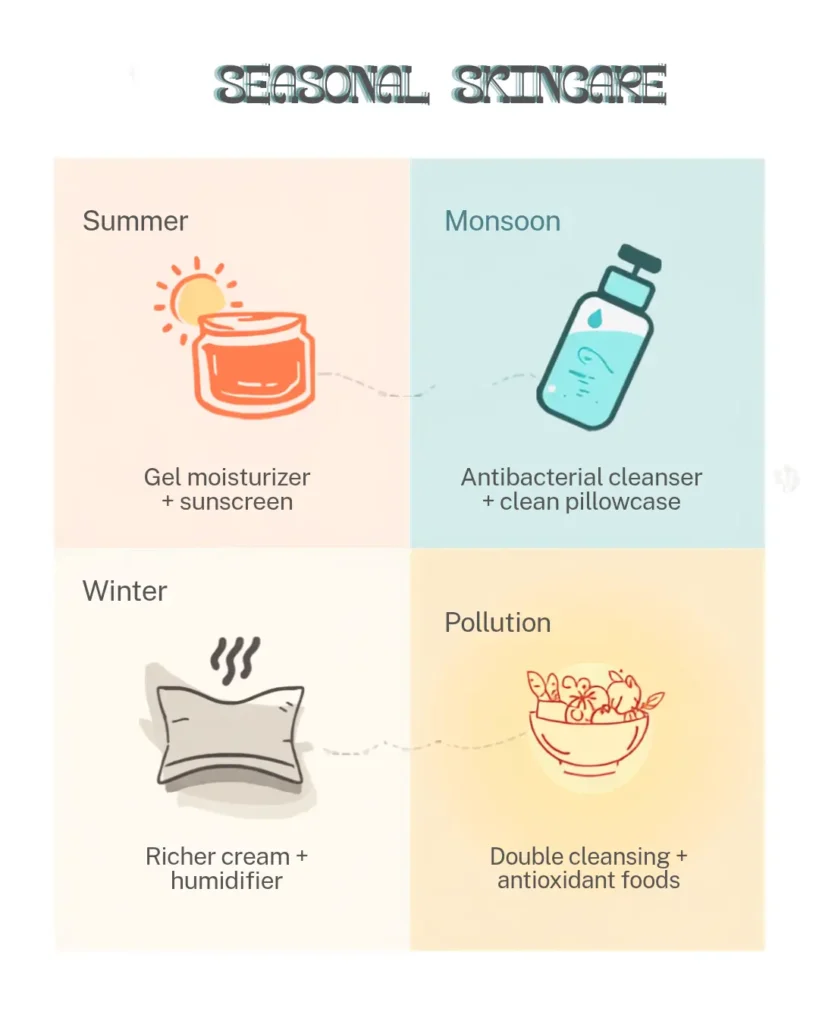
Adapt Your Routine to Indian Seasons
| Season | Challenge | Switch To | Key Ingredients | Extra Tips |
|---|---|---|---|---|
| Summer (Mar–Jun) | Heat, humidity, sweat. | Gel-based skincare products. | Aloe vera, cucumber, green tea. | Reapply sunscreen every 2 hours and keep your face mist in the refrigerator. |
| Monsoon (Jul–Sep) | Humidity and fungal acne risk. | Antibacterial cleansers. | Neem, diluted tea tree oil. | Change your pillowcase every 2–3 days and avoid heavy oils. |
| Winter (Oct–Feb) | Dry air and cold weather. | Slightly richer moisturizer. | Hyaluronic acid, squalane, shea butter (small amount). | Use a humidifier in your bedroom and avoid washing your face with hot water. |
| Pollution (Year-round) | Free radicals and clogged pores. | Double cleanse in the evening. | Green tea, amla (vitamin C). | Use a face mist during the day and include antioxidant-rich foods in your diet. |
Summer tip: A lot of readers say their skin gets oilier and more sensitive in summer. In that case, switch to a gel-based moisturizer, and keep your rose water toner in the fridge for a cool, calming spray.
Monsoon tip: Humidity does not mean your skin is fully hydrated. It only means there’s moisture in the air, but your skin barrier can still lose water. So don’t skip moisturizer — just use a lighter one.
Winter tip: If your skin feels tight after cleansing, your cleanser may be too harsh or your moisturizer may not be enough. In that case, add 2–3 drops of squalane oil to your night moisturizer.
Glow Starts From Inside
Skincare products are only part of the story. What you eat and how you live affects your skin just as much. In my experience, people who focus on internal health usually see faster and longer-lasting results.
Diet
Eat more:
- Antioxidants like amla, berries, pomegranate, and spinach. They help fight damage from pollution and sun.
- Omega-3s like flaxseeds, walnuts, and chia seeds. They help reduce inflammation.
- Zinc from pumpkin seeds, chickpeas, and lentils. It helps acne heal.
- Vitamin C from amla, oranges, and bell peppers. It supports collagen and helps fade PIH.
- Probiotics from curd, buttermilk, and fermented foods. Gut health is closely linked to skin health.
Limit:
- Sugar, because it can raise insulin, increase oil production, and trigger inflammation.
- Dairy, since some people react to dairy hormones. Try reducing it for 4 weeks and see if your acne improves.
- Fried foods, because they can increase inflammation and oxidative stress.
- Too much caffeine, because it can dry out the skin.
Hydration
Drink 8–10 glasses of water a day. Herbal teas like green tea and chamomile also count toward hydration. But more is not always better — drinking too much water will not fix skin problems.
Sleep
- 7–8 hours of sleep is non-negotiable. Your skin repairs itself while you sleep.
- Sleeping before midnight matters, because the deepest repair happens in the first half of the night.
- A silk pillowcase can help reduce friction and bacteria buildup.
- Change your pillowcase every 3–4 days, especially if you have acne-prone skin.
Stress
Stress increases cortisol, and cortisol can trigger more oil and inflammation. Deep breathing, meditation, light yoga, and journaling can all help. Also, try to stop using your phone 1 hour before bed, because blue light can disturb sleep and raise stress levels.
Exercise
Sweating helps improve circulation. Just make sure you wash your face right after working out, because sweat left on the skin can clog pores. Also, use a clean towel and don’t wipe your face with the same towel used for your body.
Hair and Skin
Hair oil on the face can clog pores, so keep your hair away from your face while sleeping. Conditioner residue on the forehead and back can also cause breakouts, so rinse well. If you have an oily scalp, washing your hair more often may also help, since oil can travel to your face.
Realistic Timeline: When Will You See Results?
Here’s what to honestly expect. No false promises. Many of my readers get frustrated at Week 2 and switch products — that’s exactly when you should keep going.
| Timeline | What’s Happening | What to Expect |
|---|---|---|
| Week 1–2 | Skin is adjusting. The skin barrier may start feeling different. | Possible mild purging or no visible change. Stay consistent and don’t panic. |
| Week 3–4 | Skin barrier repair begins. Redness and stinging may reduce. | Skin feels calmer, and you may notice fewer new breakouts. |
| Week 5–8 | Noticeable improvements begin. Skin texture gradually improves. | Active acne reduces, and the skin starts feeling healthier and more balanced. |
| Week 9–12 | Long-term improvements become more visible. | Post-inflammatory dark marks (PIH) may begin to fade, and skin tone appears more even. |
| 3–6 Months | Healthy, stable skin with a consistent routine. | Regular skincare helps maintain results. Occasional breakouts are still normal. |
Important: If you see no improvement after 8–12 weeks, or if things get worse, see a dermatologist. Natural skincare supports skin health but doesn’t replace medical treatment for severe acne.
When Natural Isn’t Enough: See a Dermatologist
Natural skincare has its limits. Some skin problems need professional help, and that is completely okay.
Here are the signs that it’s time to see a dermatologist:
- Cystic acne: Deep, painful bumps under the skin that do not come to a head.
- Acne scars: Pitted or raised scars, not just dark marks. These usually need proper treatment.
- No improvement after 8–12 weeks of following a routine consistently.
- Strong redness, burning, or peeling that does not go away.
- Sudden severe breakout, which could be linked to hormones or another underlying issue.
- Signs of infection: pus, warmth, spreading redness, or fever.
A dermatologist may suggest:
- Topical retinoids, which are stronger than bakuchiol.
- Oral medicines, especially for hormonal or severe acne.
- Professional chemical peels.
- Laser treatments for scars or PIH.
There is no shame in getting medical help. Natural skincare and dermatology can work really well together. In many cases, the best results come from combining a gentle routine with targeted treatment for stubborn skin issues.
FAQs
Q: Can I wash my face more than twice a day?
A: No. Twice a day is enough — once in the morning and once at night. Washing too much can strip your skin barrier and make your skin even oilier or drier.
Q: My skin got worse after starting natural products. Is that normal?
A: It can happen, but it may be either purging or a reaction. Purging usually lasts 2–4 weeks and shows up where you normally get breakouts. A reaction usually appears in new areas and comes with redness, itching, or burning. If it looks like a reaction, stop using the product.
Q: Can I use multani mitti every day?
A: No. It is very drying. Use it only 1–2 times a week, and always apply moisturizer after.
Q: Is ghee good for the face?
A: No. Ghee can clog pores, so it is not a good choice for facial skin. You can use it on your lips or body instead.
Q: Do I need sunscreen if I stay indoors all day?
A: Yes. UVA rays can pass through windows and still cause dark marks and early aging. Daily sunscreen is important.
Q: Can I leave aloe vera gel on overnight?
A: Yes, but only if it is pure aloe gel from the plant. Store-bought gels may contain alcohol and preservatives that can irritate sensitive skin.
Q: Can I use a turmeric and honey mask daily?
A: No. Two to three times a week is enough. Turmeric can also leave a temporary yellow stain on the skin.
Q: How do I know if a product is causing breakouts?
A: If you start getting new pimples in places where you usually do not break out, within 1–2 weeks of using a new product, that product may be the reason. Stop it and patch test first.
Q: Can I mix oils together?
A: Yes, but start with non-comedogenic oils like jojoba and squalane. Use small amounts and patch test first.
Q: Will natural skincare completely cure my acne?
A: Natural skincare can support skin health and help reduce mild to moderate acne. But severe or cystic acne often needs medical treatment. Knowing when to see a doctor matters.
Continue Reading:
How to Remove Pimples: Complete Guide for Indian Skin
Salicylic Acid vs Benzoyl Peroxide: Which One Is Right for Your Skin?
Disclaimer
The information shared on this blog is based on personal experience and general research. I’m not a dermatologist or medical professional. If you have a serious skin condition, please consult a certified dermatologist before trying any new product or routine. What works for my skin may not work for everyone — always do a patch test first.
Author
Hi, I’m Shivanshi — a teenage skincare enthusiast from Lucknow who’s been dealing with oily, acne-prone skin for years. Everything I write on SkinDeepGlow.com comes from my own real experience — products I’ve actually tested, mistakes I’ve made, and lessons my skin taught me the hard way. No fluff, just honest skincare talk.