
By Shivanshi | SkinDeepGlow.com | Reviewed by a Certified Dermatologist | Last Updated: June 2026
Skip to What Actually Worked →
How to Remove Pimples: here we know full information real and experienced:
Last year, I had a function at home. Relatives were coming, my outfit was ready, and I genuinely felt like everything was in place. Then I woke up that morning and saw it — a big, angry, red pimple sitting right in the middle of my forehead like it owned the place. I stood in front of the mirror for five full minutes just staring at it.
If you have ever felt that exact panic, you are in the right place.
I have been dealing with pimples on my oily Indian skin for over two years now. I have tried kitchen remedies that my mom swore by, serums that beauty influencers called life-changing, and face packs that promised clear skin in seven days. Some things helped. Some made things worse. A few actually worked — and I want to tell you exactly which ones and why.
This is not a guide that was put together by copying twenty articles and listing every ingredient that has ever touched skin. This is what I personally went through, tested, failed at, and finally figured out — living in Lucknow, with its heat, pollution, hard water, and the kind of humidity that makes your T-zone shine by 9 AM.
In this guide you will find honest home remedy results, the science-backed ingredients that genuinely changed my skin, a complete daily routine for oily acne-prone Indian skin, diet changes that helped, and the mistakes I made so you do not have to repeat them. There are no false promises here. Pimples take time. But the right approach makes that time shorter — and that is exactly what this post is about.
This guide is for you if you have oily or combination skin, live in an Indian climate, and are tired of advice that does not account for our diet, our weather, and our skin.
What Is a Pimple? The Science, Explained Simply
Before you can treat something properly, you need to understand what it actually is. And once I understood the biology of a pimple, I stopped making the same mistakes over and over.
How a Pimple Forms: Step by Step
Your skin has tiny openings called pores. Each pore is connected to a sebaceous gland underneath, which produces oil called sebum. This oil is not a bad thing — it keeps your skin moisturized and protected. The problem starts when there is too much of it.
Here is exactly what happens when a pimple forms:
Step 1: Your sebaceous gland produces more oil than usual. This can happen because of hormones, heat, stress, or diet — all of which we will get into.
Step 2: Dead skin cells — which your skin sheds naturally every day — mix with that excess oil inside the pore.
Step 3: The pore gets blocked. This blockage is called a comedone. At this stage, it is either a whitehead (closed pore, white bump) or a blackhead (open pore, oxidized and dark).
Step 4: A bacteria called Cutibacterium acnes (previously known as P. acnes) — which lives naturally on your skin — feeds on the trapped oil and starts multiplying inside the clogged pore.
Step 5: Your immune system detects the bacteria and sends white blood cells to fight it. This immune response is what causes inflammation — the redness, swelling, and pain you see as an active pimple.
That five-step process is what every pimple goes through. Understanding it changes everything about how you approach treatment.
Types of Pimples: Why This Matters for Treatment
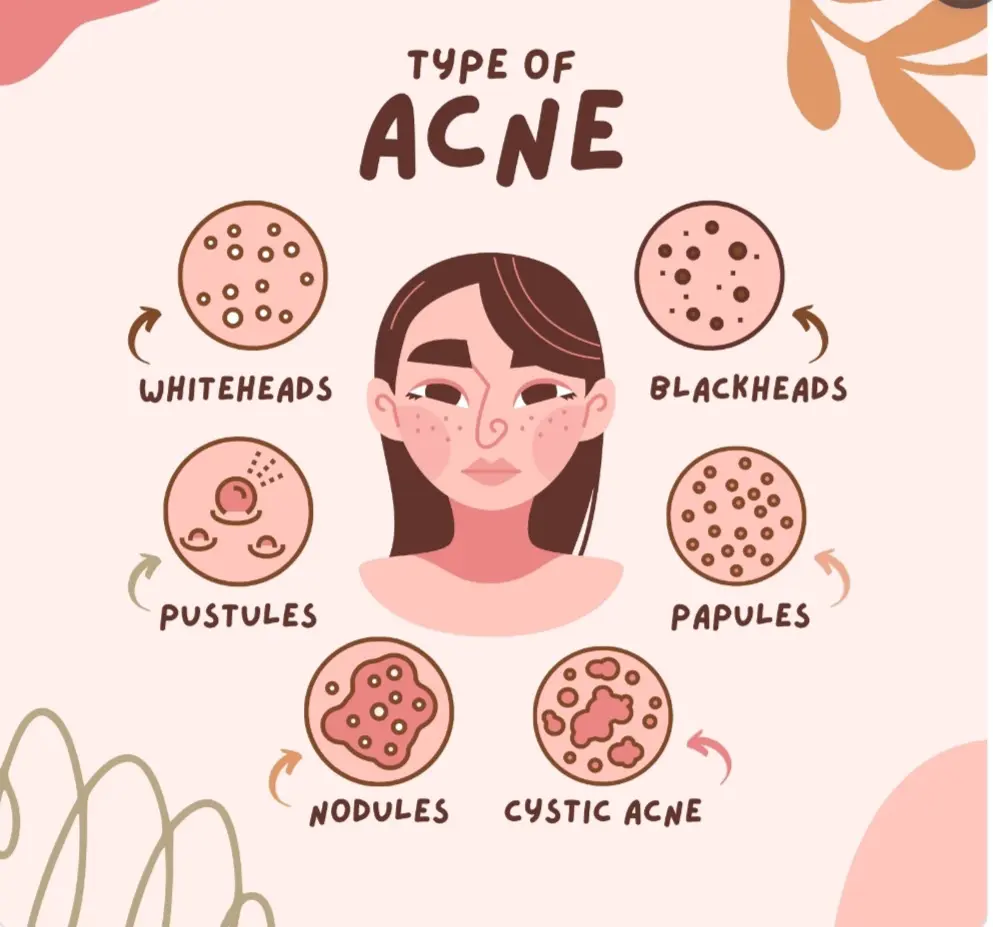
One of the biggest mistakes people make is treating all pimples the same way. A tiny blackhead and a deep, painful cyst need completely different approaches. Here is a clear breakdown:
| Type | What It Looks Like | Pain Level | Best Treatment |
|---|---|---|---|
| Whitehead | Small white bump, pore is closed | None | Salicylic acid, gentle exfoliation |
| Blackhead | Dark spot, open pore, not raised | None | BHA exfoliation, professional extraction |
| Papule | Small red bump, no visible center | Mild | Spot treatment, niacinamide |
| Pustule | White or yellow center, red base | Moderate | Benzoyl peroxide spot treatment |
| Nodule | Large, hard lump deep under skin | High | Dermatologist — do not self-treat |
| Cyst | Deep, pus-filled, very painful | Very High | Dermatologist only — cortisone injection |
The surface-level ones — whiteheads, blackheads, papules, pustules — respond well to home care and over-the-counter products. The deeper ones — nodules and cysts — need professional treatment. Trying to pop or self-treat deep pimples is one of the fastest ways to end up with permanent scars. I know because I have been there.
If you want to understand ingredients for different pimple types, read my detailed post on Salicylic Acid vs Benzoyl Peroxide.
Why Do Indians Get More Pimples? My Realization
For the longest time, I thought I just had bad skin. Everyone around me seemed to manage, and I was stuck dealing with breakouts every few weeks. Then I started paying attention — not to my skincare routine, but to my environment. That is when things started making sense.
The Indian Climate Factor
Most skincare content you find online is written for people living in mild, dry climates. That is simply not our reality. In most parts of India, humidity sits between 60 and 90 percent for a significant part of the year. What that means for your skin is constant, excessive sweating. Your sebaceous glands are working overtime. Your pores are permanently open and catching everything — dust, pollution particles, bacteria from the air.
In summer, the heat alone pushes your skin into overdrive. In monsoon, it gets worse because you get the combined problem of humidity and fungal activity on the skin. I used to break out the most during July and August — not just regular pimples, but a texture issue across my forehead that I later learned was fungal acne triggered by constant moisture on my skin.
Pollution: The Enemy No One Talks About
Delhi, Mumbai, Kanpur, Lucknow — our cities consistently rank among the most polluted in the world. And those PM2.5 particles in the air? They are tiny enough to sit inside your pores. When pollution settles on your skin, it mixes with your skin’s oil and sweat, and creates the ideal environment for clogged pores and bacterial growth.
I noticed this very clearly once when I spent two weeks in the hills. My skin visibly calmed down. No new pimples, existing ones healed faster. The moment I was back in the city with its traffic and dust, the breakouts started returning. That was proof enough for me that pollution was a real contributing factor — not just something dermatologists say to sound thorough.
Hard Water: The Hidden Culprit Nobody Mentions
This one took me a long time to figure out. The tap water in most Indian cities — especially those supplied by municipal pipelines — is hard water. It contains high concentrations of calcium and magnesium. When you wash your face with hard water, these minerals leave an invisible residue on your skin that disrupts your skin’s natural pH balance and weakens the moisture barrier.
A weak skin barrier means your skin cannot protect itself properly. It becomes more prone to inflammation, sensitivity, and — yes — acne. I did a simple test at home: filled a glass with tap water, left it overnight, and found white deposits at the bottom. That was the calcium I was washing my face with every single day.
The fix that worked for me was switching to filtered or RO water for face washing whenever possible. Even storing RO water in a small bottle just for face cleansing made a noticeable difference over a few weeks.
Indian Diet Triggers
Our food is beautiful. It is also, unfortunately, quite good at triggering breakouts if you have acne-prone skin.
Dairy is a big one. The milk we drink in India — whether in chai, lassi, or paneer — contains hormones that stimulate oil production in the skin. I reduced my chai from three cups a day to one and switched to plant-based milk for the other two. Within a month, the frequency of my breakouts reduced noticeably.
Maida — which is the base of so much of what we love, from naan to biscuits to white bread — has a high glycemic index. That means it spikes your blood sugar fast, which in turn spikes insulin, which triggers more oil production. Spicy food, fried snacks, and processed packaged foods all do similar things — they create internal inflammation, which shows up on the skin.
Stress: The Factor We Normalise
Indian students know board exam pressure. Indian professionals know late-night deadline stress. And anyone who has lived in a joint family knows the particular kind of emotional load that comes with that setup. All of that stress causes your body to release cortisol — a hormone that directly tells your sebaceous glands to produce more oil.
Board exams time on my face were a disaster. Consistent breakouts, ones that healed and were immediately replaced by new ones. It was not until I started managing stress through basic things — sleeping properly, stepping outside, not being on my phone until 2 AM — that this cycle began to slow down.
Using the Wrong Products
Fairness creams are still everywhere in Indian households and pharmacies. Most of them are heavy, occlusive, and absolutely not suitable for oily or acne-prone skin. I used one for three months in my early teens because someone told me it would help with marks. It made my acne significantly worse. Coconut oil, which is a staple in so many Indian skincare routines, is highly comedogenic — meaning it blocks pores. It is wonderful for hair. On acne-prone facial skin, it is one of the worst things you can use.
The lesson I learned is that traditional home remedies and modern products both need to be chosen based on your actual skin type — not just because something worked for someone else.
8 Root Causes of Pimples
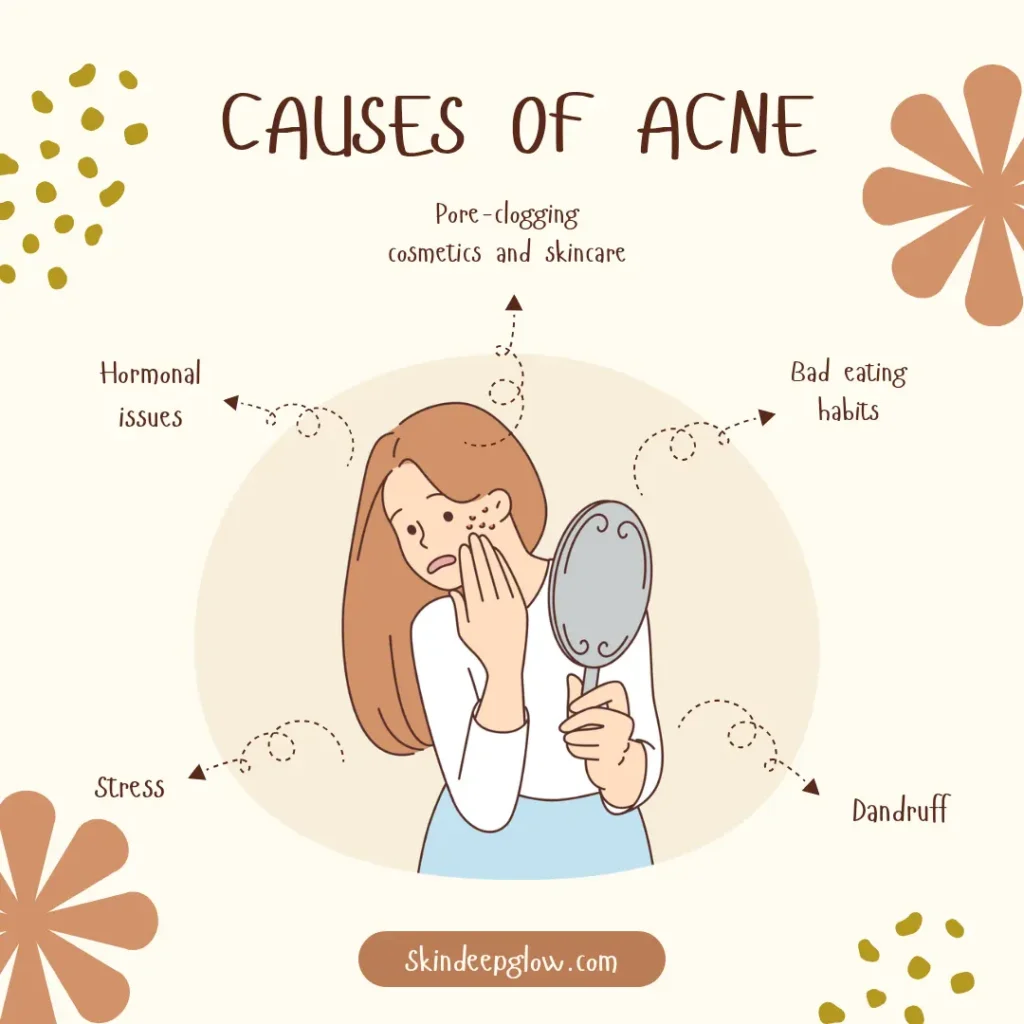
Now that you understand why Indian skin has its own specific challenges, here are the eight core reasons pimples actually form. Go through each one and honestly assess which ones apply to you — because your treatment approach changes depending on your triggers.
1. Excess Oil Production
Your genetics determine how active your sebaceous glands are. If oily skin runs in your family, you are more likely to overproduce sebum. On top of genetics, heat and hormones push oil production higher. The T-zone — forehead, nose, chin — is almost always the worst-affected area because it has the highest concentration of sebaceous glands.
2. Clogged Pores
Your skin naturally sheds dead cells. But if that process is not happening efficiently — or if you are not cleansing properly — those dead cells pile up and mix with oil to block pores. This is where regular, gentle exfoliation becomes important. Not scrubbing aggressively — gentle chemical exfoliation with the right ingredients.
3. Bacterial Infection
Cutibacterium acnes lives on everyone’s skin. It becomes a problem only when pores get clogged and it starts multiplying rapidly inside that trapped environment. Touching your face with unwashed hands, using a dirty phone screen against your cheek, or sleeping on a pillowcase that has not been washed in weeks — all of these transfer bacteria directly onto your skin and into open pores.
4. Hormonal Changes
Hormones are one of the most common — and most frustrating — pimple triggers. During puberty, androgen levels rise and signal the sebaceous glands to produce more oil. For women, the hormonal shifts right before a period do the same thing. PCOS, a condition that affects a significant percentage of Indian women, causes chronic hormonal imbalances that result in persistent, jaw-line-heavy acne that does not respond well to surface-level treatments alone.
5. Wrong Skincare Products
Heavy creams, certain sunscreens, and foundations that contain comedogenic ingredients like lanolin, isopropyl myristate, or coconut oil will clog pores even if everything else in your routine is perfect. Reading ingredient lists before buying is not being extra careful — it is necessary.
6. Touching Your Face
Most people touch their faces dozens of times a day without realizing it. Every time you rest your chin on your hand, rub your forehead, or pick at a pimple, you transfer oil and bacteria from your fingers to your skin. Phones are particularly bad — phone screens collect more bacteria than most things we touch, and holding one against your cheek for a call is direct bacteria transfer.
7. Diet
High-glycemic foods, dairy, and processed foods all have documented links to increased acne activity. This does not mean you need to eat only raw vegetables, but making conscious swaps — especially reducing dairy and refined carbs — makes a measurable difference for a lot of people with acne-prone skin.
8. Stress and Sleep Deprivation
Cortisol — the stress hormone — directly increases sebum production. Sleep deprivation raises cortisol levels. Late nights plus stress, which is a very common combination in Indian academic and work culture, is one of the most underrated contributors to consistent breakouts.
Indian Kitchen Remedies: I Tried Them All — Honest Results
Let me be very clear before we get into this section. I did not try these remedies once and form an opinion. I gave each one at least three to four consistent weeks of use, kept notes, and tracked changes with weekly photos. What I am sharing here is what I actually observed — not what the internet claims.
1. Multani Mitti + Rose Water
What it is supposed to do: Multani mitti, or fuller’s earth, is a clay mineral that absorbs excess oil and draws impurities out of pores. Rose water soothes inflammation and balances skin pH.
How I used it: Two tablespoons of multani mitti mixed with enough rose water to make a smooth paste. Applied it on my face, left it for 15 minutes until it dried, then rinsed with cool water. I used it twice a week.
What actually happened: My skin felt significantly less oily for about four to five hours after each use. Over three weeks, I noticed fewer new blackheads forming on my nose and chin. But — and this is important — using it more than twice a week started over-drying my skin, which triggered even more oil production as a response. My skin was getting tighter and more irritated by Day 3, which told me my barrier was being stripped.
Honest verdict: Good for oil control on a weekly basis. Not a standalone acne treatment. Works best as part of a larger routine, not as the main event. If you use it daily expecting dramatic results, your skin will revolt.
The science: Multani mitti contains magnesium chloride, which has documented sebum-absorbing properties. It also has mild antiseptic action. But it does not penetrate deep enough to kill bacteria in active pimples.
2. Turmeric + Honey Paste
What it is supposed to do: Turmeric contains curcumin, a compound with strong anti-inflammatory and antibacterial properties. Honey is a natural humectant and antimicrobial agent.
How I used it: A pinch of raw turmeric powder mixed with half a teaspoon of pure honey — dabbed directly on active pimples as a spot treatment and left overnight.
What actually happened: The redness on active pimples reduced noticeably by morning — not eliminated, but visibly calmer. The problem was the yellow staining. Even with a small amount, it left a faint yellow tint on my skin that took two washes to fully remove. On lighter areas of my face, it was noticeable the next morning. On the pimple itself, it did help reduce the angry red swelling.
Honest verdict: Works for occasional spot use, especially on inflamed red pimples. Not something I would use as a full face mask or daily routine because the staining is genuinely inconvenient. Also avoid the day before any event — yellow stain plus sunscreen plus foundation is not a great combination.
The science: Curcumin inhibits the activity of C. acnes bacteria and reduces pro-inflammatory cytokines — the signals that cause pimple swelling and redness. There is legitimate research supporting its anti-inflammatory action.
3. Neem Paste and Neem Water
What it is supposed to do: Neem is one of the most powerful natural antibacterials available in India. It has been used in Ayurveda specifically for skin conditions for centuries, and it has solid modern scientific backing too.
How I used it: I tried two methods. First, I ground fresh neem leaves with a little water into a paste and applied it as a spot treatment for 20 minutes. Second, I boiled a handful of dried neem leaves in two cups of water, let it cool completely, transferred it to a spray bottle, and used it as a face mist twice a day.
What actually happened: The neem water spray gave me the most consistent results of all the home remedies I tried. Over two weeks of twice-daily use, I saw roughly a 30% reduction in new pimples forming. Existing ones healed a little faster too. The neem paste was effective but deeply inconvenient — the smell is very strong and it left a green tint that took several washes to remove completely.
Honest verdict: The spray format is the most practical way to use neem for acne. It is effective, low-effort, and cheap. The paste is better if you have very targeted areas you want to treat. Both smell pungent — not something to use right before meeting people.
The science: Neem contains azadirachtin and nimbidin — compounds that have demonstrated antibacterial activity specifically against C. acnes. There are published studies confirming neem’s effectiveness against acne-causing bacteria.
4. Aloe Vera Gel
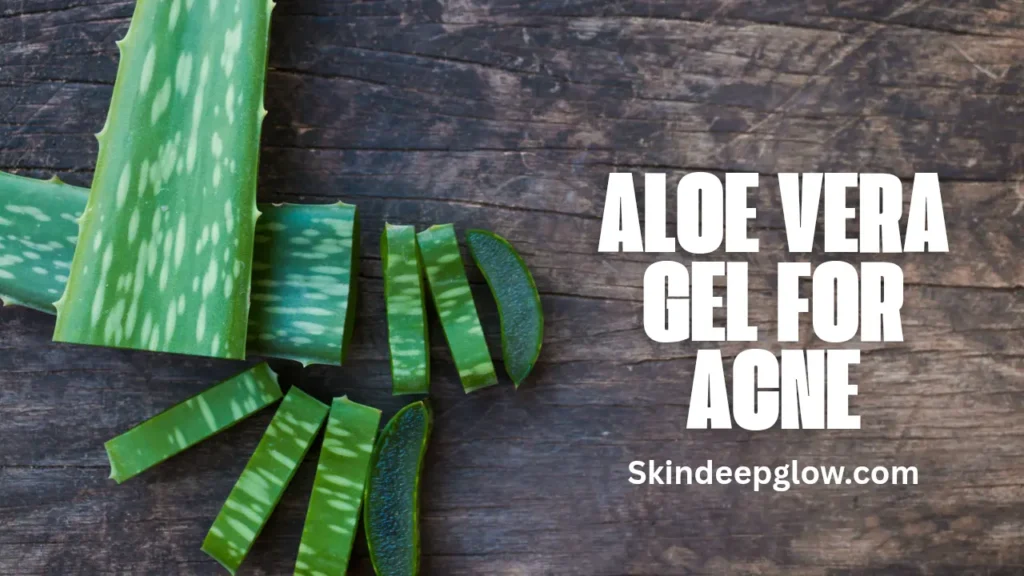
What it is supposed to do: Aloe vera soothes inflammation, promotes healing, and has mild antibacterial properties.
How I used it: I used fresh aloe vera gel — cut from the plant, not the bottled kind — applied directly on pimples and left overnight. I also mixed it with a drop of neem water sometimes for extra antibacterial effect.
What actually happened: Aloe vera is genuinely the gentlest and safest home remedy I tried. It did not cause any irritation, never broke me out, and consistently calmed active pimples. The swelling and redness reduced overnight with regular use. Where it fell short was marks — it did almost nothing for post-pimple dark spots. It heals the active pimple well but does not fade what comes after.
Honest verdict: Best home remedy for calming active pimples and reducing redness. Safe for daily use. Not strong enough for marks or persistent acne on its own.
The science: Aloe contains polysaccharides that stimulate skin cell regeneration and have documented anti-inflammatory effects. It also contains aloesin, which has mild skin-brightening properties — though too weak to meaningfully fade post-inflammatory hyperpigmentation on Indian skin.
5. Ice Cube
What it is supposed to do: Cold temperature constricts blood vessels (vasoconstriction), which reduces swelling, redness, and pain in an active pimple.
How I used it: Wrapped an ice cube in a clean cotton cloth and held it on the pimple for 10 minutes. Then gave it 10 minutes rest. Repeated two to three times.
What actually happened: This is the best emergency fix I have ever found. Within 30 minutes, a swollen, red pimple looks about 50% less angry. It does not treat the pimple — it does not kill bacteria or unclog the pore — but it makes it significantly less visible and less painful in the short term. This became my go-to whenever I had a pimple the morning of something important.
Honest verdict: Use this when you need fast visual improvement. It is not a treatment — it is a coping mechanism. But it is a very effective one and completely harmless when done properly with a cloth barrier (never ice directly on skin).
6. Green Tea Toner
What it is supposed to do: Green tea contains EGCG (epigallocatechin gallate), an antioxidant that reduces sebum production and has mild anti-inflammatory effects.
How I used it: Brewed two green tea bags in hot water, let it cool completely, transferred to a spray bottle, and stored in the fridge. Sprayed on my face after cleansing and before other products.
What actually happened: My skin felt refreshed and slightly less oily on the days I used this. It is a mild but pleasant addition to a routine. However, it did nothing for active pimples on its own — the effect is too subtle for that. Over six weeks, I did notice slightly fewer new pimples forming on my forehead, which has the most oil, but I cannot be sure how much of that was the green tea versus the rest of my routine improving at the same time.
Honest verdict: A good, easy, cheap addition to your routine — not a treatment. Works well as a refreshing toner for oily skin types.
7. Besan + Curd Face Pack
What it is supposed to do: Besan (gram flour) provides gentle physical exfoliation, and curd contains lactic acid which offers mild chemical exfoliation.
How I used it: Two tablespoons besan mixed with enough curd to make a paste, applied on the face, left for 15 minutes, rinsed off.
What actually happened: My skin felt smooth after each use and had a temporary brightening effect. But for acne treatment? Very limited. It did not make existing pimples better. It helped with texture over time and kept blackheads slightly less prominent. I found it useful as a weekly maintenance pack rather than any kind of acne treatment.
Honest verdict: Good for skin smoothness and gentle maintenance. Do not expect it to clear breakouts. Also — if you have dairy sensitivity triggering your acne, curd on the face may not cause the same issues as consuming dairy, but I personally preferred not to use it regularly.
My Honest Verdict on Home Remedies
After two years, here is what I genuinely believe: home remedies improved my skin by about 30 to 40 percent. They reduced oil, calmed inflammation, and kept new pimples slightly at bay. But they did not give me clear skin. The “get rid of pimples in 7 days” claims that every third article makes are simply not true — at least not for persistent acne on oily Indian skin.
Realistically, with consistent home remedy use plus a proper skincare routine, you can expect meaningful improvement in two to three months. Not seven days. Not one month. Two to three months of doing things right, consistently.
What Actually Worked: Science-Backed Ingredients
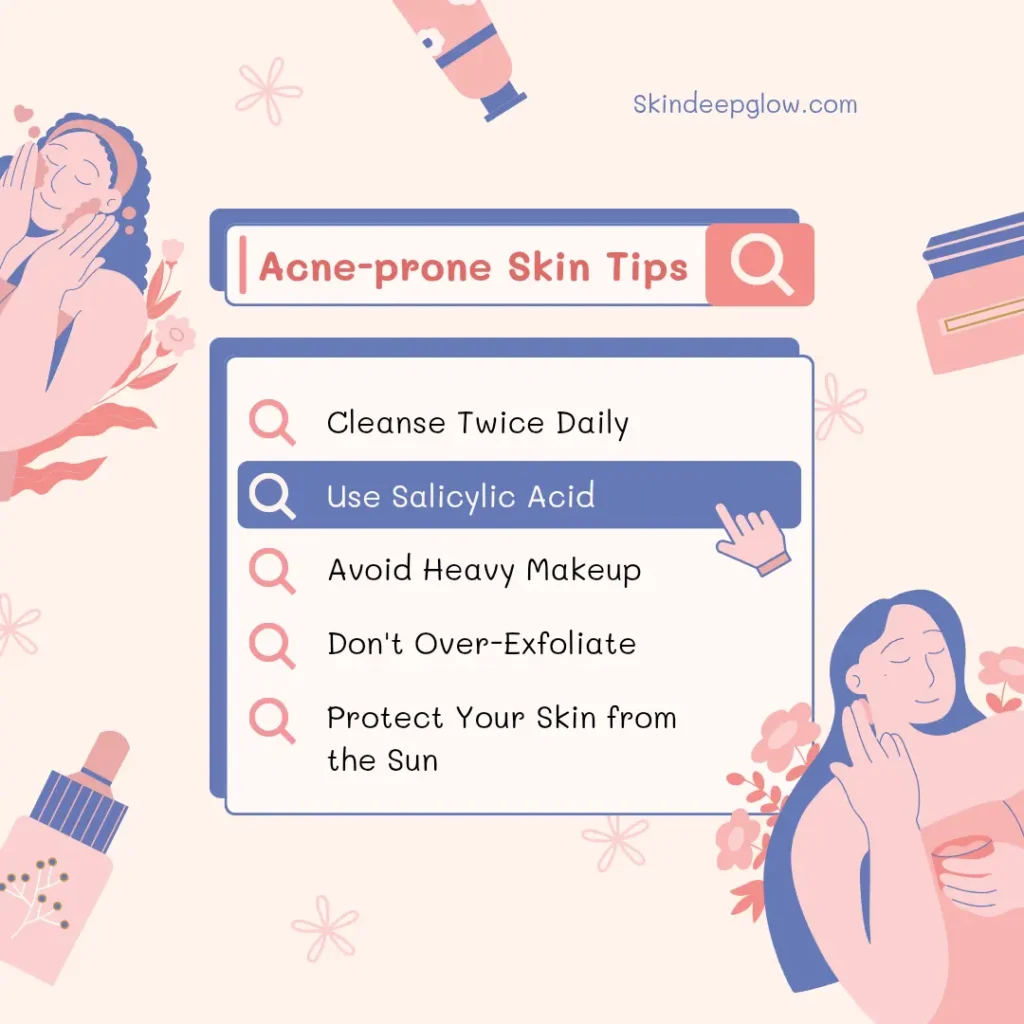
This is the section that changed everything for me. After months of home remedies giving me partial results, I started looking into actual skincare ingredients that have clinical research behind them. What I found was that a few affordable, widely available ingredients — used correctly and consistently — did more for my skin in six weeks than all the home remedies combined had done in six months.
1. Niacinamide — My Holy Grail Ingredient
Niacinamide is a form of vitamin B3. It controls oil production, reduces redness and inflammation, fades post-pimple marks, and strengthens the skin barrier — all at the same time. For oily, acne-prone Indian skin, this is probably the single most useful ingredient you can add to your routine.
I started using a 10% niacinamide serum and kept a daily log. Here is exactly what I noticed:
Days 1 to 3: No visible change. Skin felt the same. I noticed a very mild tingling the first two applications, which settled by Day 3.
Days 4 to 7: My skin texture felt smoother under my fingers. Not dramatic — but genuinely different. Less bumpy on the forehead.
Days 8 to 12: Some of my older post-pimple dark spots looked marginally lighter. The T-zone was noticeably less shiny by midday.
Days 13 to 15: Fewer new pimples forming. The ones that did come up were smaller and healed faster than before. My skin had a baseline glow I had not seen in a long time.
How to use: Morning and evening, applied after cleansing on damp skin, before moisturizer. Start with 5% if you have sensitive skin, work up to 10%.
Affordable Indian options: Minimalist 10% Niacinamide (around ₹349), which is excellent value and genuinely effective.
2. Salicylic Acid (BHA) — The Pore Unclogger
Salicylic acid is a beta-hydroxy acid that is oil-soluble, meaning it can penetrate into the pore itself and dissolve the buildup of dead skin and sebum from the inside. This is what makes it so effective for blackheads and whiteheads specifically.
I started with a 1% salicylic acid toner, three times a week. Week 1 was the purging phase — I actually got a few more small pimples initially, which is normal and means the ingredient is working. By Week 2 and 3, my pores looked visibly cleaner on the nose and chin, and blackhead activity slowed down significantly.
How to use: Evening only. Start two to three times a week and build up to daily only if your skin tolerates it. Do not use the same night as retinol — alternate them.
Important note: If you are just starting out, 1% is sufficient. 2% is for skin that has built up tolerance. Do not jump to the highest concentration thinking it will work faster — it will just irritate your skin.
3. Benzoyl Peroxide — The Bacteria Killer
Benzoyl peroxide works differently from salicylic acid. Instead of unclogging pores, it releases oxygen inside the pore, which kills the C. acnes bacteria. Bacteria cannot survive in an oxygen-rich environment.
I used a 2.5% benzoyl peroxide gel as a spot treatment on active red pimples. Within 24 to 48 hours, the redness and swelling reduced meaningfully. This became my go-to for emergencies — the night before something important, this is what I reached for.
Important things I learned the hard way: It bleaches fabric. My favorite dark pillowcase has ghost-white spots on it from benzoyl peroxide. Always use a white pillowcase and white towels when using this. It also dries the skin significantly, so always follow with a moisturizer.
How to use: Spot treatment only on active pimples. Evening use. White towels and pillowcases are non-negotiable.
4. Tea Tree Oil — The Natural Antibacterial
Tea tree oil has genuine antibacterial action against acne-causing bacteria. The key thing I learned about it is dilution — pure tea tree oil on skin is too strong and will cause irritation and sometimes chemical burns. Always dilute it.
I mixed one part tea tree oil with twelve parts jojoba oil and used it as a spot treatment. It works more slowly than benzoyl peroxide — think one to two weeks rather than one to two days — but it is gentler on the skin and a good option if you prefer natural alternatives.
How to use: Always diluted, never neat. Spot treatment only, once daily, evenings.
5. Retinol — The Game Changer for Long-Term Skin
Retinol is a vitamin A derivative that speeds up skin cell turnover. This means it prevents dead skin cells from building up and clogging pores, reduces the appearance of existing marks, and with consistent use, genuinely transforms the texture and clarity of acne-prone skin.
I started with the lowest concentration I could find — 0.25% — and worked my way up over six months. The first month was rough. My skin purged, got dry, and was more sensitive than usual. Month two, things started to stabilize. By Month three, my skin looked and felt different in a way that nothing else had achieved. Fewer pimples, faster healing, fading marks, better overall texture.
Critical rules for retinol: Evening use only. Pea-sized amount for your entire face. Always follow with moisturizer. SPF the next morning is absolutely non-negotiable — retinol makes your skin significantly more sun-sensitive, and in Indian sun, skipping SPF while on retinol will make marks worse, not better.
Avoid if: Pregnant or breastfeeding. Consult a dermatologist before starting if you have very sensitive or rosacea-prone skin.
6. Vitamin C — For Fading Post-Pimple Marks
Vitamin C does not treat active pimples. But what it does extremely well is fade the dark marks that pimples leave behind — a problem that is particularly significant for Indian skin tones because we are more prone to post-inflammatory hyperpigmentation (PIH).
I used a 10% L-ascorbic acid serum in the mornings. After four weeks, the older dark spots on my cheeks were noticeably lighter. After eight weeks, some of them had faded to the point where they were barely visible without close examination.
How to use: Morning use, after cleansing, before sunscreen. Vitamin C is photosensitive — store it in a dark bottle away from sunlight. If it turns orange or brown, it has oxidized and is no longer effective.
| Ingredient | Best For | Time to See Results | Price Range (India) | My Rating |
|---|---|---|---|---|
| Niacinamide | Oil control + fading marks | 2–3 weeks | ₹300–500 | ⭐⭐⭐⭐⭐ |
| Salicylic Acid | Clogged pores, blackheads | 3–4 weeks | ₹300–600 | ⭐⭐⭐⭐ |
| Benzoyl Peroxide | Active red pimples fast | 1–2 days | ₹150–400 | ⭐⭐⭐⭐ |
| Tea Tree Oil | Natural antibacterial option | 1–2 weeks | ₹200–500 | ⭐⭐⭐ |
| Retinol | Prevention + long-term clarity | 2–3 months | ₹400–1000 | ⭐⭐⭐⭐⭐ |
| Vitamin C | Fading dark marks | 4–6 weeks | ₹500–1500 | ⭐⭐⭐⭐ |
For a detailed comparison of salicylic acid and benzoyl peroxide and which one to choose for your skin, read my post on Salicylic Acid vs Benzoyl Peroxide for Pimples.
My Daily Routine: What I Do Now and Why It Works
Getting the right ingredients is only half the picture. How you use them — in what order, at what time of day, with what else — determines whether they actually work or just sit on your shelf doing nothing.
Here is my complete current routine for oily, acne-prone skin. I built this over two years of trial and error, and it is what finally gave me consistent, clear skin.
Morning Routine (AM)
| Step | Product Type | What to Look For | Why This Step Matters |
|---|---|---|---|
| 1. Cleanse | Gentle foaming cleanser | Sulfate-free, pH balanced | Removes overnight oil without stripping skin |
| 2. Treat | Niacinamide serum | 5–10% concentration | Controls daytime oil, starts fading marks |
| 3. Moisturize | Gel moisturizer | Oil-free, non-comedogenic | Hydrates without adding weight or clogging pores |
| 4. Protect | Sunscreen SPF 30–50 | Matte finish, PA+++ or higher | Prevents marks from darkening, prevents new damage |
Evening Routine (PM)
| Step | Product Type | Notes | Why |
|---|---|---|---|
| 1. Double Cleanse | Micellar water then gel cleanser | If wearing sunscreen or makeup | Fully removes SPF — regular cleanser alone does not |
| 2. Treat (Alternate Nights) | Salicylic acid OR retinol | Never both same night | SA on Mon/Wed/Fri, Retinol on Tue/Thu |
| 3. Spot Treatment | Benzoyl peroxide 2.5% | Active pimples only | Kills bacteria in active breakouts overnight |
| 4. Moisturize | Gel cream or barrier repair cream | Especially important after actives | Repairs skin barrier, reduces dryness from actives |
Weekly Additions
Once a week: Clay mask (multani mitti or a kaolin clay mask) — deep oil control and pore cleaning.
Once a week: Hydrating sheet mask — especially useful after a week of heavy active ingredient use to restore moisture balance.
Once a week: A rest day where I only cleanse and moisturize — no actives at all. This gives my skin barrier time to recover.
Realistic Timeline for This Routine
| Timeframe | What Happens | What I Experienced |
|---|---|---|
| Week 1–2 | Skin adjusts — possible purging | A few more small pimples initially. Do not panic and quit. |
| Week 3–4 | Fewer new pimples, texture improves | First real sign that things were working. |
| Month 2 | Active pimples reduce, marks begin fading | Skin started looking noticeably cleaner. |
| Month 3 | Clear skin phase, occasional pimple | Pimples came but healed in 3–4 days instead of 2 weeks. |
| 6+ Months | Scar fading, stable clear skin | Older marks significantly lighter. Skin unrecognizable from before. |
This timeline is with the full routine described above — ingredients, daily consistency, sunscreen, and diet adjustments. Skipping any one element consistently will extend the timeline.
For a complete step-by-step guide to building a skincare routine for oily acne-prone skin, see my post on Skincare Routine for Oily Acne-Prone Skin.
My Diet Changes: Simple Indian Swaps That Helped
I resisted the diet angle for a long time. I did not want to believe that my beloved chai or paneer was contributing to pimples. But after reading enough research and finally running my own experiment — cutting out dairy completely for six weeks and tracking results — I had to admit the connection was real.
I am not going to tell you to eat raw salads and avoid everything delicious. That is not realistic and not sustainable. What I am sharing are the specific swaps I made that fit naturally into Indian cooking and eating habits.
| What I Used to Eat (Triggered Breakouts) | What I Eat Now (Helped Clear Skin) |
|---|---|
| Dairy milk in 3 cups of chai daily | One chai with less milk, two cups green tea |
| White bread, maida roti, naan | Whole wheat roti, oats, daliya |
| Fried samosa, pakode, chips | Roasted makhana, chana, fox nuts |
| Sugary cold drinks, packaged juices | Nimbu paani, coconut water, plain water |
| Milk chocolate daily | Dark chocolate 70%+ as occasional treat |
| Heavy paneer dishes multiple times a week | Dal, rajma, chana as primary protein sources |
My Rough Daily Meal Pattern
Breakfast: Poha or upma with vegetables, or two eggs with whole wheat toast. Green tea instead of regular chai.
Lunch: Dal, two whole wheat rotis, one sabzi, and a small salad. This is the most normal Indian meal — no dramatic changes needed here.
Snack: Roasted chana or makhana with a glass of nimbu paani. Very filling, zero guilt.
Dinner: Light khichdi, daliya, or simple dal-sabzi before 8 PM. Eating late consistently was making my digestion sluggish, which I believe contributed to breakouts.
Water: Three to four liters daily, mostly RO or filtered water. Not glamorous advice, but genuinely important.
What About Festivals and Cheat Days?
I did not eliminate anything completely. At Diwali, I had sweets — just fewer than before. At parties, I tried to choose grilled over fried when there was an option, but I did not stress out if I ate something I normally avoid. One day of eating freely does not undo weeks of consistency. The next morning I just drank extra water and had a lighter meal.
The pressure of being perfect about diet was itself causing me stress, which was causing cortisol spikes, which was causing pimples. Moderation is genuinely better than obsession here.
Want to know exactly which specific foods trigger breakouts and the science behind why? Read my full post on Foods That Cause Pimples.
Mistakes I Made So You Do Not Have To
Every single mistake in this section is something I personally did. Some of them I did repeatedly before finally connecting the cause and effect. I am including them here because I see these same mistakes everywhere in comment sections and skincare groups, and they genuinely slow down skin improvement.
1. Popping Pimples
I know. Everyone knows they should not do it. And everyone does it anyway. I did it too. The result was a pimple that had been on track to heal in seven days turned into an open wound that took three weeks to heal and left a dark mark that stayed for four months. Squeezing pushes bacteria deeper into the skin, spreads it to surrounding pores, and creates trauma that the skin responds to with scarring.
The better option is a hydrocolloid patch — the flat, clear ones that you stick directly over a pimple. They draw out fluid from the pimple, protect it from being touched, and actually speed up healing. They have become one of my most-used skincare items.
2. Using Coconut Oil on My Face
My grandmother swore by coconut oil for everything. Hair, body, face. And for her skin type, it probably works fine. But coconut oil is one of the most comedogenic oils available — meaning it is extremely prone to blocking pores. I used it as a face moisturizer for two months based on family advice. My pores got significantly worse in that time. The day I stopped, my skin started improving.
For oily and acne-prone skin, if you want to use an oil, look for non-comedogenic options like jojoba oil, squalane, or rosehip oil — these have very low comedogenic ratings and will not block pores.
3. Washing My Face Four or Five Times a Day
When my skin was oily, my logic was simple: wash away the oil. So I was washing my face every time it got shiny — sometimes four or five times a day. The problem is that over-cleansing strips the skin’s natural moisture barrier. Your skin then compensates by producing even more oil. I ended up with skin that was somehow both very dry and very oily at the same time, with more breakouts than before.
Twice a day — morning and evening — is the correct frequency. If your face gets oily during the day, blotting paper is the answer, not another face wash.
4. Toothpaste on Pimples
I tried this because a video told me it works overnight. What it actually did was give me a chemical irritation spot that was red, flaky, and angrier looking than the original pimple. Modern toothpaste contains ingredients — fluoride, SLS, whitening agents — that are formulated for teeth, not skin. The drying effect some people see is from irritation, not healing.
Use a proper spot treatment. Even neem paste or aloe vera is better than toothpaste.
5. Skipping Moisturizer Because My Skin Is Already Oily
This is one of the most common skincare mistakes I see. The logic seems to make sense — oily skin does not need more moisture. But it is wrong. When your skin is dehydrated, it overproduces oil to compensate for the lack of moisture. A lightweight, gel-based, oil-free moisturizer actually helps regulate oil production rather than making it worse. Once I added moisturizer back into my routine consistently, my midday oiliness reduced noticeably.
6. Applying Lemon Juice Directly on Skin
Lemon juice is acidic enough to cause photosensitivity and chemical irritation on skin. I applied it undiluted on some dark marks thinking it would bleach them faster. It did make the skin lighter in those spots — temporarily — but the irritation caused more hyperpigmentation once the sun hit it. My marks actually got darker. It took months to fix the damage from this particular mistake.
If you want vitamin C’s brightening effect on skin, use a properly formulated vitamin C serum with a stable concentration and the right pH — not lemon juice from the kitchen.
7. Switching Products Every Two Weeks
My patience with products was terrible initially. If something did not show a noticeable difference in two weeks, I abandoned it and tried something else. The result was that my skin never got a consistent routine long enough to actually respond. Skincare ingredients — especially salicylic acid, niacinamide, and retinol — need six to eight weeks minimum to show meaningful results. Switching before that window means you never actually give anything a fair chance.
8. Believing Sunscreen Was Optional When Indoors
UVA rays — the ones responsible for hyperpigmentation and skin damage — penetrate through glass windows. Sitting near a window in your home or office without SPF means your skin is getting UV exposure even though you feel like you are indoors. I skipped sunscreen for six weeks during a period when I was mostly working from home, and every existing mark visibly darkened during that time. I will not make that mistake again.
I Waited Too Long — Please Do Not Make My Mistake
I spent six months trying to manage my acne entirely on my own before seeing a dermatologist. I kept telling myself it would get better, that I just needed to find the right combination of products, that seeing a doctor was an overreaction. By the time I finally went, I had active acne plus a significant amount of post-inflammatory hyperpigmentation that would have been much easier to prevent than it was to treat.
A dermatologist is not a last resort. For certain types of acne, it is the first and best step.
Go to a Dermatologist If Any of These Apply
Painful cysts or nodules: These deep, hard pimples do not respond to topical treatments. They need either prescription medication or in-office treatment like a cortisone injection to resolve without scarring.
Acne covering large areas: If you have pimples simultaneously on your face, chest, and back, the root cause is likely systemic — hormonal or otherwise — and needs professional assessment.
Scarring starting to form: If pimples are leaving indented marks, not just dark spots, that is permanent damage that needs early intervention to minimize. Indented scars are far harder to treat than flat hyperpigmentation.
No improvement after three months: If you have been consistently following a proper routine for three months — proper cleansing, the right actives, sunscreen, diet adjustments — and you are still seeing no meaningful change, something more specific is likely going on that needs professional diagnosis.
Emotional impact: If your skin is affecting your ability to socialize, attend events, or simply feel okay in your own body, that is already a significant enough reason to see a doctor. Acne has real mental health consequences that are widely documented, and no one should have to push through those alone when effective treatments exist.
What to Expect From a Dermatologist Visit in India
The first visit typically involves a thorough skin examination and sometimes blood tests if hormonal acne is suspected. The dermatologist will prescribe a treatment plan based on your specific acne type and severity. Common prescriptions include topical retinoids (stronger than OTC retinol), oral antibiotics for a short course, or in the case of hormonal acne, medication to address the underlying hormonal issue.
Follow-up visits are usually monthly to track progress. A good treatment plan from a dermatologist gives results within three to six months for most acne types. The cost in India ranges from around ₹500 to ₹2,000 per consultation depending on the city and clinic, with prescription costs varying based on what is prescribed.
Professional Treatments for Severe Acne
Beyond prescription medication, dermatologists also offer in-clinic procedures for acne and acne marks. Chemical peels using glycolic or salicylic acid help with both active acne and marks. Laser therapy targets excess oil production and reduces bacteria. Professional extractions — done correctly with proper equipment — clear blackheads and whiteheads without the damage that home extraction causes. Cortisone injections are the fastest way to flatten a deep, painful cyst — within 24 to 48 hours in most cases.
For a full breakdown of professional pimple treatments, when to consider them, and what they cost in India, read my post on Professional Pimple Treatments.
My Honest Timeline: What to Actually Expect
Every skincare article I read when I was first trying to fix my skin was full of impossible promises. Clear skin in a week. Pimple-free in ten days. These timelines set me up for disappointment and made me quit routines too early. So here is what I actually experienced, and what most people with oily, acne-prone Indian skin can realistically expect.
| Timeframe | What Actually Happens | My Personal Experience |
|---|---|---|
| Week 1–2 | Skin adjusts. Purging is possible — more small pimples temporarily. | I almost quit here. New small pimples scared me. Staying consistent was the right call. |
| Week 3–4 | Fewer new pimples forming. Skin texture begins improving. | First real reason to feel hopeful. Breakouts smaller, healed faster. |
| Month 2 | Active acne reducing significantly. Old marks still present but not worsening. | Skin looked cleaner in photos. Still marks, but active breakouts slowing. |
| Month 3 | Clear skin most days. Occasional pimple that heals within a week. | The “finally working” moment. Skin manageable and visible marks lighter. |
| Month 4–6 | Mark fading continues. Skin stability improves. Fewer relapses. | Confidence returning. Not perfect, but genuinely clear on most days. |
| 6+ Months | Older marks significantly faded. Skin at its best with maintenance. | Worth every month of patience. This is where the real transformation shows. |
This timeline assumes consistent use of the full routine described in Section 7, combined with the diet adjustments in Section 8 and sunscreen every single day. If you are relying on home remedies alone without a proper routine, double this timeline at minimum.
Frequently Asked Questions
How long does it take to remove a pimple?
A surface pimple — whitehead or pustule — takes three to seven days to resolve with the right spot treatment. A deeper papule or nodule can take two to four weeks. If you do nothing, most pimples resolve on their own in one to two weeks, but often leave marks behind. The right treatment speeds healing and reduces the chances of scarring.
Can I remove pimples overnight?
Not completely — but you can significantly reduce its appearance overnight. Ice plus a benzoyl peroxide spot treatment can reduce swelling and redness by 50% or more by morning. Hydrocolloid patches worn overnight flatten and extract pimples while you sleep. Full healing still takes days, but for an event the next morning, these are the most effective options.
Is it okay to pop a pimple?
No. Popping pushes bacteria deeper into the skin, spreads it to surrounding pores, and creates physical trauma that the skin responds to with scarring and dark marks. If a pimple has a visible whitehead and you absolutely cannot leave it, clean your hands thoroughly, use a clean tissue, and apply very gentle pressure only to the sides — never directly downward. But honestly, a hydrocolloid patch does the same job without the damage.
Which is the best face wash for pimples in India?
For oily acne-prone skin, look for a gentle, pH-balanced, sulfate-free foaming cleanser. Harsh face washes that strip the skin create more oil production, not less. The Cetaphil Gentle Skin Cleanser works well for sensitive skin. For oily skin specifically, a cleanser with salicylic acid in it adds an extra layer of pore-clearing benefit. The key is gentle — not aggressive.
Does drinking water help remove pimples?
Indirectly, yes. Staying well-hydrated helps your skin maintain its natural barrier function and heal faster. Dehydration can also trigger excess oil production as the skin tries to compensate. However, drinking water alone will not clear acne — it is a supporting factor, not a treatment. Aim for three to four liters daily, especially filtered or RO water.
Can pimples leave permanent marks?
The dark flat spots that most pimples leave are called post-inflammatory hyperpigmentation (PIH), and they are not permanent — they fade over three to twelve months with sunscreen and the right brightening ingredients. Indented scars, however, are permanent without professional treatment. Indian skin tones are particularly prone to PIH, which is why sunscreen and early treatment are so important.
Why do I get pimples before my period every month?
In the 10 days before a period, progesterone rises and stimulates the sebaceous glands to produce more oil. This is a normal hormonal cycle, and it explains why so many women get breakouts consistently at this time. The best approach is to anticipate it: increase niacinamide use slightly in the week before, avoid introducing new products, and keep the routine consistent. If hormonal acne is severe and recurring, a dermatologist can assess whether medication would help.
Are expensive skincare products better for pimples?
No — and this is one thing I feel strongly about. The ingredients that work for acne — niacinamide, salicylic acid, benzoyl peroxide — are available in affordable Indian brands at excellent concentrations. What matters is the active ingredient, its concentration, and consistent use. I have seen better results from a routine that cost under ₹1,000 per month than from individual products that cost more than that alone.
Reviewed by: Dr. Suyash Singh Tomar, Dermatologist, Cosmetologist, Dermatosurgeon, Trichologist
MBBS, MD – Dermatology , Venereology & Leprosy
10 Years experience
This article has been reviewed by a certified dermatologist for medical accuracy.

Written by: Shivanshi | Founder, SkinDeepGlow.com
Shivanshi is a skincare blogger based in Lucknow with two years of personal experience managing oily, acne-prone Indian skin. She spent those two years testing home remedies, skincare ingredients, and dermatologist-recommended routines to find what actually works for Indian skin — through Lucknow’s humidity, hard water, and all. She writes honest, research-backed skincare content for real Indian readers, without false promises or generic advice.
What is your biggest pimple struggle right now? Is it the constant breakouts, the marks that stay for months, or not knowing which products to trust? Comment below — I read every single one and do my best to help. 👇