
Picture this. You wake up, look in the mirror, and the same red, itchy patch is sitting right where it was yesterday. You’ve tried an antifungal cream. Then a steroid cream. Then a whole new face wash. Nothing sticks. The rash calms down for a day or two, then comes right back.
If this sounds familiar, here’s something worth considering — the problem might not be your skincare routine at all. It could be a simple allergy to something that touches your skin every day, and you’ve never even suspected it.
Common everyday triggers include:
- Hair dye you use every few weeks
- Artificial jewellery worn daily
- Sindoor or bindi adhesive
- Mehendi applied for a wedding or festival
Most people never make this connection because allergic reactions don’t show up right away. They build up slowly, sometimes over days or weeks, which makes the real cause easy to miss.
This is exactly where patch testing helps. It’s not guesswork — it’s a proper diagnostic method dermatologists use to identify the exact ingredient your skin is reacting to, so you stop experimenting blindly with product after product.
Read more: Morning vs Night Skincare Routine for Sensitive and Acne-Prone Skin (2026)
What Is Patch Testing? (Patch Test for Skin Allergy)
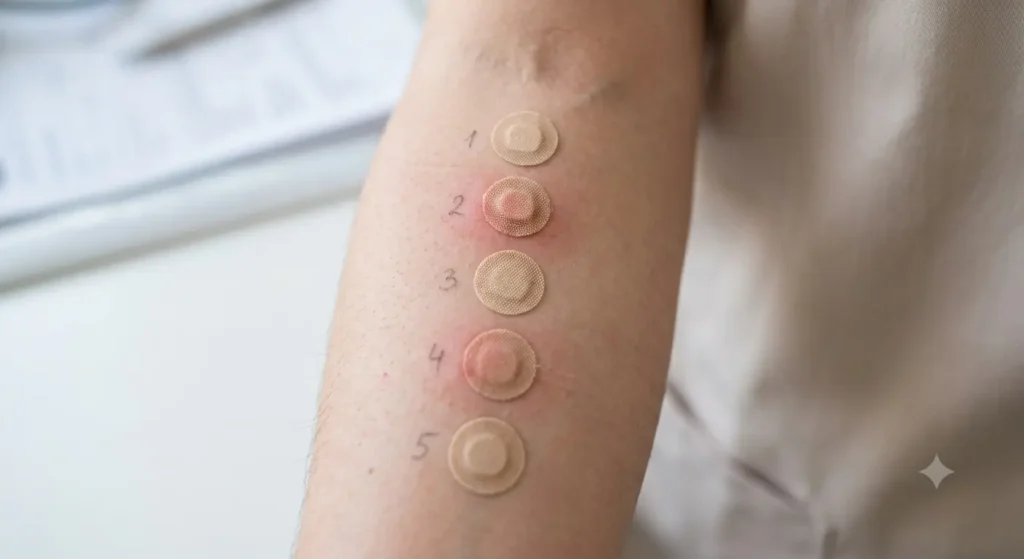
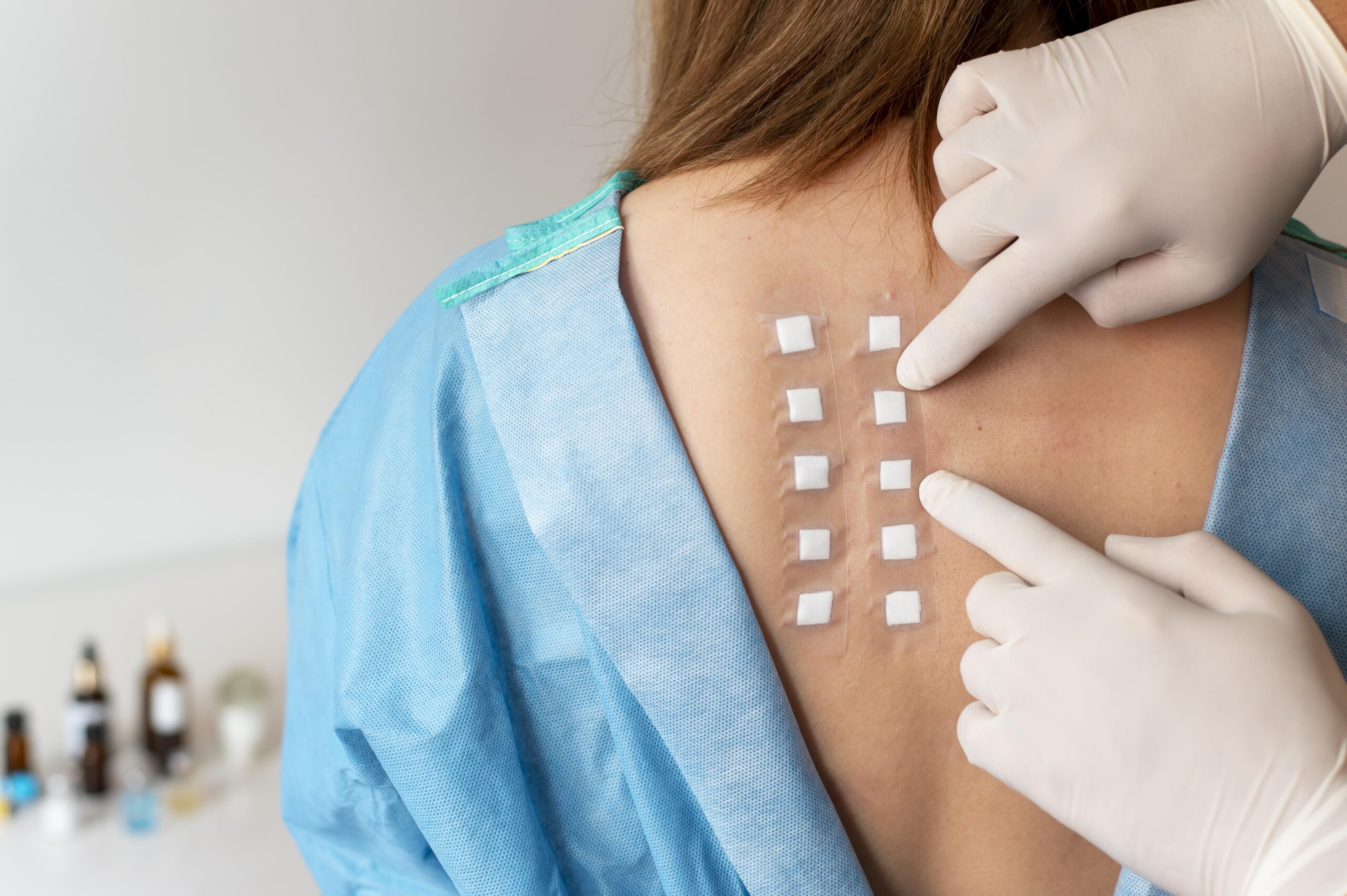
In simple terms, patch testing involves placing small amounts of common allergens — things like metals, fragrances, or hair dye chemicals — inside tiny adhesive patches on your back. These patches stay on your skin for a set number of days. Afterward, a dermatologist checks each spot to see whether your skin reacted to any of them. Wherever a reaction shows up, that’s your answer.
This isn’t a new or experimental idea. Dermatologists have relied on this method for decades to diagnose a condition called allergic contact dermatitis — skin irritation caused by direct contact with something you’re allergic to.
Here’s the part that makes patch testing different from most allergy tests: timing. A bee sting causes swelling within minutes. Patch testing doesn’t work that way. It relies on what’s called a delayed hypersensitivity reaction. Your skin’s immune system needs time to notice the allergen, let it penetrate slightly, and then respond. That’s why a genuine reaction usually takes 48 to 96 hours to fully appear — sometimes even longer.
This is also why the test can’t be rushed. Checking results too early means missing allergies that simply haven’t had enough time to show up yet.
Patch Test vs. Skin Prick Test — They’re Not the Same Thing
A lot of people mix these two up, and it’s an easy mistake to make. But they check for completely different things:
- Patch test — checks whether your skin reacts to something it touches, like metal, fragrance, or preservatives in creams. Applied on the back, read over several days.
- Skin prick test — checks whether you react to something you eat or breathe in, like dust, pollen, or certain foods. Done on the forearm, with results in under 30 minutes.
If your issue is a stubborn, recurring rash — not sneezing, not breathing trouble, not a reaction right after eating — a patch test is what you need, not a prick test or a random blood allergy panel.
One more thing worth remembering: a patch test cannot detect food allergies. If that’s your concern, you’ll need a completely different kind of evaluation.
Read more: How to Achieve Glass Skin Glow Naturally in 2026: Complete Guide for Sensitive & Acne-Prone Skin
Signs You Might Actually Need a Patch Test

Not every small rash needs a patch test. But certain situations are worth taking seriously, especially when a rash keeps returning or won’t respond to regular treatment:
- Reaction after mehendi or “black henna” — a chemical called PPD is often added to darken henna designs faster. Itching, blistering, or dark raised marks afterward are a classic warning sign.
- Rash from bindis, sindoor, or artificial jewellery — nickel allergy is one of the most common contact allergies, and it usually shows up exactly where jewellery or adhesive touches the skin.
- Reaction after hair colouring or salon treatments — dyes, straightening chemicals, and certain shampoos are frequent culprits.
- Rash that gets worse with certain skincare products — fragrance and preservatives in creams, sunscreens, and soaps are common triggers.
- Ongoing hand or facial dermatitis that won’t improve — especially after a dermatologist has already ruled out fungal infection or a simple eczema flare.
It’s also worth understanding that in a hot, humid climate, a lot of skin irritation comes from sweat, friction, or harsh soap — not a true allergy at all. This is called irritant dermatitis, and it can look almost identical to an allergic reaction. Patch testing is exactly what tells the two apart.
Where Your Rash Shows Up Matters Too
Even though the test itself is done on the back, dermatologists pay close attention to where your rash actually appears — because location gives clues about what to test for.
- Eyelids — often linked to nail polish (transferred by touch), shampoo runoff, or hand cream residue, since eyelid skin is extremely thin and reacts fast.
- Cheeks, forehead, or chin — usually connected to makeup, moisturisers, or jewellery resting near the face.
- Sides of the neck — often linked to perfume, nail cosmetics, or necklace metal.
- Hands — commonly caused by hair products, public washroom soap, moisturisers, or gloves.
- Around the lips — often traced back to toothpaste, lip balm ingredients, or certain cosmetics.
These are only clues, not final answers. That’s exactly why the actual test still happens on the back — location just helps the dermatologist decide which allergens to prioritise.
Read more: Skincare Routine for Oily Acne Prone Skin India: What Actually Worked for Me (2026)
Getting Ready for Your Patch Test
A few simple steps before your appointment can make a real difference to how accurate your results turn out:
- Stop oral or topical steroids about 2–3 weeks before testing, if your doctor advises it, since steroids can suppress a genuine reaction and cause a false negative
- Avoid heavy sun exposure on your back for 2–3 weeks before the test
- Don’t apply any lotion, oil, or skincare product to your back on test day
- Wear loose clothing on the day of application so patches don’t get rubbed off
- Bring along your everyday cosmetics, shampoo, lotions, jewellery, or footwear — your dermatologist may want to test these directly
Skipping even one of these steps can affect your results, so it’s worth confirming this checklist with your clinic before your appointment.
Read more: Salicylic Acid vs Benzoyl Peroxide for Pimples: Which One Is Actually Better for Indian Skin?
How the Procedure Actually Works, Step by Step
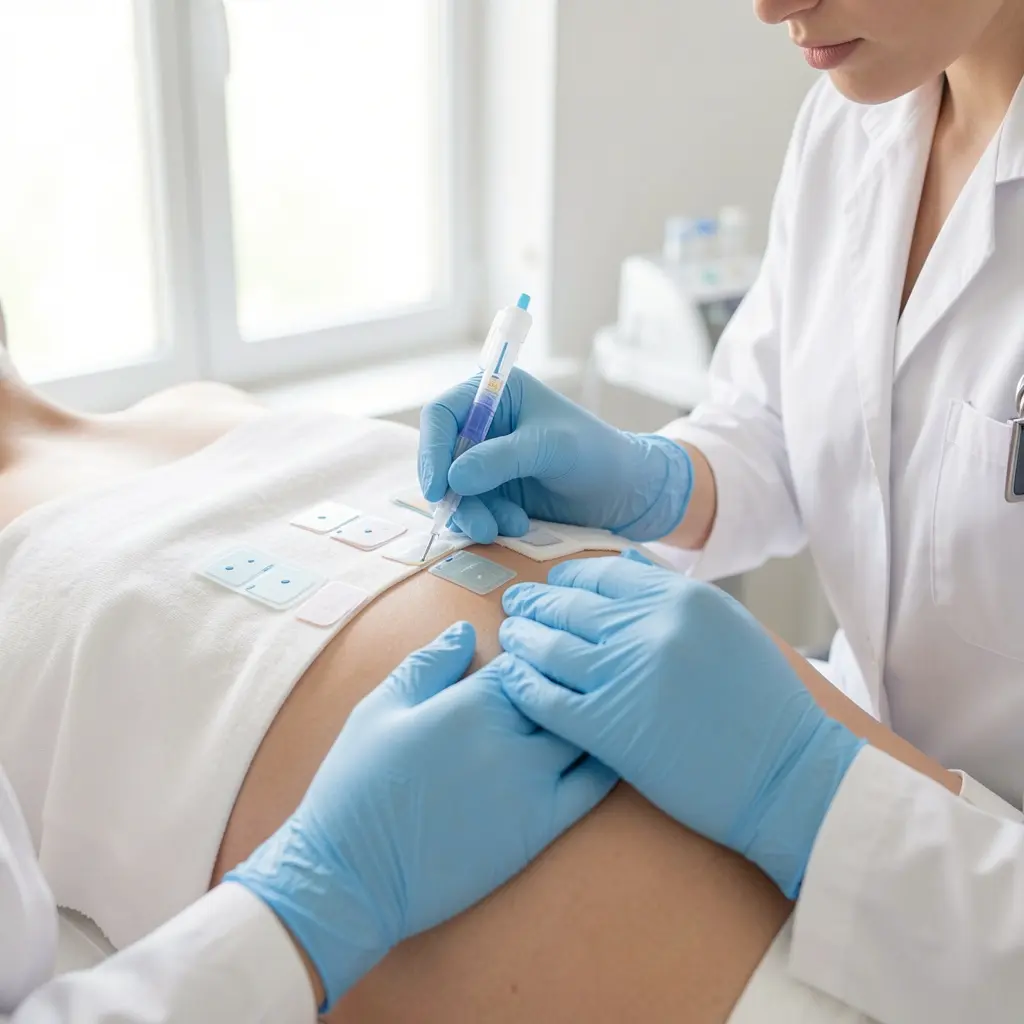
Patch testing isn’t a single visit. It plays out over roughly a week, across three appointments.
| Visit | What Happens |
|---|---|
| Day 1 | Small allergen patches — anywhere from 20 to 80+, depending on the panel — are taped to your back in rows. They must stay dry and undisturbed. |
| Day 2–3 | Patches stay in place. No direct water on the area, no heavy sweating, and no sun exposure. |
| Day 3 (~48 hrs) | Patches are removed. A short waiting period lets tape-related redness settle before the first reading is taken. |
| Day 5–7 (~1 week) | Final reading. Some genuine allergies only become visible at this stage, which makes this appointment just as important as the first. |
If a clinic offers to complete patch testing in a single visit, that’s a sign the full protocol isn’t being followed — all three appointments matter for an accurate result.
How Patch Test Results Are Actually Read
This is one of the most searched questions about patch testing, and the answer is more detailed than most people expect. Dermatologists don’t just note “reaction” or “no reaction.” Each allergen spot is graded on a standard scale:
- Negative (–) — no reaction at all
- Doubtful (?) — faint, unclear redness
- Weak positive (+) — mild redness with slight thickening, no blisters
- Strong positive (++) — clear redness, swelling, and small blisters
- Extreme positive (+++) — intense redness with spreading blisters
- Irritant reaction (IR) — looks similar to an allergy but is caused by skin irritation, not a true allergic response
There’s also a common question worth clearing up here — patients sometimes notice a black mark on their back after testing and assume it’s a severe reaction. In most cases, it’s simply the marker pen dermatologists use to outline each patch position for accurate reading. A genuine allergic reaction shows up as raised, red, sometimes blistered skin — not a black mark.
Is a Patch Test 100% Accurate?
No medical test is completely perfect, and patch testing is no exception. It’s considered the gold standard for diagnosing contact allergies, but a few limitations are worth knowing:
- False positives can happen — usually when an allergen concentration is strong enough to irritate the skin without a true allergy being present
- False negatives can happen too — often linked to recent steroid use, an allergen missing from the test panel, or very low recent exposure to the trigger
- A fully negative result is actually common — roughly one in four people test negative across the standard panel, which usually means the cause isn’t a classic contact allergen and may need a more customised panel
This is exactly why dermatologists never rely on a single reading alone. Results are always considered alongside your history, your daily products, and where your rash actually appears — because the test is one piece of the puzzle, not the whole picture.
Read more: Pilgrim vs Minimalist: Why 73% of Indians Regret Buying the Wrong One
What If Your Patch Test Comes Back Positive?
Most people assume a positive result means “found it, now just avoid this ingredient.” But it’s a little more layered than that. A positive reaction doesn’t always mean that specific allergen is behind your current rash. Dermatologists sort positive results into different categories to give you advice that’s actually useful, not just a name on a report.
- Current relevance — the allergen is very likely explaining the rash you came in with. This is the easiest case to act on.
- Past relevance — it may explain a reaction from months or years ago, but isn’t necessarily linked to what’s happening now.
- Future relevance — you’re not reacting to it in daily life right now, but your skin is sensitive to it, so it’s smart to avoid it going forward.
- Cross-reaction — being allergic to one ingredient can sometimes mean reacting to a chemically similar one too, even if you’ve never used it directly. For example, a hair dye allergy can sometimes overlap with certain fabric dyes or preservatives.
This is why the consultation after your results matters just as much as the test itself. Your dermatologist connects the result to your lifestyle, occupation, and daily products to figure out what it actually means for you.
Read more: Ultimate Guide to Natural Skincare Routine for Sensitive & Acne-Prone Skin in 2026
What Allergens Get Tested?
Patch testing follows a structured approach — it starts broad and gets more specific if needed.
- Standard baseline series — the most well-known is the North American 80 series, covering around 80 common allergens found in cosmetics, jewellery, fragrances, and everyday chemicals.
- Indian Standard Series — a slightly smaller panel many Indian dermatologists use, built around allergens more relevant to local products, climate, and common exposures like henna and traditional jewellery.
- Occupation-based panels — if the standard series doesn’t explain your rash, testing gets tailored further based on your daily exposures.
A beautician handling hair dye all day will be tested very differently from a homemaker managing detergents, or a factory worker exposed to industrial chemicals. This is what makes patch testing genuinely personal, rather than a one-size-fits-all test.
Why Is the Test Done on Your Back Even If Your Rash Is on Your Face?
This confuses a lot of people, and it’s a fair question. If the problem is on your face, shouldn’t the test be there too?
The answer comes down to practicality. The back offers a large, flat surface where dozens of allergens can be applied at once and monitored accurately. There simply isn’t enough space on the face or hands to fit 20 to 80 individual patches, and that skin is far more sensitive, which would make testing harder to manage.
Here’s the key point: your skin’s immune system responds the same way to a given allergen no matter which part of your body it touches. So a reaction on your back reliably predicts how your skin would react anywhere else — the face may simply be more sensitive and react a little faster or stronger.
Rash location is still useful, though — as covered earlier, it helps your dermatologist decide which allergens deserve priority, even though the test itself always happens on the back.
What Does Patch Testing Cost in India?
Pricing depends on a few factors — how many allergens are in your panel, whether you visit a standalone clinic or a hospital chain, and which city you’re in. Metro cities tend to be pricier than smaller towns, and larger panels naturally cost more than basic ones.
| Panel Type | What It Covers |
|---|---|
| Basic/Screening Panel | 20–30 common allergens (Indian Standard Series) |
| Standard Panel | North American 80 series or similar, most commonly recommended |
| Extended/Customised Panel | Occupation-specific or added allergens based on lifestyle |
Since pricing varies quite a bit between clinics and cities, it’s best to confirm current costs directly with a dermatology clinic near you before booking. It’s also worth remembering that an experienced dermatologist and proper follow-up readings matter more than finding the cheapest option — a missed reading can mean a missed diagnosis.
Side Effects and Precautions Worth Knowing

Patch testing is a well-established, safe procedure, but a few things are worth understanding so you know what’s normal and what isn’t.
- Mild itching or redness during testing is expected and not a cause for concern
- Temporary lighter or darker patches of skin can appear where patches were placed, and usually fade on their own over time
- Psoriasis flare-ups can occasionally be triggered at the test site, so mention this condition to your dermatologist beforehand
- Avoid hydrocortisone cream on the area during testing, as it can suppress reactions and affect your results
- Keep the area dry while bathing throughout the testing period, since wet patches can shift or wash away
- Serious complications like infection are rare, but contact your dermatologist right away if something feels unusual
When You Should See a Dermatologist Right Away
Most reactions from patch testing settle on their own once the patches come off. But certain signs shouldn’t be ignored:
- Painful blisters or fluid oozing from the test site
- The area feels noticeably hot to touch
- The rash spreads well beyond where the patches were placed
- No improvement at all after several days
If something feels off, trust that instinct. Reaching out to your dermatologist early is always better than waiting it out.
What Happens After You Know Your Allergen
Getting a result isn’t the finish line — it’s actually where the useful part begins. Once your dermatologist identifies your allergen, here’s what typically comes next:
- You’ll get the exact name of the allergen, plus any alternate names brands use for it on ingredient labels
- You’ll learn how to read INCI (ingredient) lists on skincare and haircare products sold in India
- You may get a list of products or brands considered safer for your specific allergy
And if your result comes back completely negative, that’s useful information too. It usually means the cause isn’t a classic contact allergen, which shifts the focus toward irritant triggers or an underlying skin condition instead.
Frequently Asked Questions
Does a patch test hurt?
No. Applying the patches is completely painless — it feels like wearing a sticker. Some mild itching or a slight prickling sensation is common closer to the reading days, but it isn’t sharp pain.
Is patch testing safe during pregnancy?
It’s generally considered low-risk, but most dermatologists avoid it unless necessary, since treating a strong reaction is more limited during pregnancy. Always check with your dermatologist and gynaecologist first.
How accurate are patch test results?
Patch testing is the gold standard for diagnosing contact allergies, but it isn’t flawless. False positives and false negatives can occur, which is why multiple readings and your full history matter alongside the test itself.
Can a patch test detect food allergies?
No. It only checks substances that touch your skin. Food, pollen, or inhaled allergies need a different test, usually a skin prick test done by an allergist.
Final Thoughts
If you’ve spent months cycling through creams and home remedies for a rash that just won’t quit, it might be time to stop guessing. Patch testing gives you something trial and error never can — clarity. It tells you exactly what’s behind the reaction, whether that’s your everyday jewellery, your hair dye, or a sunscreen you’ve used for years without suspecting a thing.
Yes, it takes a bit of patience — a full week, three appointments — but knowing exactly what to avoid is worth far more than months of blind experimenting.
And even a negative result isn’t wasted effort. It rules out one possibility and points you toward the next, instead of leaving you stuck guessing in the dark.
Disclaimer: This post is for general informational purposes only and is not a substitute for professional medical advice. Please consult a qualified dermatologist before undergoing patch testing or making changes to your skincare routine, especially if you have a persistent or worsening rash.