
My skin is oily on top of being sensitive, and for the longest time that combination confused me. I kept assuming “sensitive” meant dry, delicate, papery skin — and since mine was oily, I ignored every warning sign it kept giving me. Random redness after a new serum. A weird stinging after just washing my face with tap water. Flare-ups that showed up with no obvious cause. I brushed all of it off as “oily skin drama” for years.
It wasn’t. It was reactivity — and reactivity has nothing to do with how much oil your skin makes. This post is only about that: what actually calms sensitive skin down, keeps it stable, and stops the random flare-ups, regardless of your oil level.
⚠️ Before anything else — patch test every single new product, not just the home remedies. I mention this again later because it genuinely matters that much: apply anything new to a small patch of skin near your jaw or behind your ear and wait 24–48 hours before putting it on your whole face. This applies to sunscreens, serums, cleansers — everything, not only the DIY stuff.
How Do You Actually Know If Your Skin Is Sensitive?
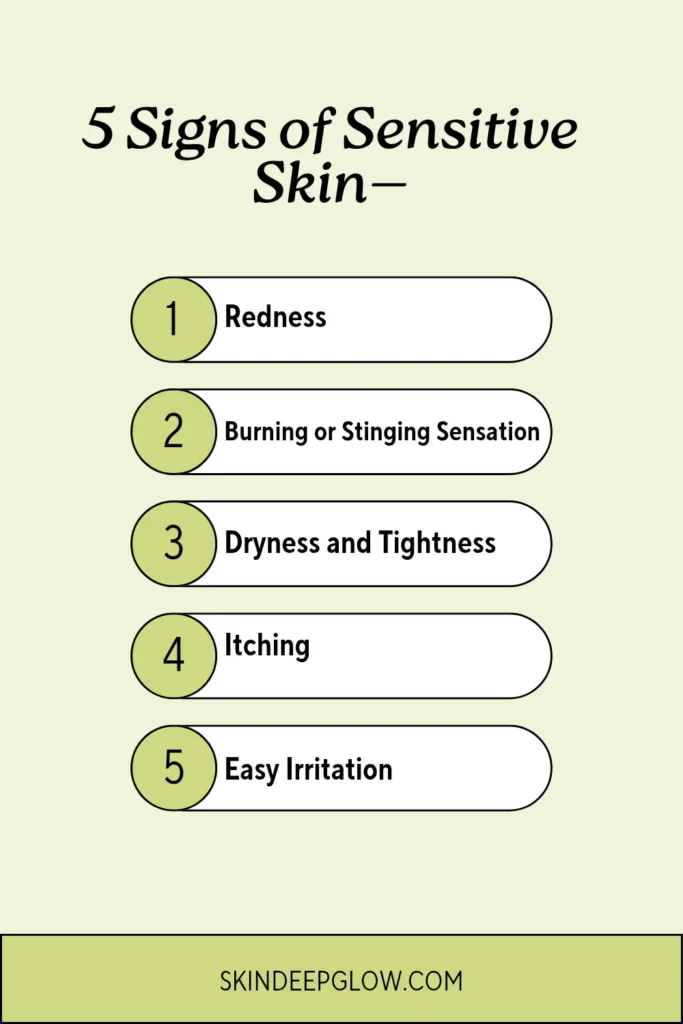
People throw the word “sensitive” around a lot, so here’s what I actually look for:
- Stinging or burning within seconds of trying something new, even products labelled “mild”
- Visible redness right after washing your face, especially with hard tap water
- Reacting to sun, wind, or sudden weather changes, not just to products
- Flare-ups that seem to come out of nowhere
- Getting irritated by fragrance even in things marketed as gentle
If most of this sounds like your skin, keep reading — this routine was built around exactly that.
Read more: Ultimate Guide to Natural Skincare Routine for Sensitive & Acne-Prone Skin in 2026
☀️ Morning Routine
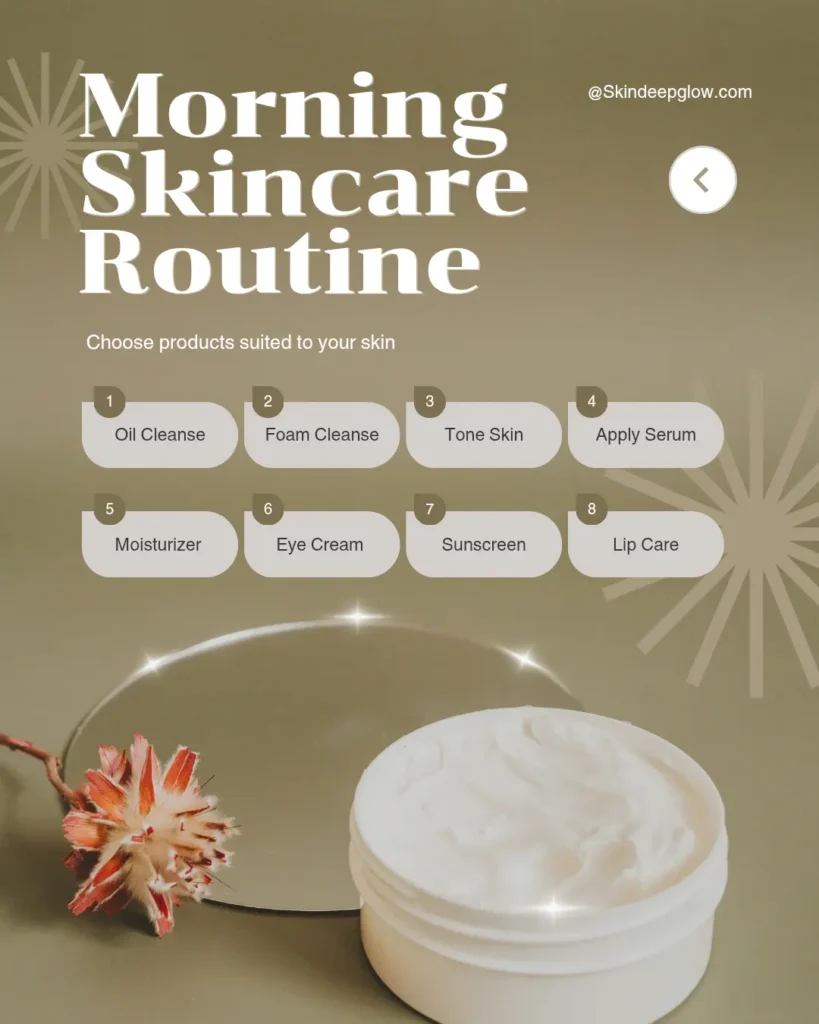
The morning goal is simple: calm the skin down from overnight, then protect it before you step outside. I used to think more steps meant better results, but sensitive skin actually responds best to a short, deliberate routine — not twenty products stacked one on top of the other.
- Rinse, don’t scrub. Overnight skin usually isn’t dirty, it’s just resting. Plain water or a cream-based cleanser is enough — Cetaphil Gentle Skin Cleanser is the classic, no-fragrance option most dermatologists still recommend. If you want something a bit more local, Minimalist Oat & Ceramide Cleanser does the job without disturbing your barrier. Whatever you use, never bar soap on your face — it’s drying and tends to leave a film that reactive skin doesn’t handle well.
- Tone — but only if it’s alcohol-free. This step is optional, and honestly, older-style toners did more harm than good. The alcohol-based astringents that were popular for years strip away oil along with the good bacteria living on your skin’s surface, and stripping oil this aggressively often backfires — skin senses the loss and just produces more oil to compensate. A gentle, alcohol-free toner instead helps bring your skin’s pH back to a slightly acidic level after cleansing, which is where healthy skin sits best. If you use one, check the ingredient list first and skip anything with alcohol high up on it.
- A centella (cica) serum, before anything heavier. This one ingredient made the biggest difference for me personally — it takes the “hot” feeling out of my skin after cleansing. Minimalist Centella Asiatica 3% Serum is the easiest starting point. Dr. Sheth’s Centella & Green Tea Serum is a good mid-tier option if you want something with a bit more going on.
- A vitamin C + E antioxidant serum — only once your skin tolerates it. Antioxidants help protect skin against everyday environmental damage, and combining vitamin C with vitamin E tends to work better than vitamin C on its own. That said, vitamin C can sting on genuinely reactive skin, so patch test this one properly before committing, and start with a lower concentration rather than jumping straight to a strong formula. Buy it in an amber or opaque bottle — vitamin C oxidises quickly once light gets to it, and a serum that’s turned brown or dull yellow has already lost most of its effect.
- A ceramide moisturizer — non-negotiable, even on oily days. Sensitive skin almost always has a weaker barrier, and ceramides are what that barrier is actually made of. Minimalist Ceramide Moisturizer is lightweight enough for oily-sensitive combos.
- An eye cream, if the under-eye area feels dry or tight. This is easy to skip, but the skin around the eyes is thinner and often reacts differently from the rest of your face. Look for something moisturizing rather than one built around strong anti-ageing actives, and patch test it separately since eye area skin can be more reactive than your cheeks or forehead.
- Sunscreen — mineral where possible, but a well-tolerated chemical one is fine too. Zinc oxide or titanium dioxide based sunscreens are gentle and well tolerated on reactive skin, though they can leave a slight white cast — usually a fair trade-off for sensitive skin. If you want something that blends in more for daily wear under makeup, look for avobenzone-based formulas instead, and steer clear of oxybenzone or octinoxate, which some people prefer to avoid altogether. Re’equil Ultra Matte Zinc Oxide Sunscreen is a solid Indian option that’s actually easy to find online and in stores.
Rea more: How to Remove Pimples: Complete Guide for Indian Skin (2026)
🌙 Night Routine
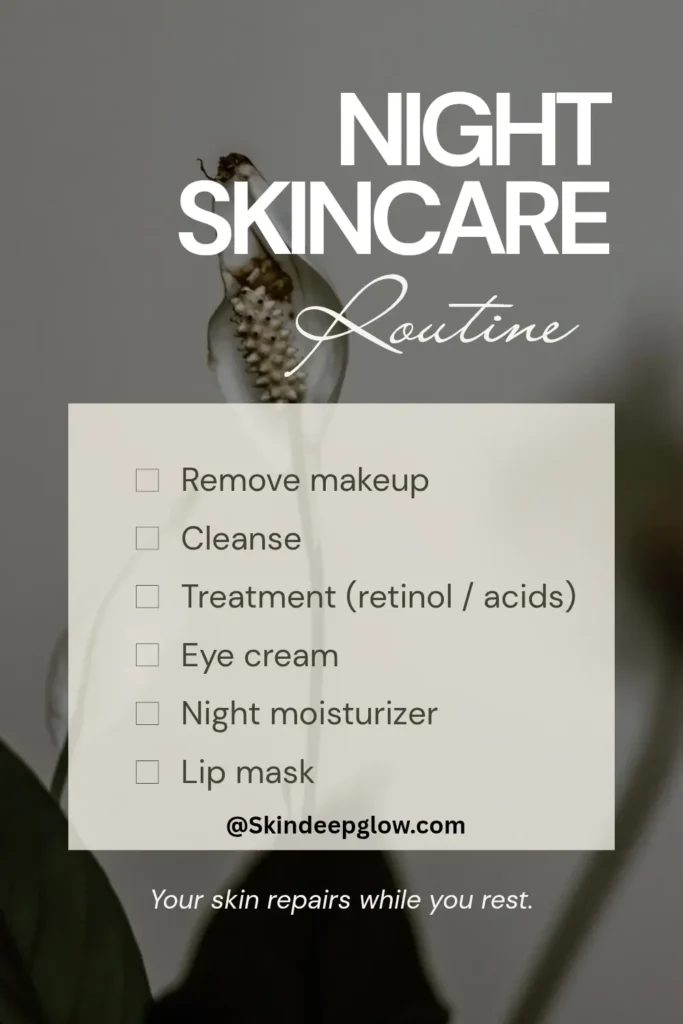
Night is repair time. The mistake most people make here is treating it like a second chance to “fix” their skin with actives — for sensitive skin, that usually backfires.
- Micellar water first, if you wore sunscreen or makeup. Skip the foaming cleanser at night — it’s too much for reactive skin. Bioderma Sensibio H2O is genuinely the benchmark here, though it is an imported French product, so expect a higher price and check that you’re buying from an authorized seller (Nykaa, Purplle, or the brand’s official listing) rather than a random third-party import. Simple Micellar Cleansing Water is the easy, budget, easily-available-everywhere alternative.
- A panthenol or oat-based repair serum. This is where actual healing happens overnight. Minimalist Sepicalm 3% Oat Serum is affordable and does exactly this job.
- A slightly richer ceramide night cream. Even oily-sensitive skin benefits from a touch more richness at night than in the morning. Dr. Sheth’s Cica Repair Cream is a good middle-ground option, calming redness while you sleep.
A quick honesty note on some of the imported names I’ve mentioned (like Bioderma or La Roche-Posay, if you come across them elsewhere): they’re genuinely good, but they’re not always in stock everywhere in India, and pricing can shift depending on where you buy from. If budget or availability is tight, the Indian brands above (Minimalist, Dr. Sheth’s, Re’equil) are formulated well enough that you’re not missing out by sticking with them.
Read more: Salicylic Acid vs Benzoyl Peroxide for Pimples: Which One Is Actually Better for Indian Skin?
🌿 Calming Home Remedies That Actually Work
I’ve thrown out most “home remedy” skincare advice because so much of it is either useless or actively damaging for reactive skin. A few things genuinely helped, though, when I used them the right way:
- Cooled green tea, used as a compress. Brew it, let it cool completely, soak a soft cloth, and press it gently on flushed areas for about 5 minutes. It’s calming enough that I’ve used it even during an active flare-up.
- Plain oatmeal paste. Cook plain oats, let them cool fully, apply as a thin mask for 10 minutes. One of the only “masks” I trust that soothes instead of drying skin out further.
- Fresh aloe vera gel — but patch test it first. A thin layer at night, 2–3 times a week, not daily. Some sensitive skin types genuinely do react to raw aloe, so don’t skip the patch test on this one either.
- A cold milk compress, occasionally. Soak a cotton pad in cold milk, press gently on redness for a few minutes, then rinse off. It’s an old remedy, but it works for occasional flushing — just don’t rely on it daily as a moisturizer substitute.
❌ What I Tried and Ruled Out
- Lemon juice — too acidic, disrupted my skin’s pH and left me with patchy irritation instead of any brightness
- Toothpaste on flare-ups — the menthol and whitening agents genuinely burned, not a real fix
- Sugar or coffee scrubs — too rough for a reactive barrier; caused micro-damage that made things worse
- Baking soda masks — too alkaline, threw off my skin’s natural balance and caused stinging almost immediately
💡 Tips That Actually Matter
- “Fragrance-free” and “unscented” are not the same thing. Unscented products can still hide masking fragrance chemicals — look specifically for “fragrance-free” on the label.
- Pat dry, never rub. Friction from a towel alone can trigger redness on reactive skin, no product involved.
- Space out new products by 7–10 days, not every few days. Sensitive skin reactions are often delayed, so introducing things too fast makes it nearly impossible to tell what actually caused a flare-up.
- Keep a small “safe list” of 3–4 products you know your skin tolerates. During a flare-up, go back to only these instead of experimenting further.
- Skip hot water on your face entirely. Even lukewarm can be too much for some reactive skin — cool water is generally better tolerated.
- Watch for “natural” products with essential oils. Natural doesn’t mean non-irritating — essential oils are one of the most common hidden triggers in “gentle” marketed products.
Read more: Pilgrim vs Minimalist: Why 73% of Indians Regret Buying the Wrong One
🚫 Mistakes That Make Sensitivity Worse
Over 70% of people describe their own skin as “sensitive” in some way, so if you’re nodding along to this post, you’re genuinely not the exception. Dermatologists who deal with reactive skin all day tend to flag the same handful of habits again and again — and I’ve made most of them myself before I actually understood why they were a problem.
1. Skipping the patch test — or doing it wrong
I used to think dabbing a new serum on my jaw for two minutes counted as “testing” it. It doesn’t. The proper version is called a ROAT (repeat open application test) — you apply a thin layer of the new leave-on product to the same small spot on your inner arm, once a day, for a full 7 days. For wash-off products like cleansers or shampoo, one minute of contact before rinsing is enough to test.
The reason a single quick test fails is that a lot of reactions aren’t immediate. Delayed hypersensitivity can take 4 to 6 days to show up, so if you only wait a day before slapping something on your whole face, you’ve genuinely learned nothing. Watch that patch for a full week — any redness, bumpiness, or swelling means the product’s a no.
2. Not moisturizing every single day
This one surprised me. I used to skip moisturizer on days my skin didn’t feel dry, assuming I was saving it from unnecessary product. Actually the opposite happens — a weaker, under-moisturized barrier lets allergens and irritants get in more easily, which over time can make your skin more sensitive, not less. Moisturizing daily, even when skin feels fine, is what keeps that barrier strong enough to shrug things off.
3. Switching products too often
If something is already working, leave it alone. Every new product is a fresh chance for irritation, and constantly rotating through new launches means your skin never gets the stability it needs to actually calm down.
4. Introducing several new products at the same time
Space new products out by at least a week each. I learned this one the hard way — I once started a new cleanser, serum, and sunscreen in the same week, broke out in redness, and had absolutely no way of knowing which one did it, or whether it was the combination of all three reacting badly together.
5. Overcomplicating your routine
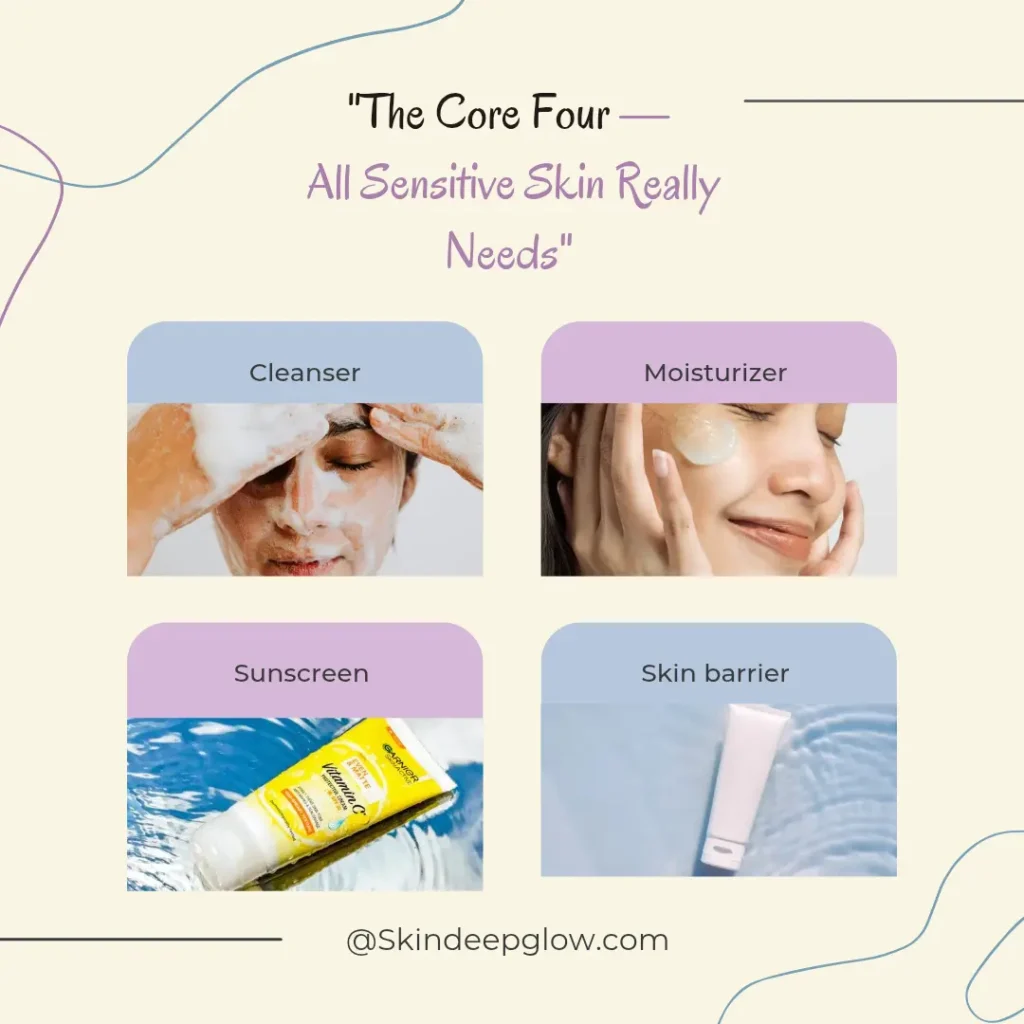
Sensitive skin genuinely does better with fewer products, not more. Dermatologists often talk about a “core four”: a gentle cleanser, a moisturizer, a sunscreen, and a barrier ointment or occlusive for when skin needs extra sealing. Build everything else around those four, slowly, one at a time — not the other way around.
6. Being too aggressive with actives and exfoliation
Retinoids and exfoliants — chemical or physical — speed up cell turnover, which is exactly why they’re both useful and risky. Overusing them breaks down the barrier faster than it can repair, and that shows up as redness, peeling, and irritation. And it’s not just serums — rough towel-drying, harsh wipes, and vigorous rubbing all count as a form of physical exfoliation too, even though most people don’t think of it that way.
7. Trusting “natural” or “clean” labels blindly
Natural doesn’t automatically mean gentle. Poison ivy is natural too. Essential oils and plant-derived fragrances are common culprits precisely because people assume “natural” means safe and stop reading the rest of the ingredient list.
8. Taking very hot, steamy showers
I know how good a scalding shower feels, especially in winter, but that heat strips your skin barrier fast and leaves sensitive skin more reactive afterward. Lukewarm is the boring but correct choice here.
9. Assuming an old, “safe” product could never be the culprit
If you suddenly develop a new sensitivity, don’t rule out something you’ve used for months or years without issue. Brands quietly reformulate — a preservative or fragrance component can change without much fanfare — and skin can also develop a new allergy to something it tolerated fine before. Neither of these is common, but both happen more than people expect.
Read more: Aloe Vera Gel for Face: Benefits, Uses, How to Apply for Indian Skin (2026 Guide).
🔄 If Your Skin Has Already Reacted — The 2-Week Reset
When my skin flares up badly, this is what actually gets it back on track, and it usually takes about two weeks for the barrier to visibly improve:
- Strip back to the core four. Remove every potentially irritating active — retinoids, vitamin C, exfoliants, peptides — and stick to just a gentle cleanser, moisturizer, sunscreen, and a barrier ointment if needed.
- Look for barrier-repair ingredients specifically. Ceramides, niacinamide, panthenol, glycerin, dimethicone, and plain petrolatum are the ones actually backed by consistent use in reactive-skin products — not trending actives.
- Give it the full two weeks before judging anything. Reintroducing actives too early during a flare-up usually resets the clock on healing.
- See a dermatologist if it’s not settling. If redness or irritation isn’t improving after two weeks of this stripped-back approach, that’s the point to get a professional patch test done rather than keep guessing at home.
📋 Morning + Night Routine — At a Glance
Save or screenshot this section for quick daily reference.
| 🌤️ Morning | 🌙 Night |
|---|---|
| 1. Rinse or gentle cream cleanser 2. Alcohol-free toner (optional) 3. Centella (cica) serum 4. Vitamin C + E serum (if tolerated) 5. Ceramide moisturizer 6. Eye cream (if needed) 7. Mineral or avobenzone sunscreen | 1. Micellar water (if sunscreen/makeup worn) 2. Panthenol or oat repair serum 3. Richer ceramide night cream |
🔗 Related reads on SkinDeepGlow:
⚠️ Disclaimer
This routine comes from personal experience with sensitive, reactive skin, combined with general skincare knowledge — it isn’t medical advice. If you’re dealing with persistent redness, severe reactions, or think you might have something like rosacea or eczema, please see a dermatologist instead of self-treating long-term.
👩 About the Author

I’m Shivanshi, founder of SkinDeepGlow.com, writing from Lucknow. My skin is oily and sensitive at the same time, which is exactly what taught me that sensitivity isn’t about oil level — it’s about how your skin reacts. Everything here is what actually calmed my skin down, not just what’s trending.