
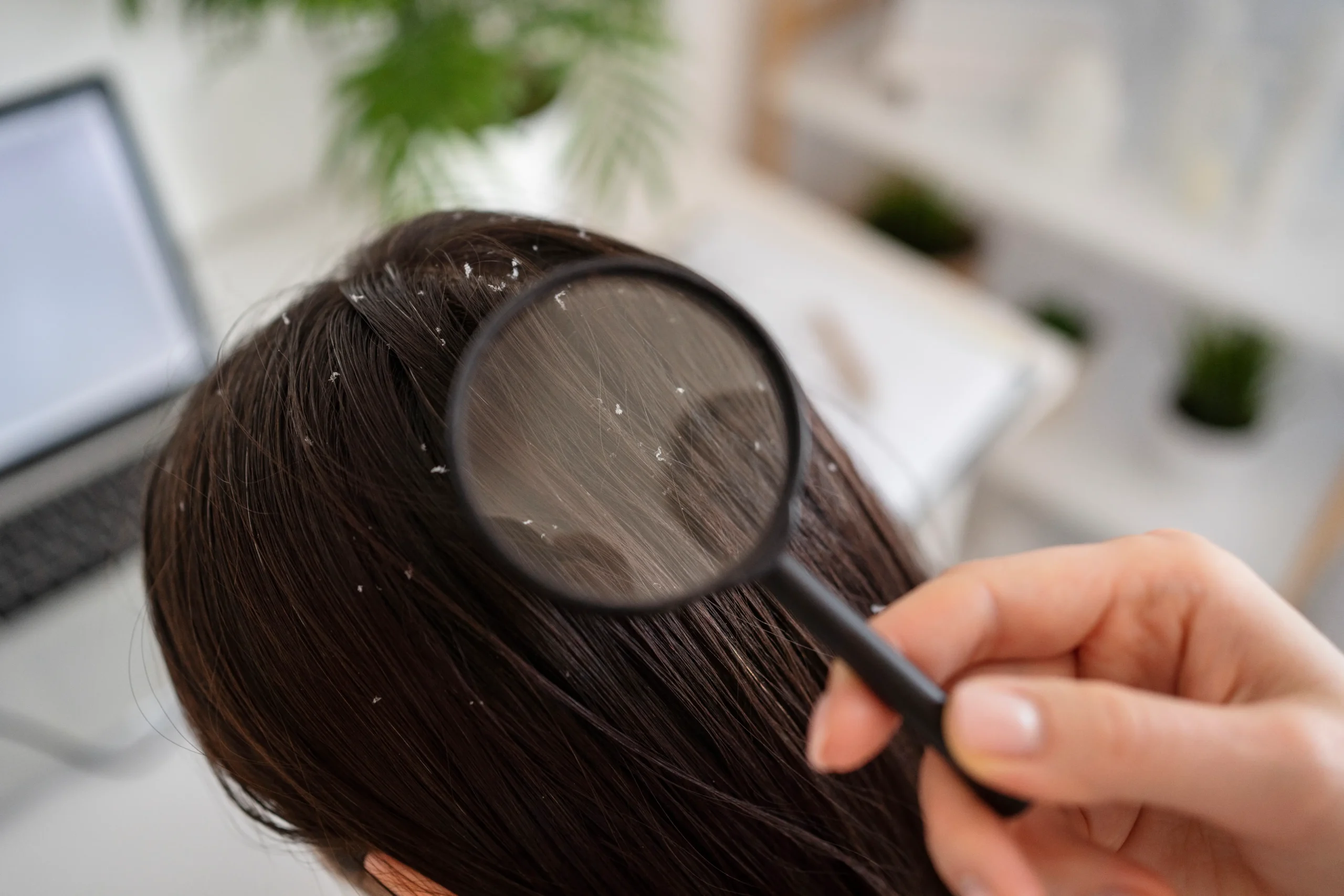
Intro: (how to get rid of dandruff)
Have you ever seen those TV ads where someone notices dandruff on their shoulder at the worst possible moment? I’ve actually experienced that kind of embarrassment myself. Dandruff may seem like a small hair problem, but when you keep noticing flakes on your clothes, it can affect your confidence too.
Dandruff is extremely common and can begin during adolescence and continue to come and go through adulthood. Many people still believe that dandruff happens simply because you don’t wash your hair every day. But that’s a common misconception. The American Academy of Dermatology explains that dandruff isn’t simply a result of poor hygiene.
In my case, having an oily scalp seemed to make the problem worse, and I struggled with dandruff for quite some time. But oily skin isn’t the only factor. Hair-care habits, scalp irritation, and certain skin conditions can also play a role.
In this guide, I’ll explain what can cause dandruff, how to choose an anti-dandruff shampoo, and how to build a practical 4-week routine. I’ll also share some of the mistakes I learned to avoid, explain when home remedies aren’t enough, and tell you when it’s better to see a dermatologist.
Quick Answer (My Personal Story):
To tell you the truth, my dandruff wouldn’t go away. I tried everything, aloe vera, curd, lemon, and many products like Head & Shoulders shampoo, but nothing worked. My mistake was that I tried every ingredient and product 2-3 times and waited for results, which isn’t possible.
Dandruff would go away with shampoo, but it would come back again within 2-3 weeks. I realized that simply changing the shampoo doesn’t change anything. The most important thing is the right active ingredient, like ketoconazole or zinc pyrithione.
If you want to control dandruff from the root, patience is essential. Whatever you are doing, you should keep it for about 3-4 weeks. If you want better results and your scalp turns red, then instead of experimenting at home, consult a good dermatologist.
What is the real reason for dandruff?
Below are some combinations that are associated with dandruff. Often, multiple things occur simultaneously. Find out what those things are:
- Malassezia Yeast – This is a type of fungus found in small quantities on everyone’s skin. In some people, it grows in large quantities, breaking down the scalp’s oil into byproducts that cause irritation. It is believed that this causes cell turnover to accelerate and flakes to form. You may have noticed that researchers say that the mechanism is still being researched. Therefore, we can say that Malassezia is responsible for dandruff. It is a related phenomenon, rather than being definitively proven to be the sole cause.
- Oily skin and hair care habits – The AAD specifically lists certain medical conditions, as well as oily skin and hair care habits, as the main causes.
- Dry or irritated scalp – To tell you my story, I used to wash and bathe with cold water in the summer and hot water in the winter, and used harsh shampoos, which dried out my scalp. Hair also fell out, and a dry, flaky layer formed, which resembled dandruff, but its internal cause was different.
- Internal skin problems: Seborrheic dermatitis, psoriasis, eczema, and fungal infections of the scalp can all present as persistent flaking and often require different treatment than normal dandruff.
Age, weather, stress levels, and choice of hair products can all affect how much dandruff appears, even if none of these are the actual “cause.” This is a normal reason, I have also faced it, so avoid making this mistake.
Is It Just Dandruff or Something Else?
A flaky scalp isn’t always “just dandruff.” I’ve realized that many people treat every flake the same way, but the cause could be completely different. I’ve put together this table to help you understand what your scalp might be trying to tell you.
Note: This is based on my research and experience to help you understand the symptoms—it is not a medical diagnosis.
| What you notice | What it may suggest | What to do next |
|---|---|---|
| Small, dry, white flakes with mild itching. | Ordinary Dandruff or a dry, irritated scalp. | Use a medicated anti-dandruff shampoo consistently for 3-4 weeks. |
| Larger, greasy yellowish flakes; redness on the scalp, eyebrows, or nose. | Seborrheic Dermatitis | Try an antifungal shampoo; see a dermatologist if it doesn’t improve. |
| Thick, silvery-white scales in well-defined patches. | Scalp Psoriasis | See a dermatologist for a proper evaluation and treatment. |
| Redness, swelling, pain, or a spreading rash. | Infection or serious inflammation. | Stop home remedies and see a doctor immediately. |
| Flaking combined with noticeable hair thinning. | Hair Loss/Thinning (could be unrelated to dandruff). | Discuss with a professional rather than self-treating. |
The Bottom Line: If you notice significant redness, swelling, pain, bleeding, or if your hair starts falling out in patches, please stop experimenting at home. These are signs that you need to speak with a dermatologist rather than continuing to self-treat.
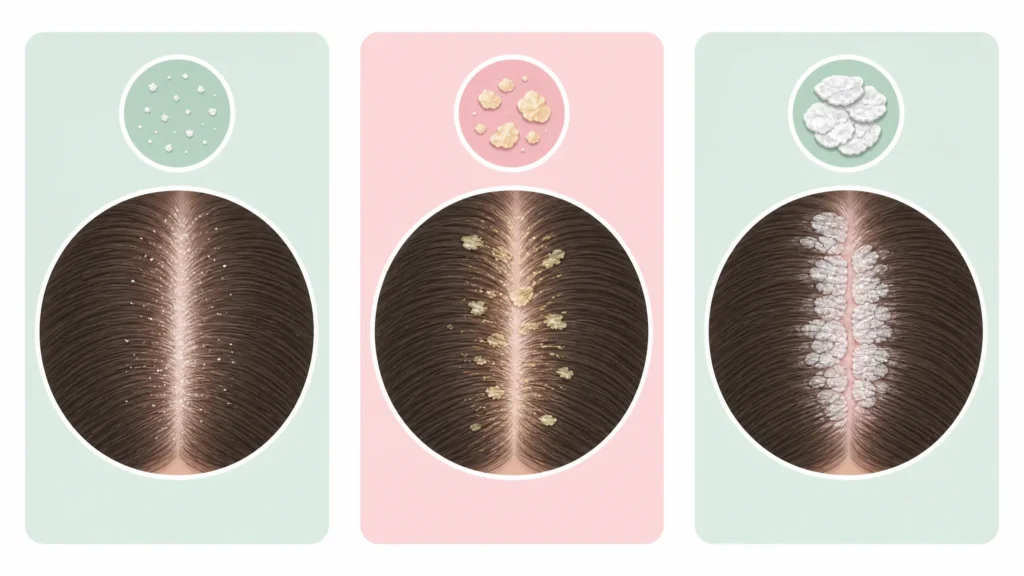
Dandruff vs. Dry Scalp vs. Seborrheic Dermatitis: What’s Really Going On?
For the longest time, I thought every flake on my shoulder was just “dandruff.” I’d grab the strongest shampoo I could find, only to realize later that I was actually making things worse because my scalp was just dry, not dandruffy!
It turns out, these three are very different, and treating them the same way is a big mistake. Here is a simple breakdown of what I discovered:
| Feature | Ordinary Dandruff | Dry/Irritated Scalp | Seborrheic Dermatitis |
|---|---|---|---|
| What the flakes look like | Small, loose, and white. | Fine, dry, and powdery (like dust). | Larger, greasy, and yellowish. |
| Is there redness? | Usually not much. | Hardly any. | Yes, it often looks angry and red. |
| Where is it? | Just the scalp. | Just the scalp. | Scalp, eyebrows, ears, or even the chest. |
| How itchy is it? | Annoying, but manageable. | Mildly itchy. | Can be really intense and persistent. |
| The Fix | Regular anti-dandruff shampoo. | Gentler shampoo and skipping the hot water. | Antifungal shampoo (and maybe a doctor’s visit). |
A Realization About Seborrheic Dermatitis:
One thing I learned is that Seborrheic Dermatitis isn’t just “bad dandruff”—it’s a chronic condition that loves to come back. Think of it like this: the yeast that causes it naturally lives in your skin’s oil. You can’t just “kill it” once and be done.
It’s more about ongoing maintenance. If you have this, don’t get frustrated when it flares up again; it’s just how this condition works, and you might need a prescription-strength shampoo to keep it under control.
How to Choose the Right Anti-Dandruff Shampoo (Without Losing Your Mind)
Let’s be real — we’ve all stood in that shampoo aisle, staring at ten nearly identical bottles, each screaming, “I’M THE ONE!”
Spoiler: Most of them aren’t.
I used to just grab whatever looked fancy or smelled nice. Spoiler again: That didn’t work. My scalp was still itchy. My black shirts? Ruined. And I was spending way too much on products that did nothing.
So I did what any slightly obsessive person would do — I dug into the ingredients. And honestly? That’s when everything changed.
Turns out, not all dandruff is the same. And not all shampoos are made to fix your specific kind of flake situation. Once I figured that out, it stopped being guesswork — and started being strategy.
Here’s what I learned, the hard way.
1. If It’s Just Light Flaking — Start Simple
You’re not itchy. Your scalp isn’t red. It’s just… a few white specks now and then.
Perfect. You don’t need a nuclear option.
Go for something with Zinc Pyrithione. It’s gentle, effective, and safe for daily use.
I started with Head & Shoulders — yeah, the classic — and honestly? It works.
It fights the fungus that causes flakes, without drying out your scalp like some harsher formulas.
This is your “daily driver” shampoo. Think of it like flossing — not exciting, but it keeps things under control.
2. Greasy Scalp + Sticky Flakes? That’s Yeast Talking
If your flakes feel oily, clump together, and come back fast — that’s Malassezia yeast throwing a party on your scalp.
And for that, you need a bouncer. Enter: Ketoconazole.
Nizoral A-1 is the most famous one. I used it twice a week for a month, and the change was real.
It doesn’t just clean — it actually disrupts the fungus’s life cycle.
Pro tip: Don’t overdo it. Once or twice a week is enough. Your scalp isn’t a warzone — you’re just evicting unwanted guests.
3. Oily Hair That Won’t Quit? Try Selenium Sulfide
If your hair looks greasy by noon and your scalp feels heavy, Selenium Sulfide (like Selsun Blue) is your best bet.
It cuts through oil, slows down skin cell turnover, and actually helps regulate sebum.
I used it once a week, and my “wash every day” cycle finally slowed down.
Yes, it has a strong smell — kind of medicinal — but it fades. And honestly? I’d take a weird smell over greasy hair any day.
4. Thick, Yellow, Crusty Scales? That’s Coal Tar’s Territory
This one’s for the heavy-duty cases. If your flakes are thick, yellowish, and won’t brush off — like they’re stuck — you might be dealing with something more persistent.
Coal Tar shampoos (like Neutrogena T/Gel) slow down how fast your skin cells shed. It’s not the prettiest solution — it can smell smoky, and it can make your scalp more sensitive to sunlight.
But it works. I used it for two weeks (every other day), and the thick buildup started flaking off — literally.
After that, I switched back to a milder shampoo to maintain.
Just remember: Wear a cap if you’re out in the sun. Coal tar + UV = not a good combo.
When to Stop the Shampoo Roulette
Here’s the truth: If you’ve been consistent for 4–6 weeks and nothing’s changed?
Stop. Just stop.
You’re not failing. The product is.
This is where most of us keep cycling through new bottles, hoping the next one will be “the one.” But sometimes, it’s not about willpower — it’s about diagnosis.
What you think is dandruff might actually be seborrheic dermatitis, psoriasis, or even a fungal infection that needs prescription treatment.
And that’s okay.
A quick visit to a dermatologist or even a smart chat with a pharmacist can save you months of frustration.
I finally went after months of trial and error — and they gave me a medicated rinse that cleared things up in two weeks.
One Last Tip: How You Wash Matters
It’s not just what you use — it’s how you use it.
- Massage the shampoo into your scalp, not just your hair.
- Leave it on for 3–5 minutes. Let the active ingredients work.
- Rinse thoroughly. Leftover residue = more irritation.
And please — don’t wash your hair with boiling water. I know it feels good, but it strips your scalp and makes flaking worse. Lukewarm is the way to go.
Final Thought: You Don’t Need a New Bottle Every Month
Once you find what works, stick with it.
Your scalp isn’t bored. It doesn’t need variety. It just wants balance.
The best anti-dandruff routine isn’t fancy. It’s consistent.
Find your formula. Use it. Protect your scalp. And stop feeling guilty about those white specks.
You’ve got this. 💪
What’s in that anti-dandruff bottle? (And Why It Matters)
Let’s be honest — we’ve all stood in the shampoo aisle, squinting at the back of the bottle like we’re trying to decode a secret message. “Ketoconazole”? “Zinc Pyrithione”? Sounds like something from a lab, not a shower.
But here’s the truth: that tiny list of ingredients? That’s the only thing that actually works. The “cool mint blast” and “ocean breeze”? Just marketing fluff. The real magic is in the science — and once you know what to look for, it’s way easier to pick the right one.
So here’s the lowdown on the Big Five — no jargon, no fluff. Just what each one does, who it’s for, and how to use it without messing up.
1. Ketoconazole – The Heavy Hitter
If your dandruff just won’t quit — like, it’s flaking even after you’ve washed — this is your go-to. It’s not just cleaning; it’s attacking the root cause: a little yeast on your scalp that goes wild and makes your skin shed too fast.
Best for: Stubborn, persistent flakes.
Pro tip: Don’t rush it. Leave it on for 5 minutes. Seriously — set a timer. If you rinse it off in 30 seconds, you’re wasting your time.
2. Zinc Pyrithione – The Everyday Hero
You’ve seen this one — it’s in Head & Shoulders, and a ton of other everyday shampoos. It’s gentle, it’s effective, and you can use it regularly without wrecking your scalp.
Best for: Mild to moderate flaking.
Pro tip: If your scalp starts stinging or feeling tight, back off for a few days. Even the “gentle” stuff can be too much if your skin’s already irritated.
3. Salicylic Acid – The Scalp Scrub
Think of this like exfoliating, but for your head. It loosens up the dead skin so it washes away instead of building up into thick, crunchy flakes.
Best for: When your scalp feels rough or scaly.
Pro tip: It can dry out your hair, so follow up with conditioner — but keep it on the hair, not the scalp. You don’t want to clog those pores.
4. Selenium Sulfide – The Oil Tamer
If your hair gets greasy by noon and you’ve got big, oily flakes, this one’s for you. It slows down skin cell turnover and fights the yeast at the same time.
Best for: Oily, greasy scalps with thick flakes.
Pro tip: Yeah, it’s got a bit of a “medicine” smell. And if you have blonde or light-colored hair, it might tint it slightly. Just rinse it out well.
5. Coal Tar – The Old-School Warrior
This one’s been around forever — and it works. It slows down how fast your skin cells grow, so they don’t pile up and flake off.
Best for: Serious, crusty buildup.
Pro tip: It makes your scalp more sensitive to the sun. If you’re using this, throw on a hat when you’re outside. Don’t skip this — sunburn on your scalp is not fun.
Read more: Thinking of Buying Pilgrim Hair Growth Serum? Read This Review First
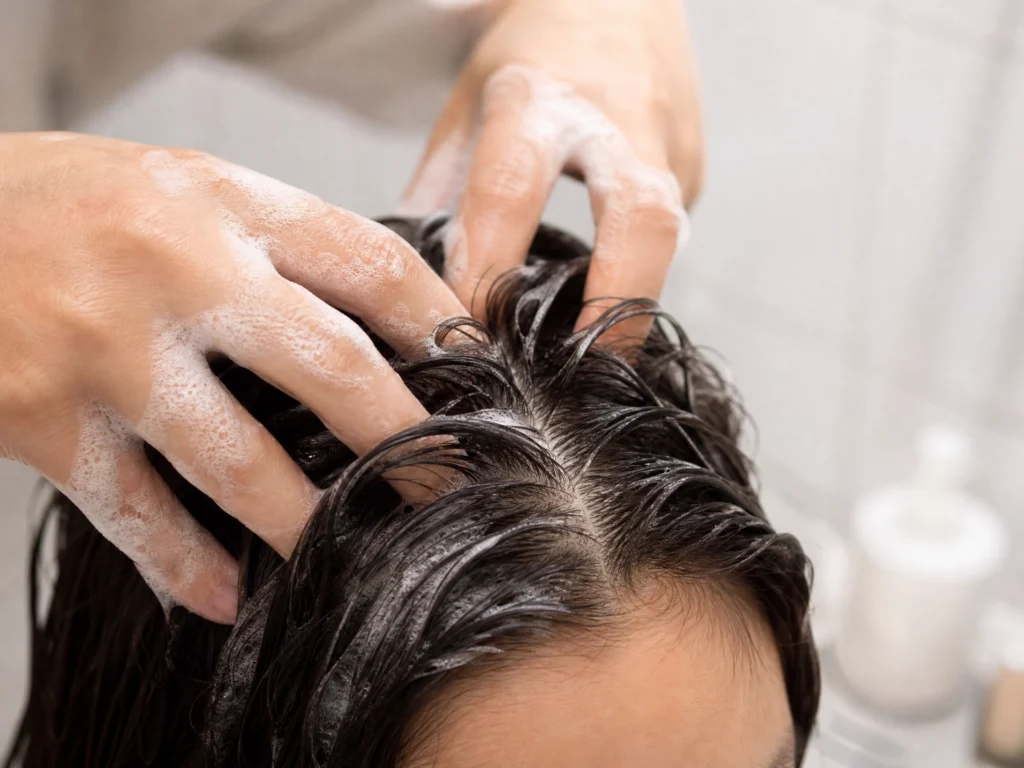
How to Use It (Because Most of Us Are Doing It Wrong)
I used to just lather, rinse, and repeat. Spoiler: that doesn’t work.
Here’s how to actually get results:
- Scalp, not hair: Massage the shampoo into your scalp. That’s where the problem is. Don’t waste it on the ends.
- Wait it out: Leave it on for 3–5 minutes. This is non-negotiable. If you rinse too fast, you’re just washing money down the drain.
- Don’t overdo it: You don’t need to use medicated shampoo every day. Start with 2–3 times a week. See how your scalp feels.
- Switch it up: If one stops working, try alternating between two types (like Zinc one day, Keto the next). It keeps your scalp from getting “used” to it.
Final Word: Be Patient
Dandruff didn’t show up overnight, and it won’t vanish in one wash. Give it at least 4 weeks of consistent use before you decide it’s not working.
You’ve got the tools. Now just stick with it — and you’ll see the difference. 💪
A Practical 4-Week Dandruff Routine
We all have different skin types, and we know the effects of any ingredient vary, so we’ll approach it as a framework rather than a guarantee.
Week 1: Use medicated shampoo that matches your skin type. Apply at the frequency indicated on the bottle label. Not too much, not too little. Avoid using too many products at once so you can notice what’s actually working.
Week 2: You may see no change or irritation. Continue with the same products. Eventually, it will fade.
Week 3: This is usually when many people start to notice less flaking and itching, if the product and routine are working well. If your scalp is more irritated than when you started, it’s worth re-evaluating rather than prolonging it.
Week 4: Take an honest look. Good improvement indicates you’re on the right track and can be continued, perhaps reducing the frequency, once your symptoms are under control. Little or no improvement despite regular, correct use suggests seeing a dermatologist rather than continuing to self-treat forever.
Natural Remedies: Do They Actually Work or Are You Just Making a Salad?
I’ll be the first to admit it—before I bought a single medicated shampoo, I tried everything in my kitchen. Aloe vera, curd (dahi), lemon, coconut oil… you name it, I’ve put it on my head.
But here’s the “real talk”: while some natural ingredients are great for soothing your scalp, they usually aren’t strong enough to kill the root cause of dandruff. If you want to go natural, here is what actually has some science behind it—and what you should be careful with.
1. Tea Tree Oil (The Only One with Real Science)
If there’s one natural remedy to take seriously, it’s this. Tea tree oil is a natural antifungal and antibacterial.
- Does it work? Yes, studies show that a shampoo with 5% tea tree oil can significantly reduce dandruff.
- The Catch: Never apply pure tea tree oil directly to your scalp—it’s way too strong and can cause a nasty rash. Mix a few drops into your regular shampoo instead.
2. Aloe Vera (The “Cooling Agent”)
This was my go-to when my scalp felt like it was on fire. Aloe vera is amazing for reducing inflammation and itching.
- Does it work? It won’t “cure” the dandruff fungus, but it will stop you from scratching your head raw. It’s like a cold compress for your scalp.
- How to use: Apply fresh gel, leave it for 20 minutes, and rinse. It feels nice.
3. Coconut Oil (The “Hydration Hero”)
This is a tricky one. Coconut oil is great for dry skin, but dandruff is often caused by too much oil.
- Does it work? If your “dandruff” is actually just a dry scalp, coconut oil is a miracle worker. But if you have oily dandruff, adding more oil might actually feed the yeast!
- My Tip: Use it only if your scalp feels tight and dry, not if it feels greasy.
4. Apple Cider Vinegar & Lemon (The “Acid Trip”)
People love these because they help balance the pH of your scalp.
- Does it work? It can help wash away buildup, but there isn’t much proof that it kills dandruff.
- The Danger: Lemon and Vinegar are very acidic. If you have any tiny scratches on your scalp from itching, it will sting like crazy. Always dilute them with plenty of water. Personally? I’d skip the lemon—it’s too harsh for most people.
5. Neem & Fenugreek (The Traditional Route)
These have been used in India for centuries. Neem is naturally antifungal, and Fenugreek (Methi) is great for conditioning.
- Does it work? They are great “bonuses” to keep your scalp healthy, but they take a long time to show results.
My “Real Person” Verdict on Natural Remedies
After all my experiments, here is what I learned: Natural remedies are like a side dish, not the main course.
If you have a serious “snowstorm” on your shoulders, you need a medicated shampoo to do the heavy lifting. Use the natural stuff (like Aloe or Coconut oil) as a way to soothe your scalp on the days you aren’t using the medicated shampoo.
Don’t make the mistake I did: I spent months trying to fix a fungal problem with dahi and nimbu, and it only got worse. Use the science for the cure, and use nature for the comfort.
Common Mistakes: Why You’re Still Struggling to Get Rid of Dandruff
Look, I’m not judging you. I’ve made every single one of these mistakes—some of them twice. But if you’re serious about finally figuring out how to get rid of dandruff, you’ve got to break these 6 bad habits right now:
1. Treating Your Nails Like Claws: We’ve all been there. That itch hits, and you just want to dig in. But here’s the thing: your nails are basically tiny daggers for your scalp. You’re not just removing flakes; you’re creating micro-wounds that can easily get infected. Trust me, use the pads of your fingers to massage. It might feel less “satisfying” at first, but your scalp needs healing, not a fight.
2. The “Shampoo Hope”: This was my biggest downfall. I’d use a bottle twice, decide it wasn’t a “miracle cure,” and immediately go buy something else. But hair science doesn’t work overnight. Most active ingredients need at least 3 to 4 weeks to actually start winning the battle. Every time you switch too soon, you’re just hitting the “reset” button on your progress.
3. Playing “Lab Scientist” with Essential Oils: I know everyone on social media says tea tree oil is the holy grail. And it is great! But don’t just pour it straight onto your head. It’s incredibly potent. I once tried it undiluted and my scalp felt like it was on fire for an hour. Always, always mix it with a carrier oil or your regular shampoo.
4. The “Boiling Water” Habit: I love a steaming hot shower as much as the next person, especially when it’s cold outside. But for your scalp? It’s a disaster. It strips away every bit of natural moisture, leaving your hair feeling like straw and your scalp angry and irritated. Switch to lukewarm water. It’s not as cozy, but it’s a lifesaver for your hair.
5. Conditioner on the Roots: Think of it this way: your roots already have enough natural oil; they don’t need the extra weight. Conditioner is meant for the mid-lengths and ends of your hair. When you put it on your scalp, you’re just inviting buildup and clogging your pores, which makes flaking way worse.
6. Ignoring the “Red Flags”: If your scalp is constantly angry, red, or—heaven forbid—bleeding, it’s time to put down the home remedies. Sometimes it’s not just “normal” dandruff. Don’t be stubborn like I was; go see a professional if it actually hurts.
The Big Question: Should You Actually Oil Your Scalp?
In India, we’re raised to believe that a good “champi” (oiling) fixes everything. But when it comes to dandruff, it’s a bit complicated. It’s not a one-size-fits-all answer.
- If your scalp is bone-dry: A little light oil is like a drink of water for your skin. It feels amazing and stops that tight, itchy feeling.
- But if your scalp is OILY: Be careful! The yeast that causes dandruff actually loves oil. It’s like throwing a party for the bad guys. If you have greasy flakes and you pile on heavy oil, you’re just making the problem bigger.
My Personal Rule: If you really want to oil your hair, don’t leave it in for days. Apply it, enjoy the massage for 30 to 60 minutes, and then wash it out completely. Leaving a layer of heavy oil on a dandruff-prone scalp is just an open invitation for more flakes to show up.
Can Dandruff Actually Cause Hair Fall?
This is the question everyone asks, and here’s the honest truth: Dandruff itself doesn’t usually make your hair fall out.
But (and this is a big “but”), the scratching does. When your scalp is itchy and you’re constantly digging your nails in, you’re literally damaging your hair roots. Also, if you have a serious scalp infection that you’re ignoring, that irritation can definitely make your hair thin out over time.
My advice: If you see flakes and your hair is thinning, don’t just assume it’s normal dandruff. That’s a combination you should definitely talk to a doctor about.
Why Does Dandruff Keep Coming Back? (The Frustrating Truth)
If you feel like you “fix” your dandruff only for it to show up again two weeks later—you’re not alone. I’ve been through this cycle a dozen times.
The reason is simple: the yeast that causes dandruff lives on everyone’s skin. You can’t just kill it once and be done with it forever. For some of us, our scalp is just more sensitive to it.
The Secret: Don’t stop your routine the moment the flakes disappear. Once your scalp is clear, keep using your medicated shampoo once every week or two just to keep things under control. It’s like cleaning your house—you don’t just do it once and expect it to stay clean forever!
When to Stop Playing Doctor (When Shampoo Isn’t Enough)
Sometimes, no matter how many bottles you buy, the flaking just won’t stop. I know we all want to fix things ourselves, but you need to see a dermatologist if:
- You’ve used the right shampoo consistently for a month and nothing has changed.
- Your scalp actually hurts, feels swollen, or looks very red.
- The flakes are thick, crusty, and “stuck” to your scalp.
- The redness is spreading to your eyebrows, ears, or nose.
- You’re losing hair in patches.
A doctor can tell if it’s actually dandruff or something else like psoriasis or eczema, which need totally different treatments. Don’t waste more money on shampoos if your scalp is trying to tell you it needs professional help.
Final Takeaway: The Bottom Line
There is no “magic pill” for dandruff. The secret to how to get rid of dandruff is actually quite simple:
- Figure out your scalp type.
- Pick the right active ingredient.
- Use it correctly (leave it on!).
- Be patient for at least 4 weeks.
If you’ve done all this and your shoulders are still white, stop experimenting and go see a dermatologist. Your scalp will thank you.
FAQs: Quick Answers to Common Questions
Can dandruff go away permanently?
No, but you can control it. The yeast that causes flakes is a natural part of everyone’s skin. You just need a regular maintenance routine to keep it away for good.
How long does it take to see results?
Give it 3 to 4 weeks. Most people quit after two washes, but active ingredients need time to work. Consistency is the only way to win.
How often should I use anti-dandruff shampoo?
Twice a week is usually the sweet spot. If your hair is very oily, you might need it more. If it’s dry or curly, once a week might be enough.
Can dandruff cause hair loss?
Not directly. But aggressive scratching can damage your hair roots. If you’re seeing flakes and thinning hair, it’s time to talk to a doctor.
Should I oil my scalp?
Only if your scalp is bone-dry. If you have oily dandruff, adding oil is like feeding the problem. If you must oil, wash it out after 30 minutes.
Can stress make dandruff worse?
Yes. Stress doesn’t “cause” dandruff, but it’s a major trigger. When you’re stressed, your scalp is much more likely to flare up.
Is dandruff contagious?
No. You can’t catch it from someone else. It’s all about your own skin’s oil production and yeast levels.
Why does my dandruff keep coming back?
Because the yeast is a natural part of your skin. Think of it like dust in your house—you have to keep “cleaning” (maintaining) to keep it away.
When should I finally see a dermatologist?
If your scalp hurts, bleeds, or doesn’t improve after a month of consistent treatment. Also, see a doctor if the redness spreads to your face or ears.