
Why Rosacea Happens? Simple Science Explained
Let’s get one thing straight first — you didn’t cause this. Not your food, not your hygiene, not some product you forgot to use. Rosacea happens because of how your skin is wired underneath, and once you get that, everything else starts making sense.
Your Skin Barrier Isn’t as Strong
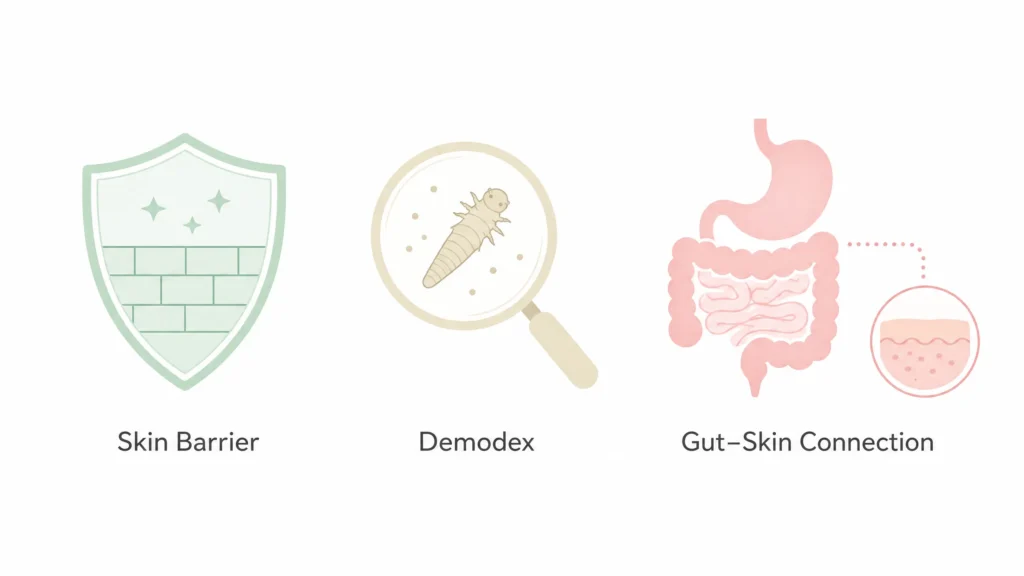
Every skin type has a protective layer — a barrier that keeps moisture in and irritants out. If you have rosacea, that layer just doesn’t hold up as well.
Here’s what that means in real life:
- Your skin dries out fast, even if it looks red or oily on top
- Dust, pollution, and even tap water can irritate it more than they should
- Products that work fine for other people might sting or burn on you
That weak barrier is exactly why gentle cleansing matters so much. Load your skin up with harsh soaps or scrubs, and you’re basically poking a hole that’s already there.
Meet Demodex — The Mites You Didn’t Know You Had
Okay, this part sounds a bit gross, but stay with me. Tiny mites called Demodex live on everyone’s face — yes, everyone’s. Normally, there aren’t many, and they don’t cause trouble.
But in rosacea-prone skin, these mites tend to show up in bigger numbers, and that can trigger extra inflammation.
This is actually good news, in a way. It explains why treatments like ivermectin cream work so well — they don’t just calm inflammation, they also deal with the mite population. So no, having more mites doesn’t mean you’re not clean. It’s just how some skin behaves.
Your Gut Might Be Involved Too
This one’s newer, but researchers are finding a real link between gut health and rosacea flare-ups.
An unbalanced gut seems to make flare-ups worse, and eating gut-friendly foods — think probiotics, fibre, fermented foods — may support whatever treatment you’re already using.
We’ll get into this properly in the diet section further down.
What Sets Off a Flare-Up
None of these actually cause rosacea, but they’re common reasons your skin might suddenly act up:
- Sitting in the sun too long — this is the number one trigger for most people
- Spicy food, alcohol (red wine especially)
- Hot tea, hot coffee
- Stress, poor sleep
- Rough scrubs or harsh skincare
- Standing near heat — a stove, a bonfire, even a hot shower
Once you start noticing which of these affect you, avoiding flare-ups gets a lot less complicated. It’s really just about learning your own skin’s pattern.
Know more: How to Get Rid of Pimples on Forehead Fast: I Tried 7 Methods in 48 Hours
Rosacea Treatment That Actually Works
Nobody’s found a permanent cure yet, and honestly, anyone promising one is probably trying to sell you something. But that doesn’t mean you’re stuck. There are proven treatments out there, and most people see real improvement once they find the right combination for their skin.
Creams and Gels — Usually Where You’ll Start
For most people with mild to moderate rosacea, this is the first line of defence, and it’s often enough on its own.
| Treatment | Best For | How Long It Takes |
|---|---|---|
| Ivermectin cream | Bumps and pimple-like spots | 2–12 weeks |
| Azelaic acid | Bumps + redness together | 4–8 weeks |
| Metronidazole gel | Mild bumps | 4–8 weeks |
| Brimonidine/Oxymetazoline | Temporary redness relief | Works within hours, wears off |
Don’t be surprised if your dermatologist prescribes two of these together. That combination often works faster than using just one.
When Tablets Get Added to the Mix
Sometimes creams just aren’t enough, especially if your rosacea is more on the moderate-to-severe side. That’s usually when a doctor brings tablets into the picture:
- Low-dose doxycycline — this isn’t used the way antibiotics normally are. At this dose, it’s mainly working to calm inflammation.
- Isotretinoin — reserved for severe cases only, and completely off-limits during pregnancy.
One thing worth repeating: these are prescription medicines, not something to pick up because a friend used them for acne. Rosacea and acne behave differently, and treating them the same way can backfire.
Laser — For When Redness Just Won’t Budge
If you’ve tried creams and tablets and there’s still visible redness or veins that won’t fade, laser treatment is often the next step.
- Pulsed dye laser and IPL are the two most commonly used for this
- One session usually isn’t enough — expect a few rounds before you see the full result
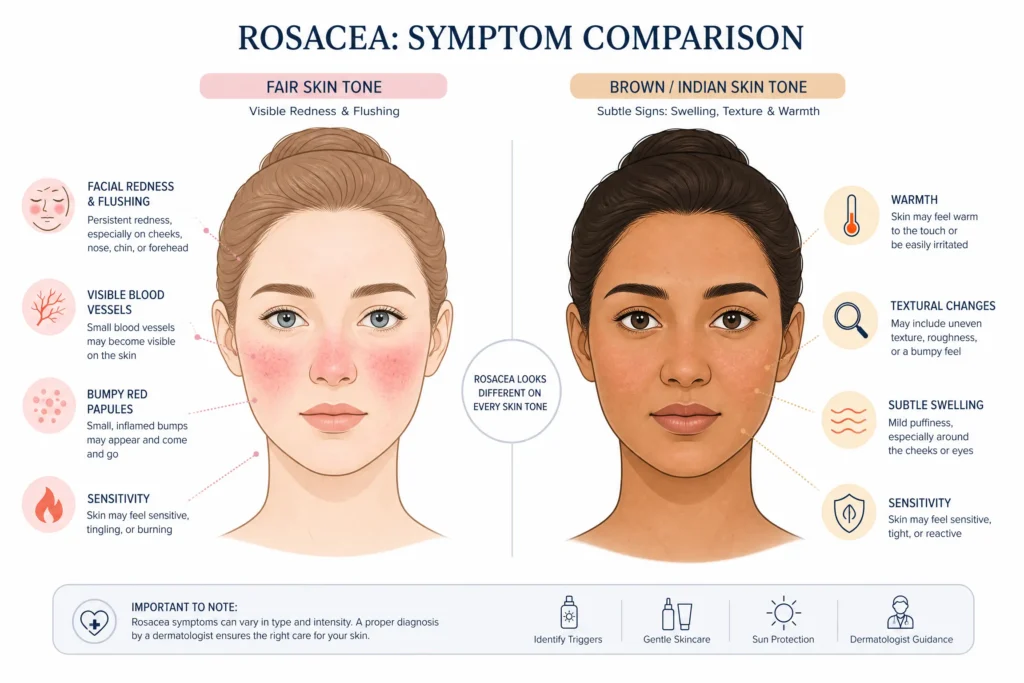
- If you have Indian or brown skin, please read this part carefully: laser treatment done wrong can leave behind dark patches that are harder to fix than the redness itself. Go to someone experienced, and ask directly about this risk before you start.
- Most insurance plans don’t cover it, since it’s often classified as cosmetic rather than medical
Where Treatment Is Headed
The good news? Rosacea research hasn’t slowed down.
Scientists are working on medicines that target inflammation right at the source, instead of just managing symptoms. Treatment is also getting more personalised — matched to your specific rosacea type rather than a generic approach. And as more options enter the market, they should become more affordable too.
If there’s one thing worth taking away from all this: what worked for your friend, your cousin, or some influencer online might do nothing for you. That’s not you doing something wrong — rosacea just isn’t a one-size-fits-all condition, and neither is its treatment.
How to Treat Rosacea Naturally at Home
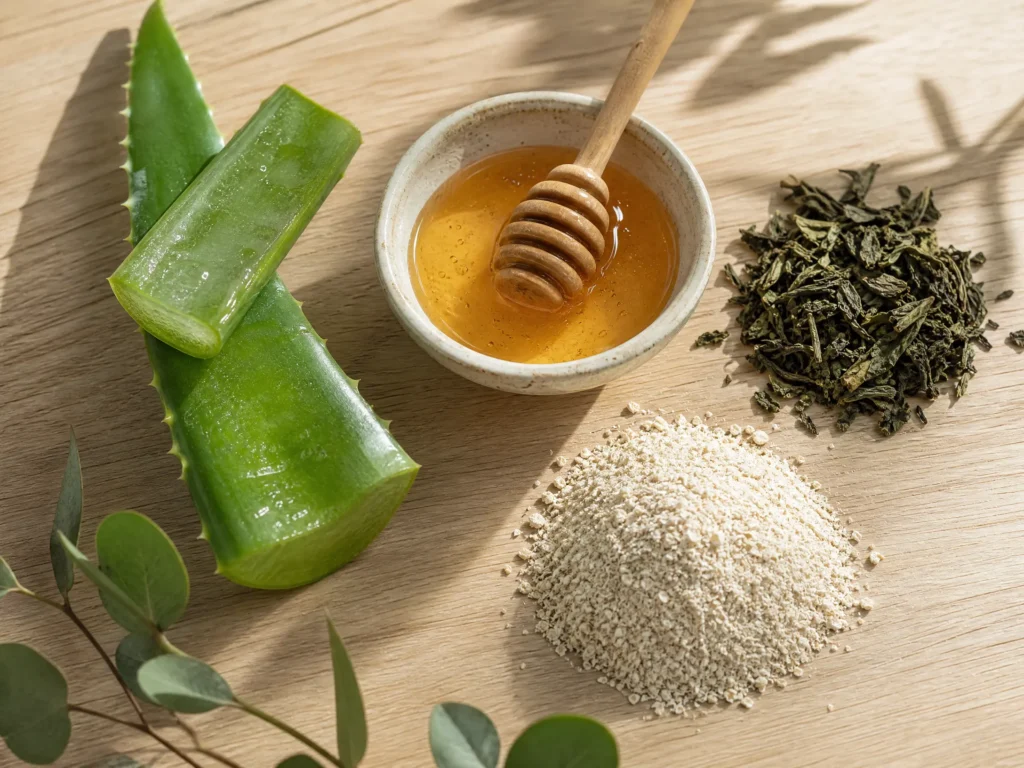
A lot of people search for natural fixes before seeing a doctor — and that’s okay, as long as you know what actually helps and what quietly makes things worse. Natural care works best alongside rosacea treatment, not instead of it.
Natural Options That Actually Help
| Remedy | How to Use |
|---|---|
| Aloe vera (pure gel) | Apply a thin layer, patch test first. |
| Green tea | Use a cooled tea bag as a compress, or choose creams containing green tea. |
| Niacinamide | Apply daily in a gentle moisturizer or serum. |
| Colloidal oatmeal | Use in face masks or oatmeal baths. |
| Raw honey | Apply a thin layer for 10–15 minutes, then rinse. Patch test first. |
| Chamomile | Use cooled chamomile tea as a gentle compress. |
These won’t cure rosacea, but they can calm redness and support your skin barrier.
What to Avoid at Home
So many “natural” remedies people try actually do more harm than good:
- Apple cider vinegar directly on skin — can burn and irritate
- Tea tree oil — often too harsh for rosacea-prone skin
- Lemon juice — acidic and can react badly with sun exposure
- Eucalyptus, menthol, camphor — these heat up the skin and trigger flushing
- Witch hazel — many versions contain alcohol, which dries and irritates
- Scrubs or exfoliating brushes — physical scrubbing almost always makes rosacea worse
If a home remedy burns, tingles a lot, or turns your skin redder — stop immediately. That’s your skin telling you something isn’t working.
“Natural” Doesn’t Always Mean Safe
Just because something is natural doesn’t mean it’s gentle. Plant extracts, essential oils, and even fruit acids can be strong enough to trigger a flare-up.
- Always patch test on your inner arm or jawline for 24 hours before using anything new on your face
- If irritation shows up, stop and don’t push through it hoping it’ll “adjust”
- If your skin isn’t improving after a few weeks, it’s time to loop in a dermatologist alongside your home care
Natural remedies work best as gentle support — real rosacea treatment usually still needs a proper skincare routine and, often, medical care too.
Patch Test for Skin Allergy: 7 Things Nobody Tells You Before You Go
Rosacea-Friendly Skincare Routine (Step-by-Step)
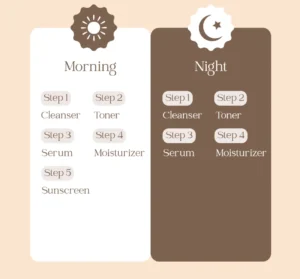
Here’s something most people don’t realise until later — your everyday routine matters just as much as any prescription cream. Do it right, and you actually speed up your treatment. Do it wrong, and one bad product can wipe out weeks of progress overnight. Yes, overnight. That’s how sensitive rosacea-prone skin can be.
Morning Routine
- Cleanse — Pick something gentle, fragrance-free, and non-foaming. And here’s a tip most people never hear: if your face feels “squeaky clean” right after washing, that’s not actually a good thing. It usually means the cleanser stripped away oils your skin needed to stay protected.
- Treat — Apply whatever your dermatologist prescribed. If you’re leaning more natural, a niacinamide serum works well too.
- Moisturise — Don’t overthink this step. A basic ceramide moisturiser is enough to help rebuild that weakened barrier we talked about earlier.
- Protect — Mineral sunscreen, always — zinc oxide or titanium dioxide, SPF 30 or higher. Stepping out for a while? Reapply every couple of hours, not just once in the morning.
Night Routine
- Cleanse — Same gentle cleanser as the morning.
- Treat — Your prescribed treatment, or azelaic acid if you’re going the over-the-counter route.
- Moisturise — This is the one time of day you can go a bit richer. Ceramides and hyaluronic acid help a lot here, since your skin does most of its repairing while you sleep anyway.
What to Look For vs Avoid
| ✅ Look For | ❌ Avoid |
|---|---|
| Niacinamide | Fragrance or perfume |
| Ceramides | Alcohol-based products |
| Hyaluronic acid | Menthol, camphor, eucalyptus |
| Zinc oxide (in sunscreen) | Physical scrubs |
| Centella asiatica (Cica) | Strong retinoids (unless prescribed) |
A Few Extra Tips If You Have Indian Skin
- Don’t skip mineral sunscreen thinking it’s optional — it’s also doing double duty protecting you from dark patches, which tend to show up more easily on Indian skin
- Steer clear of “whitening” or “fairness” products. Most are loaded with ingredients that irritate rosacea-prone skin rather than help it
- Get in the habit of checking labels for “non-comedogenic” before buying anything new
- Trying a new product? Test it on your jawline for a few days first, not your whole face straightaway
Morning vs Night Skincare Routine for Sensitive and Acne-Prone Skin (2026)
Diet and Lifestyle Tips for Rosacea
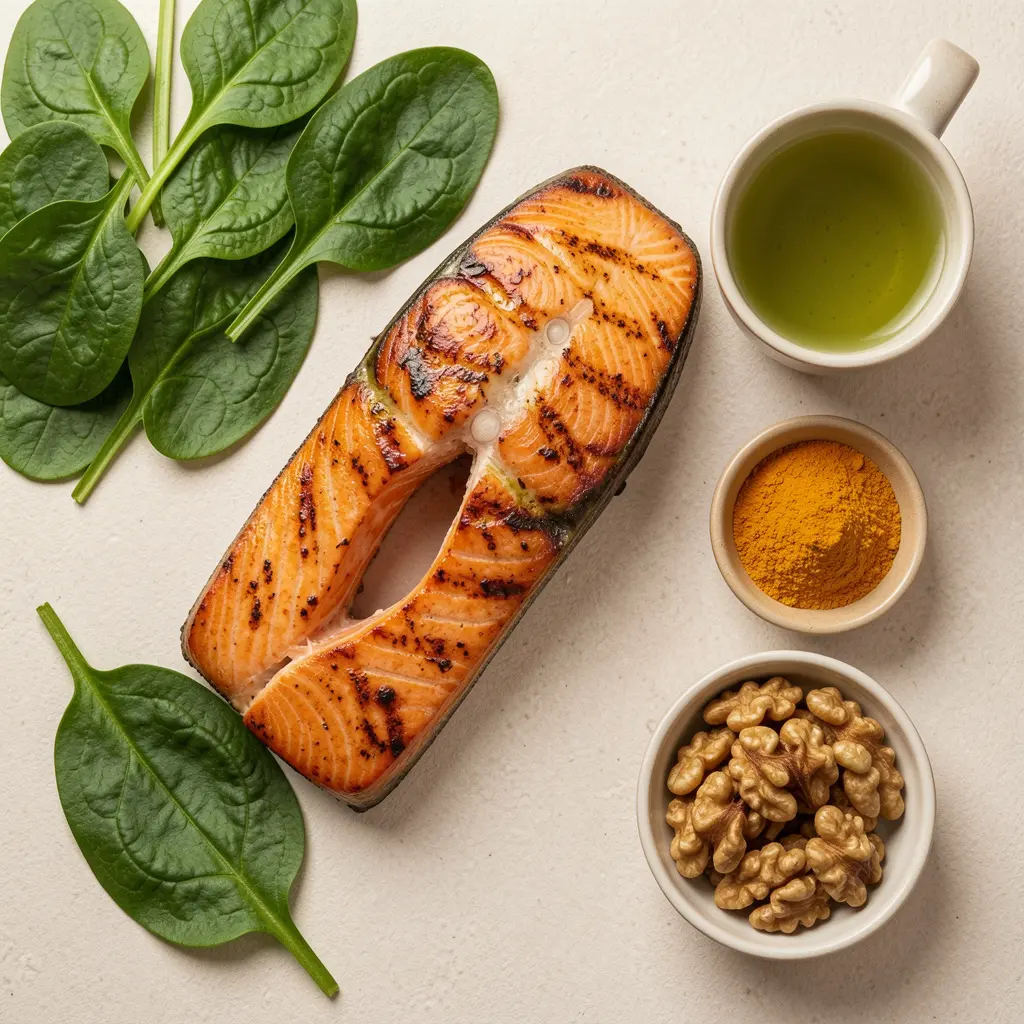
Let’s be clear about one thing first — no diet is going to cure your rosacea. But what you eat, how much you sleep, and how you handle stress can genuinely change how often your skin flares up. Think of it as backup support for your treatment, not a replacement for it.
Foods That May Help
- Fatty fish like salmon — it’s rich in omega-3s, which help calm inflammation from the inside. Vegetarian? Flaxseeds and walnuts do a similar job.
- Leafy greens like spinach and kale — packed with antioxidants that support your skin’s overall health, not just rosacea specifically.
- Fermented foods like curd, yogurt, or pickled vegetables — these bring in good bacteria, which ties directly into the gut-skin connection we’re about to get into.
- Green tea — has natural anti-inflammatory properties, and a warm (not scalding hot) cup can be a nice, skin-friendly swap for regular tea or coffee.
- Turmeric — just cooking with it regularly, the way most Indian kitchens already do, can add a small anti-inflammatory boost over time.
Foods That Can Trigger Flare-Ups
- Spicy food — capsaicin, the compound that makes chillies hot, is a well-known rosacea trigger for a lot of people
- Alcohol, especially red wine — it dilates blood vessels, which is basically the opposite of what rosacea-prone skin needs
- Very hot tea or coffee — it’s less about the caffeine and more about the temperature itself triggering flushing
- Foods high in sugar or refined carbs — these can spike inflammation in some people, though this reaction varies more from person to person
You don’t have to give any of these up completely. Just pay attention to whether your skin reacts after eating them, and adjust based on what you actually notice — not what worked for someone else.
The Gut Health Connection
We mentioned this briefly earlier — here’s the fuller picture.
There’s growing research showing that people who added probiotics alongside their rosacea medication saw better results than those using medication alone. It seems an imbalanced gut can quietly add fuel to the inflammation already happening in your skin.
The good news is this doesn’t require anything drastic. Eating more fibre and more fermented food supports your gut naturally, and that support seems to show up on your skin too, even if the connection isn’t fully understood yet.
If you’ve been doing everything right with your skincare and still aren’t seeing improvement, it might be worth asking your doctor whether your gut needs some attention as well.
Lifestyle Habits That Help
- Manage stress — yoga, meditation, or honestly even a short walk each day can bring down how often you flare up
- Sleep properly — aim for 7 to 8 hours. Skimp on sleep, and it tends to show up on your face the very next day
- Exercise, but smart — go for lower-intensity workouts, and let your body cool down gradually instead of stopping suddenly while you’re still overheated
- Be mindful of heat — saunas, very hot showers, standing too close to the stove while cooking — all of these can set off a flare-up
- Keep a simple trigger diary — just note down what you ate, did, or applied on the days your skin acts up. Give it a few weeks, and the pattern usually becomes pretty obvious on its own