

Two years ago, my skin was a mess.
Oily by 9 AM. Pimples that took three weeks to heal. Dark marks that stayed for months. I was washing my face four times a day thinking more cleansing meant less oil. I was skipping moisturizer because my skin already felt greasy. I was trying every new serum I saw on Instagram.
Nothing worked — until I understood one thing.
Most skincare routines online are written for people living in mild, dry climates using expensive Western brands. They are not written for someone in Lucknow dealing with 85% humidity, hard tap water, and a budget that does not stretch to imported products.
When I finally built a routine specifically for oily, acne-prone Indian skin — using the right ingredients at the right concentrations, in the right order — everything changed. Pimples that used to stick around for three weeks started healing in three days. The dark marks I had been carrying for months began fading within two weeks.
This post is that exact routine. Every step, every product, every reason why — from someone who has actually done it on Indian skin, in Indian weather, with Indian products.
Quick Answer — Best Skincare Routine for Oily Acne Prone Skin India:
Morning: Gentle foaming cleanser → Niacinamide serum → Oil-free gel moisturizer → SPF 50
Night: Micellar water → Gel cleanser → Salicylic acid (alternate nights) OR Retinol → Gel moisturizer
Weekly: Clay mask once + rest day once. Full details with products and prices below.
First — Understand Why Indian Oily Skin Behaves Differently
Before jumping into products and steps, this matters. Indian oily skin has specific challenges that most routines never address — and ignoring them is why those routines fail.
The Indian Climate Factor
Humidity in most Indian cities sits between 60 and 90 percent for a large part of the year. What that means for oily skin:
- Sebaceous glands produce more oil in heat and humidity
- Sweat mixes with oil throughout the day — clogs pores faster
- Monsoon brings fungal acne on top of regular acne — tiny uniform bumps across the forehead
- The T-zone — forehead, nose, chin — stays shiny within an hour of cleansing
A routine built for someone in London or California will not work the same way in Mumbai or Lucknow. The climate is different. The skin’s behaviour is different.
The Hard Water Problem
Most Indian cities have hard tap water — high in calcium and magnesium. When you wash your face with hard water every day, these minerals leave a residue on the skin that:
- Disrupts your skin’s natural pH balance
- Weakens the moisture barrier over time
- Makes skin more sensitive and breakout-prone
A simple test — fill a glass with tap water, leave it overnight, check for white deposits at the bottom. If you see them, you have hard water.
My fix: I use RO filtered water for face washing. Even storing some in a small bottle just for cleansing made a visible difference within a few weeks.
The PIH Problem — Dark Marks on Indian Skin
Post-inflammatory hyperpigmentation — the dark marks pimples leave behind — is significantly more pronounced on Indian skin tones. A pimple that leaves a faint pink mark on lighter skin can leave a deep brown mark on Indian skin that takes months to fade.
This means two things for your routine:
- Treat pimples fast — the less inflammation, the less PIH
- SPF every single day — sun exposure makes PIH dramatically darker and longer-lasting
Hormonal Acne — The Root Cause Nobody Talks About
For a long time I blamed my skincare for my breakouts. Then I got a checkup done and found out that irregular periods were causing hormonal imbalance — which was the actual root cause of my persistent pimples.
PCOS affects a significant percentage of Indian women. Hormonal imbalance causes the sebaceous glands to overproduce oil, which leads to persistent acne that does not fully respond to topical treatments alone.
“If your pimples keep coming back no matter what you try — especially on the jawline and chin — please get a checkup done. A blood test and consultation with a gynecologist or dermatologist can tell you in one visit what months of skincare trial and error cannot.”
The Ingredients That Actually Work for Oily Acne Prone Indian Skin
Before I list the routine steps, understand what each ingredient does. This way you are choosing products based on what your skin needs — not just what someone on Instagram recommended.
Niacinamide — The Most Important One
Niacinamide is vitamin B3. For oily, acne-prone skin, it does more in one ingredient than most people get from five products:
- Reduces sebum production at the source — skin produces less oil throughout the day
- Shrinks the appearance of enlarged pores
- Reduces redness and inflammation around active pimples
- Fades post-pimple dark marks over time
- Strengthens skin barrier — skin becomes less reactive
Use it morning and night. Start with 5%, build to 10%. Give it four to six weeks minimum.
Salicylic Acid — The Pore Cleaner
Salicylic acid is oil-soluble — it travels inside the pore and dissolves the buildup of dead skin and sebum that causes blackheads and whiteheads. It also prevents new blockages from forming.
- Best for blackheads, whiteheads, and bumpy texture
- Use 2% concentration — evening only
- Start 2-3 times a week, build to daily if skin tolerates
- Do not use the same night as retinol
Retinol — The Long Game Changer
Retinol speeds up skin cell turnover. Dead cells shed faster, pores stay clearer, marks fade quicker. It takes time — expect two to three months — but the results are the most transformative of any ingredient I have used.
- Start with 0.25% or 0.3% — never jump to high concentration
- Evening only, pea-sized amount
- Expect purging in the first month — do not quit
- SPF next morning is absolutely mandatory
Vitamin C — For Fading Marks
Vitamin C does not treat active pimples — but for fading the dark marks they leave on Indian skin, it is one of the best ingredients available. Use it in the morning, before SPF.
- 10% L-ascorbic acid is a good starting concentration
- Store in a dark bottle — oxidizes quickly in light
- If serum turns orange or brown — replace it
Benzoyl Peroxide — The Emergency Fix
Kills acne-causing bacteria fast. Best used as a spot treatment on active red pimples only — not all over the face. Results visible in 24 to 48 hours.
- Use 2.5% — higher percentage just causes more irritation
- Spot treatment only — evening use
- Bleaches fabric — white pillowcase mandatory
- Always moisturize after
🌿 Patch Test — Before Every New Ingredient
Apply a small amount on the inside of your wrist. Wait 24 hours. No redness or irritation means your skin is okay with it. This one step takes one day and saves you from a week of damaged skin. I skip it every time I am excited about a new product — and I regret it every time.
My Morning Skincare Routine — Step by Step

Morning routine has one main goal — protect the skin throughout the day. Oil control, light treatment, and strong sun protection.
☀️ Morning Routine — 4 Steps, 5 Minutes
1Gentle Foaming Cleanser
- Removes overnight oil and sweat without stripping skin
- Look for: sulfate-free, pH balanced, gel or foam formula
- Avoid: anything that leaves skin feeling tight or squeaky clean — that means barrier is damaged
- Use RO or filtered water if possible
- Affordable options: Cetaphil Gentle Cleanser (₹350), Minimalist Salicylic Acid Face Wash (₹299), Plum Green Tea Pore Cleansing Face Wash (₹349)
2Niacinamide Serum My Holy Grail
- Apply on slightly damp skin after cleansing
- Controls oil production for hours — genuinely changes how much your skin shines by midday
- Start with 5%, move to 10% once skin adjusts
- What I use: Foxtale 12% Niacinamide + Vitamin C Serum
- My experience: Within 15 days, existing pimple marks started visibly fading. New pimples that came up healed in 3 days instead of 2-3 weeks. This was the single biggest change in my routine.
- Other options: Minimalist 10% Niacinamide (₹349), Dot & Key Niacinamide serum (₹495)
3Oil-Free Gel Moisturizer
- Yes — oily skin needs moisturizer. Skipping it makes your skin produce more oil to compensate.
- Look for: gel formula, non-comedogenic, no mineral oil or lanolin
- Apply while skin is still slightly damp from serum — locks in hydration
- Affordable options: Minimalist Daily Moisturizer (₹399), Plum Green Tea Mattifying Moisturizer (₹425), Simple Kind to Skin gel moisturizer (₹349)
4SPF 50 Sunscreen Non-Negotiable
- Last step, every single morning — even indoors, even cloudy days
- UV rays pass through glass windows — indoor skin gets UV damage too
- On Indian skin, skipping SPF makes every pimple mark 3x darker and longer lasting
- Look for: matte finish, gel-based, PA+++ or higher, non-comedogenic
- Affordable options: Re’equil Oxybenzone & OMC Free Sunscreen (₹425), Aqualogica Radiance+ Dewy Sunscreen (₹349), Minimalist Zinc Oxide SPF 50 (₹399)
My Night Skincare Routine — Step by Step
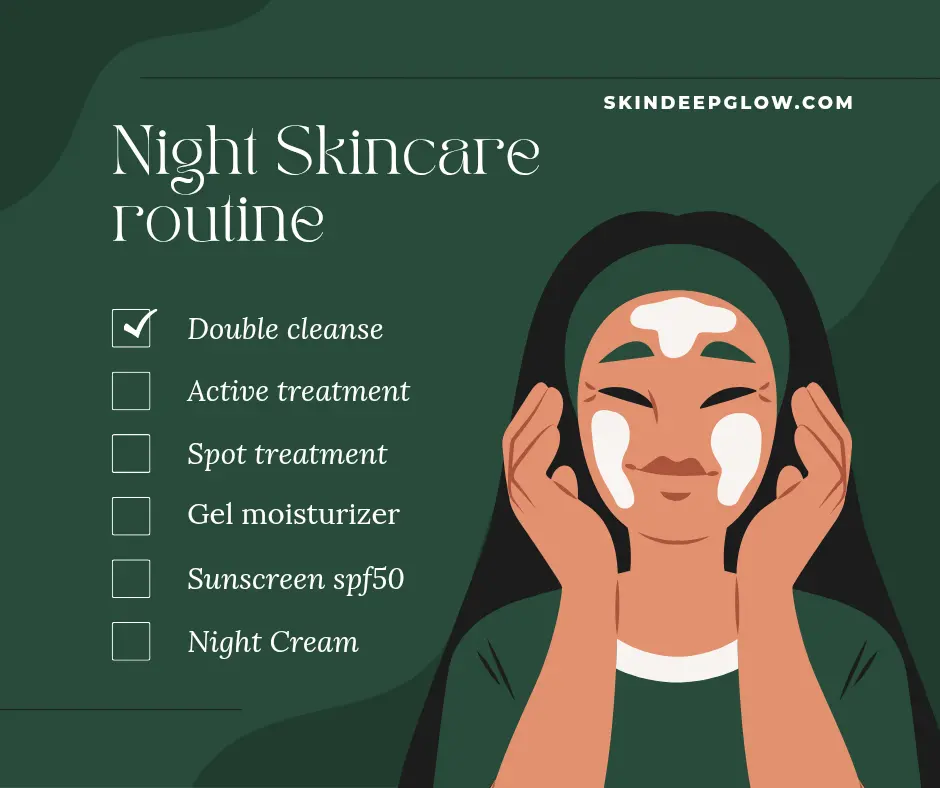
Night routine is where the real treatment happens. Skin repairs itself while you sleep — the right ingredients at night do significantly more than the same ingredients in the morning.
🌙 Night Routine — 4 Steps
1Double Cleanse
- Step 1 — Micellar water or cleansing oil to remove sunscreen and makeup
- Step 2 — Your regular gel cleanser to clean the skin
- Why double cleanse: sunscreen does not fully come off with one wash. Leaving SPF residue overnight clogs pores.
- If you did not wear sunscreen or makeup — single cleanse is fine
- Affordable options: Simple Micellar Water (₹299), Garnier Micellar Water (₹199)
2Active Treatment — Alternate Nights
- Monday / Wednesday / Friday: Salicylic Acid 2% toner or serum — unclogs pores, prevents blackheads
- Tuesday / Thursday: Retinol 0.25-0.3% — cell turnover, marks fading, long-term skin transformation
- Saturday: Rest night — no actives, just cleanse and moisturize
- Sunday: Clay mask only — no actives
- Never both SA and retinol same night — barrier damage, excessive dryness
3Spot Treatment (Only If Needed)
- Active red pimple — Benzoyl Peroxide 2.5% on that spot only
- Apply after SA or retinol has absorbed, before moisturizer
- White pillowcase mandatory — BP bleaches fabric
- Options: Benzac AC 2.5% (₹180), Acnestar Gel 2.5% (₹85)
4Gel Moisturizer
- Same as morning or slightly richer formula on retinol nights
- Mandatory after actives — repairs barrier, prevents dryness
- On retinol nights, apply moisturizer immediately after retinol to buffer dryness
Weekly Routine Additions
| When | What | Why |
|---|---|---|
| Once a week | Clay mask — multani mitti or kaolin | Deep oil control, cleans pores without stripping |
| Once a week | Hydrating sheet mask | Restores moisture after a week of active ingredients |
| Once a week | Full rest day — only cleanse + moisturize | Skin barrier recovery time |
My Foxtale Experience — 15 Days of Honest Results
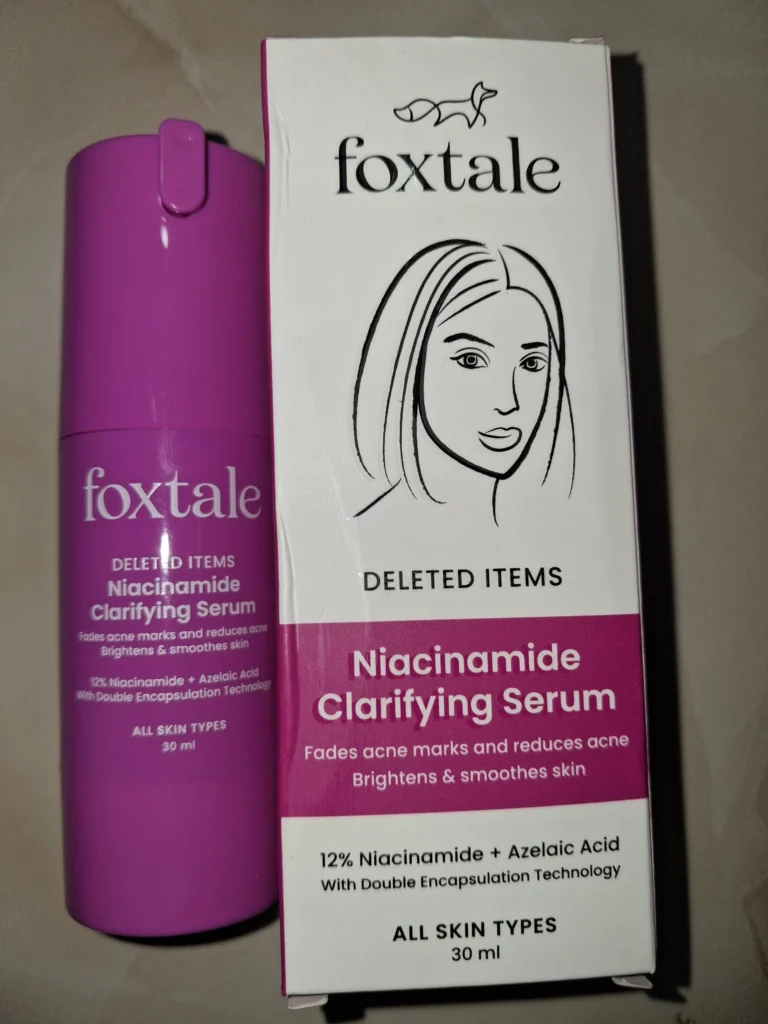
I want to talk about this specifically because it was the turning point in my routine.
I had been using niacinamide from different brands for a while with okay results. Then I switched to Foxtale’s 12% Niacinamide + Vitamin C Serum. I kept a note of what changed, day by day.
What Happened in 15 Days
| Days | What I Noticed |
|---|---|
| Day 1–3 | No visible change. Skin felt the same. Mild tingling on first application. |
| Day 4–7 | Skin texture felt smoother. T-zone less shiny by afternoon than usual. |
| Day 8–12 | Older dark marks started looking lighter. One new pimple came up but was significantly smaller than usual. |
| Day 13–15 | That new pimple healed completely in 3 days — normally mine take 2-3 weeks. Marks from previous month noticeably faded. |
The combination of 12% niacinamide with vitamin C in the same serum made a real difference. Niacinamide controlled oil and reduced inflammation so new pimples healed faster. Vitamin C worked on the existing dark marks at the same time.
“15 din mein itna fark dekha tha pehli baar. Marks fade hone lage, aur jo pimple aaya woh teen din mein theek ho gaya. Yeh mera honest experience hai — koi exaggeration nahi.”
I am not saying it will work identically for everyone. Skin is individual. But for oily, acne-prone Indian skin that struggles with both active pimples and marks at the same time — this combination of ingredients genuinely works.
Complete Affordable Indian Product List — Under ₹500 Each
| Step | Product | Price | Why It Works |
|---|---|---|---|
| Cleanser | Minimalist Salicylic Acid Face Wash | ₹299 | Gentle SA cleanser for daily oily skin use |
| Niacinamide Serum | Foxtale 12% Niacinamide + Vit C | ₹450 | Best combination for marks + oil control |
| Niacinamide Serum | Minimalist 10% Niacinamide | ₹349 | Budget pick, excellent concentration |
| Moisturizer | Plum Green Tea Mattifying Moisturizer | ₹425 | Oil-free, non-comedogenic, Indian brand |
| SPF | Re’equil Oxybenzone Free SPF 50 | ₹425 | Matte finish, no white cast, oily skin friendly |
| SPF Budget | Aqualogica Radiance+ SPF 50 | ₹349 | Lightweight, no greasiness |
| SA Serum | Minimalist 2% Salicylic Acid | ₹349 | Night use, pore clearing |
| Retinol | Minimalist Granactive Retinoid 2% | ₹689 | Gentler retinoid form, good for beginners |
| Spot Treatment | Acnestar Gel 2.5% BP | ₹85 | Pharmacy pick, fastest active pimple fix |
| Micellar Water | Garnier Micellar Water | ₹199 | Removes SPF before cleansing |
Realistic Timeline — What to Expect Week by Week
This is the section I wish every skincare article had when I was starting out. Knowing what to expect stops you from quitting too early.
| Timeframe | What Happens | My Experience |
|---|---|---|
| Week 1–2 | Skin adjusts. Possible purging — more small pimples temporarily. | I almost stopped here. The purging scared me. Staying consistent was right. |
| Week 3–4 | Fewer new pimples. Skin texture improves. T-zone less oily. | First real sign things were working. Midday shine reduced. |
| Month 2 | Active pimples reducing. Old marks beginning to fade. | Skin looked visibly cleaner. Still marks but not getting worse. |
| Month 3 | Mostly clear skin. Pimples come but heal in days not weeks. | The transformation was real. Confidence came back. |
| Month 4–6 | Marks fading significantly. Stable clear skin most days. | Old dark spots barely visible. Routine felt effortless. |
Mistakes I Made — So You Can Skip Them
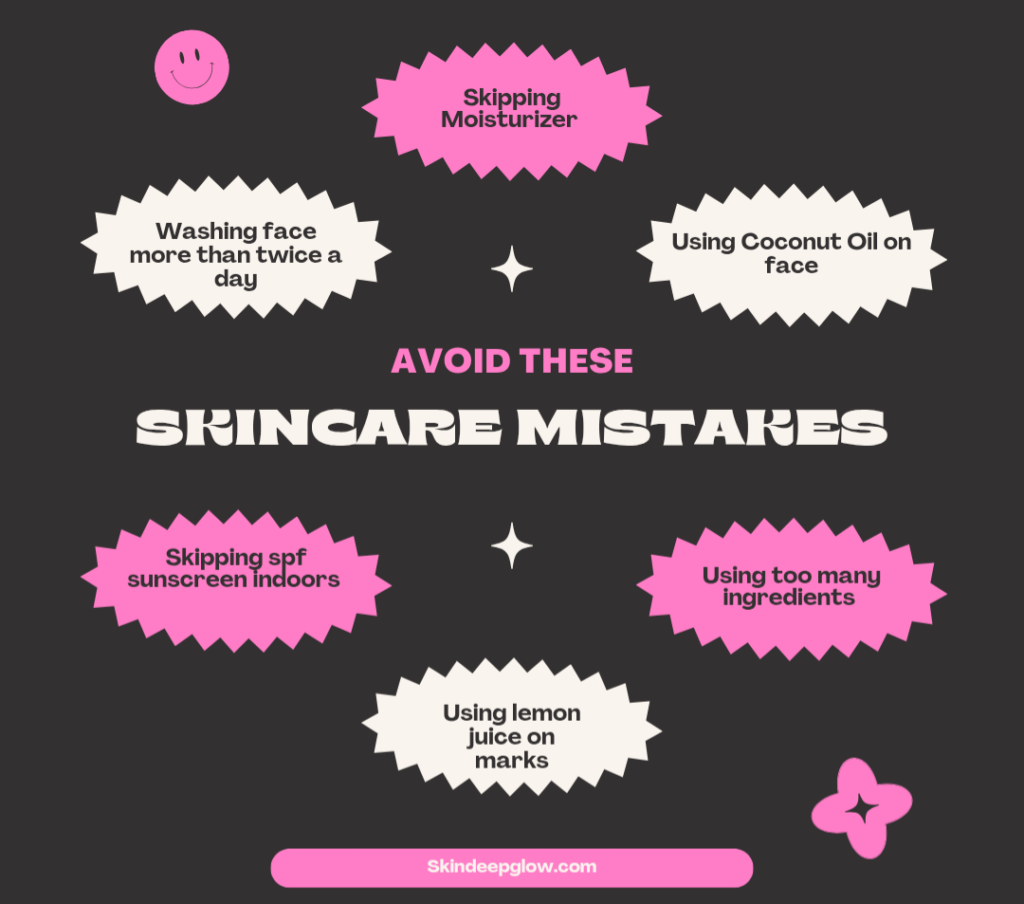
Every one of these slowed down my skin improvement. I am listing them because I see the same mistakes everywhere.
❌ Washing Face More Than Twice a Day
More washing strips the skin barrier. Skin produces even more oil to compensate. I was washing four times a day and wondering why my skin was getting oilier. Twice daily is the right frequency — no more.
❌ Skipping Moisturizer
Oily skin needs hydration. Dehydrated skin produces more oil. Gel moisturizer does not make oily skin oilier — it actually helps regulate it. This was one of the biggest mistakes I made for over a year.
❌ Using Coconut Oil on Face
Coconut oil is highly comedogenic. Great for hair. On acne-prone facial skin, it blocks pores and increases breakouts. I used it for three months based on family advice — my acne got significantly worse.
❌ Skipping SPF Indoors
UVA rays come through windows. I skipped SPF for six weeks while working from home. Every existing mark darkened noticeably. On Indian skin, SPF is not optional — ever.
❌ Using Lemon Juice on Marks
Lemon juice causes photosensitivity. After applying it, any sun exposure darkens the skin in that area. I tried this once — the mark got significantly darker and took three months to fix.
❌ Changing Products Every Two Weeks
No ingredient shows full results in two weeks. Salicylic acid, niacinamide, retinol — all need six to eight weeks minimum. Switching too early means you never give anything a real chance.
❌ Layering Too Many Actives at Once
Salicylic acid, retinol, benzoyl peroxide, AHAs — all at once is too much. Barrier damage, irritation, more breakouts. Introduce one new active ingredient at a time. Wait four weeks. Then consider adding another.
Lifestyle Changes That Helped My Skin
Skincare alone is not enough. These changes made a real difference alongside the routine.
Diet Swaps That Worked for Me
| What I Reduced | What I Added Instead |
|---|---|
| 3 cups of dairy chai daily | 1 chai + 2 cups green tea |
| White bread, maida | Whole wheat roti, oats, daliya |
| Fried snacks daily | Roasted makhana, chana |
| Sugary cold drinks | Nimbu paani, coconut water |
| Heavy paneer dishes often | Dal, rajma as main protein |
Small Habits That Made a Big Difference
- Pillowcase change every 3 days — old pillowcases transfer oil and bacteria back onto skin every night
- Phone screen cleaned daily — phone bacteria is a real acne trigger, especially jaw and cheek pimples
- 7-8 hours sleep — poor sleep raises cortisol, cortisol increases oil production
- Hands off face — I put a sticky note on my desk for two weeks. Felt silly, helped genuinely
- Hair products check — switched to water-based non-comedogenic hair products. Forehead pimples reduced significantly
A Note From Me — Before You Start
Everything I have shared in this post comes from my own personal experience. I have oily, acne-prone skin and I struggled with pimples for a long time.
What I did not know for a while was the real reason behind my breakouts. My periods were irregular, and that hormonal imbalance was the main cause of my persistent pimples. I only found this out after getting a proper checkup done.
So my honest advice — before trying anything on your skin, please do a patch test first. And if your pimples keep coming back no matter what you try, get a checkup done. Knowing your root cause changes everything.
Also take time to understand your pimple type — because different pimples need different treatments. I have covered all of this in detail across my posts on this blog.
If this post helped you in any way, please share it with your friends who might need it too. Thank you for reading. 🤍
Frequently Asked Questions
Should oily skin use moisturizer every day?
Yes — always. Oily and hydrated are two different things. When oily skin skips moisturizer, it becomes dehydrated. Dehydrated skin produces even more oil to compensate. The result is skin that is both oily and dry at the same time — which makes acne worse. Use a lightweight, oil-free gel moisturizer. It will not make your skin greasier. Over time, it actually helps regulate oil production.
How long does it take to see results from a new skincare routine?
Give any new routine at least eight to twelve weeks before judging it. Skin cell turnover takes roughly four weeks. You need two to three complete cycles to see the real effect of a new ingredient or routine. In the first two weeks, your skin may purge — this is normal for active ingredients like salicylic acid and retinol. Most people quit at this stage and miss the results that were coming. Stay consistent for eight weeks minimum.
Can I use niacinamide and vitamin C together?
Yes — modern research confirms that niacinamide and vitamin C can be used together without issues. Earlier information suggested they conflicted, but that has been updated. Many effective serums now combine both in one formula. I personally use Foxtale’s Niacinamide + Vitamin C serum in the morning and have had excellent results.
Which sunscreen is best for oily acne prone skin in India?
Look for gel-based, matte finish, non-comedogenic, oil-free sunscreen with SPF 50 and PA+++ or higher. Indian options that work well for oily skin include Re’equil Oxybenzone Free Sunscreen, Aqualogica Radiance+ Dewy Sunscreen, and Minimalist Zinc Oxide SPF 50. Avoid cream-based or tinted sunscreens that feel heavy — they clog pores and increase shine.
Is retinol safe for oily acne prone skin?
Yes — retinol is one of the most effective long-term ingredients for acne-prone skin. It speeds up cell turnover, prevents pore clogging, and fades marks. Start with the lowest concentration available — 0.25% or 0.3% — and use it only two to three times a week initially. Expect dryness and possible purging in the first month. Always follow with moisturizer and SPF the next morning. Do not use if pregnant.
Can diet really affect oily acne prone skin?
Yes — and for Indian skin specifically, this is significant. Dairy contains hormones that stimulate sebum production. High glycemic foods like maida, white bread, and sugary drinks spike insulin which increases oil production and inflammation. Reducing dairy and refined carbs while eating more whole foods, dal, and vegetables makes a measurable difference in breakout frequency for many people. It is not a substitute for a good routine — but it is a meaningful addition.
How many products should I use in my skincare routine?
For oily acne-prone skin, four morning products and four evening products is sufficient — cleanser, one active serum, moisturizer, and SPF in the morning. Double cleanse, one active treatment, spot treatment if needed, and moisturizer at night. More products does not mean better results. Too many products increases the risk of irritation and makes it impossible to know what is actually working.
Medical Disclaimer:
Reviewed by: Dr. Dr. Suyash Singh Tomar, MBBS, MD Dermatology
Reviewed for medical accuracy. Does not constitute professional medical advice.

Written by: Shivanshi | Founder, SkinDeepGlow.com
Shivanshi is a skincare blogger from Lucknow with two years of personal experience managing oily, acne-prone Indian skin. She writes honest, experience-based skincare content for Indian readers — with real product recommendations, real timelines, and no exaggerated claims.
What is your biggest challenge with oily acne-prone skin? Is it the constant shine, the pimples that never fully heal, or the dark marks that stay forever? Comment below — I read every single one. 👇