

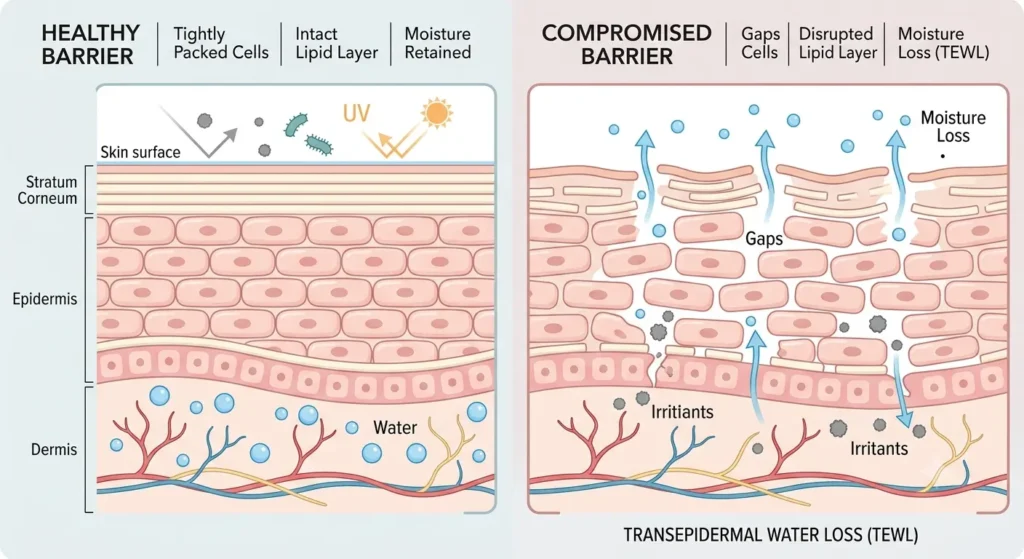
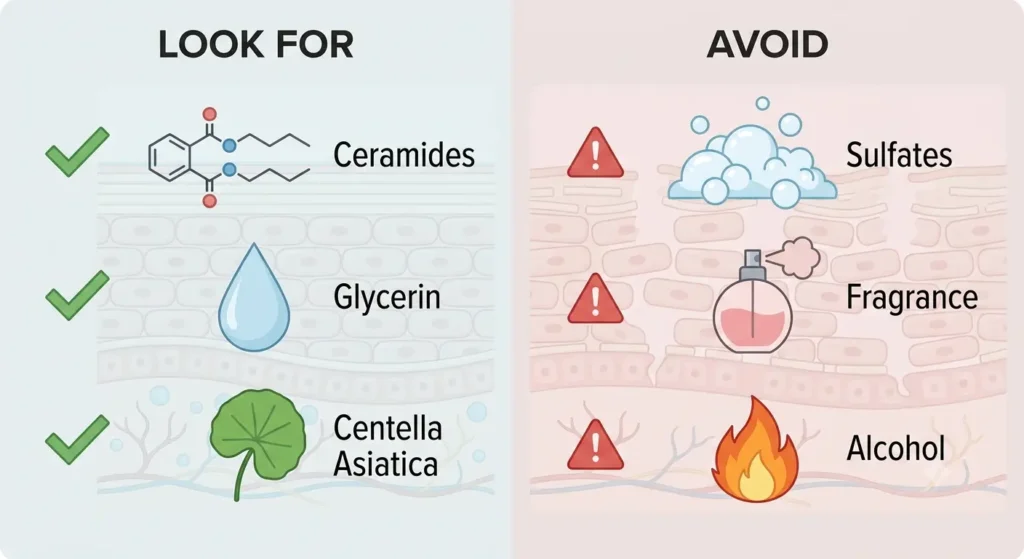
Once you start reading ingredient labels with barrier health in mind, choosing the right gentle cleanser for sensitive, acne-prone skin gets a lot less overwhelming. A few names to look out for:
Ceramides and glycerin. These are barrier-support essentials. Ceramides help rebuild the “mortar” we talked about earlier, while glycerin is a humectant that pulls moisture into the skin instead of stripping it away. A cleanser with these won’t leave your face feeling stretched or dry.
Mild surfactants. Not all cleansing agents are created equal. Ingredients like cocamidopropyl betaine or decyl glucoside clean effectively without ripping through your skin’s natural oils the way harsher surfactants do. This is often the single biggest difference between a cleanser that leaves you comfortable and one that leaves you tight and reactive.
Soothing, skin-calming actives. Niacinamide helps regulate oil production and reduce inflammation. Centella asiatica (sometimes labeled cica) and oat extract are known for calming redness and supporting barrier repair. Panthenol (pro-vitamin B5) adds hydration and has a genuinely soothing effect on irritated skin. When these show up in a cleanser, it’s usually a sign the formula was designed with sensitive skin in mind, not just acne.
A skin-appropriate pH. Your skin’s natural pH sits around 4.5 to 5.5, slightly acidic. Cleansers formulated within this range help keep your barrier intact, while high-pH (alkaline) cleansers — the kind that foam up a lot and feel “squeaky clean” — tend to disrupt it. Brands don’t always list pH on the front of the bottle, but many mention it on their website or ingredient page if you look.
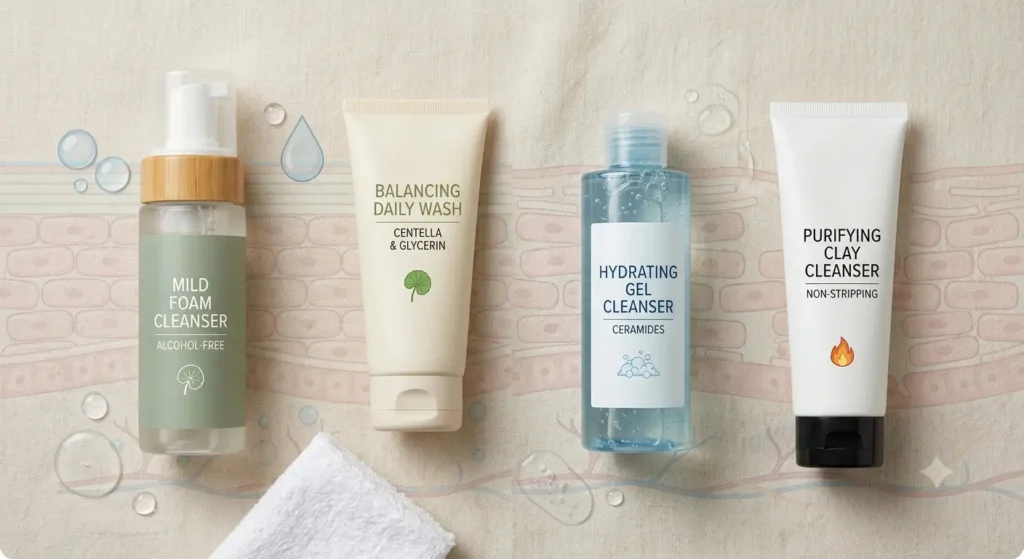
Picking a cleanser can feel overwhelming when every product claims to be “gentle” and “dermatologist recommended.” So here’s a curated list across different budgets — drugstore, premium, and Indian-market picks — based on formulation quality, not marketing hype.
Best Drugstore/Budget-Friendly Picks
- CeraVe Hydrating Facial Cleanser — Formulated with ceramides, hyaluronic acid, and niacinamide, this is a non-foaming, soap-free cleanser that cleans without disrupting the barrier. Great for dry-sensitive-acne combination skin. (₹600–800 / $12–15)
- Cetaphil Gentle Cleanser — A dermatologist-recommended classic for decades, this fragrance-free, soap-free formula is mild enough for daily use, even on compromised or post-treatment skin. Best for those who react to almost everything. (₹450–600 / $10–13)
- Simple Micellar Gel Wash — Combines micellar technology with a gel texture, no soap, no harsh sulfates, and no artificial perfume. A good lightweight option for those who want quick, gentle cleansing without heaviness. (₹300–400 / $8–10)
- La Roche-Posay Toleriane Hydrating Gentle Cleanser — Contains ceramides and niacinamide in a low-foam formula designed specifically for sensitive and reactive skin types, including those with eczema-prone patches. (₹1,000–1,200 / $16–19)
Best Premium/Dermatologist-Loved Picks
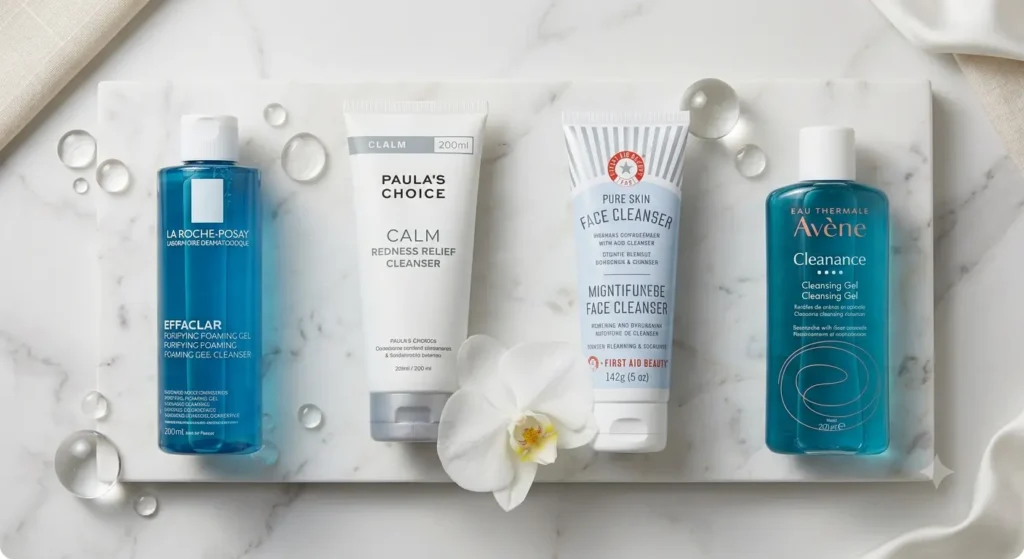
- La Roche-Posay Effaclar Purifying Foaming Gel — A slightly more active-focused option with zinc pidolate to help control oil and breakouts, while still maintaining a mild, low-irritation formula for acne-prone skin that’s not overly sensitive. (₹1,300–1,500 / $18–22)
- Paula’s Choice Calm Redness Relief Cleanser — Designed specifically for redness-prone and rosacea-adjacent skin, with soothing botanicals and no fragrance. Ideal for those whose main concern is calming inflammation alongside acne. (₹1,800–2,200 / $20–24)
- First Aid Beauty Pure Skin Face Cleanser — A gentle, sulfate-free formula with colloidal oatmeal for extra soothing, well-suited to skin that’s easily inflamed but still needs effective daily cleansing. (₹2,200–2,600 / $24–28)
- Avène Cleanance Cleansing Gel — Formulated for acne-prone sensitive skin using Avène’s thermal spring water, known for its calming properties, plus mild cleansing agents that don’t over-strip. (₹1,400–1,700 / $19–23)
Best Budget Indian-Market Options
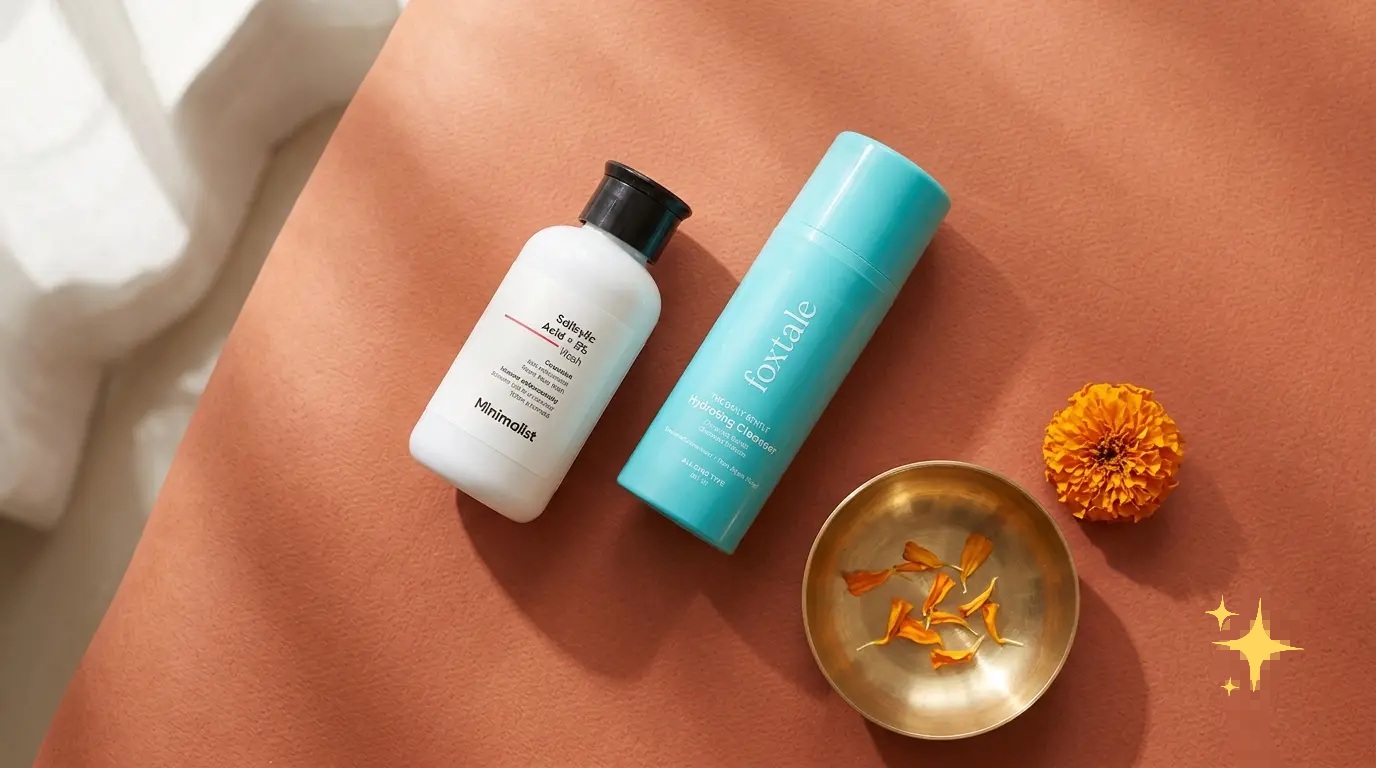
- Minimalist Salicylic Acid 2% Foaming Face Wash — A budget-friendly Indian option with a low, well-tolerated concentration of salicylic acid alongside soothing ingredients, suited for oily-acne-sensitive combination skin in humid climates. (₹350–450)
- Foxtale Ceramide Gentle Cleanser — Formulated with ceramides and a soap-free, low-pH base, this is a solid pick for reactive, breakout-prone skin dealing with India’s heat and humidity, without stripping the barrier. (₹400–500)
Know Your Skin’s Real Needs
Before you buy anything, it helps to get honest with yourself about what your skin is actually doing — not what you assume it should be doing. A few questions worth sitting with:
- Does your skin feel tight, dry, or “squeaky” right after cleansing, even if you’re breaking out?
- Do you react to a lot of new products, or is it more specific triggers (fragrance, certain actives)?
- Are your breakouts more oily-congestion type, or do they show up alongside dryness and flaking?
The answers usually point you toward one of a few patterns: dry-sensitive-acne skin (needs extra hydration alongside gentle cleansing), oily-sensitive-acne skin (needs oil control without stripping), or combination-sensitive skin (different needs in different areas, often the trickiest to balance). None of these are fixed forever, either — climate, hormones, and stress can shift things, which is part of why the “one holy grail cleanser forever” mindset rarely works long-term.
Know more: How to Remove Pimples: Complete Guide for Indian Skin (2026)
Texture & Formula Types Explained
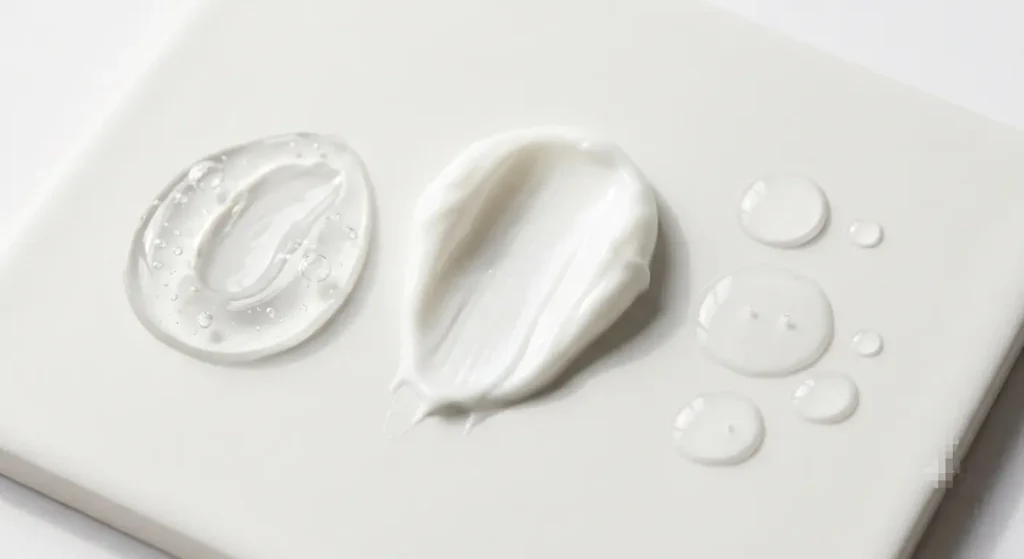
Not all cleanser textures behave the same way on skin, and picking the right one matters as much as the ingredient list.
- Gel cleansers tend to work well for oily-sensitive-acne skin — they cleanse effectively without heaviness, though it’s worth checking they’re not overly foaming or sulfate-based.
- Cream or lotion cleansers are usually the gentlest option and ideal for dry-sensitive skin, since they cleanse while leaving a light moisturizing layer behind.
- Micellar water is a soft, no-rinse-required option that’s great for sensitive skin on low-tolerance days, though it’s often better as a first cleanse or gentle morning option rather than a sole nightly cleanser.
- Foaming cleansers aren’t automatically bad, but they’re worth extra scrutiny — check the ingredient list for mild surfactants rather than assuming foam equals clean.
On double cleansing: it’s genuinely useful if you wear heavy sunscreen or makeup, using an oil or balm cleanser first to dissolve product, followed by a gentle water-based cleanser. But if your skin is very reactive, double cleansing every single day can be one cleanse too many — it’s not a mandatory step for everyone.
Reading Labels Like a Pro
You don’t need a chemistry degree to read a cleanser label well — you just need to know where to look and what to ignore.
- Focus on the first 5–10 ingredients listed; that’s roughly where the bulk of the formula sits, and it tells you far more than the marketing claims on the front of the bottle.
- Build a quick mental “green flag / red flag” list: ceramides, glycerin, niacinamide, mild surfactants (green) versus sulfates, fragrance, denatured alcohol (red, or at least worth caution).
- Be skeptical of buzzwords like “natural,” “clean,” or “hypoallergenic” — none of these terms are strictly regulated, so they don’t guarantee a formula is actually gentle. Always check the ingredient list itself rather than trusting the label copy.
Step-by-Step Gentle Cleansing Routine
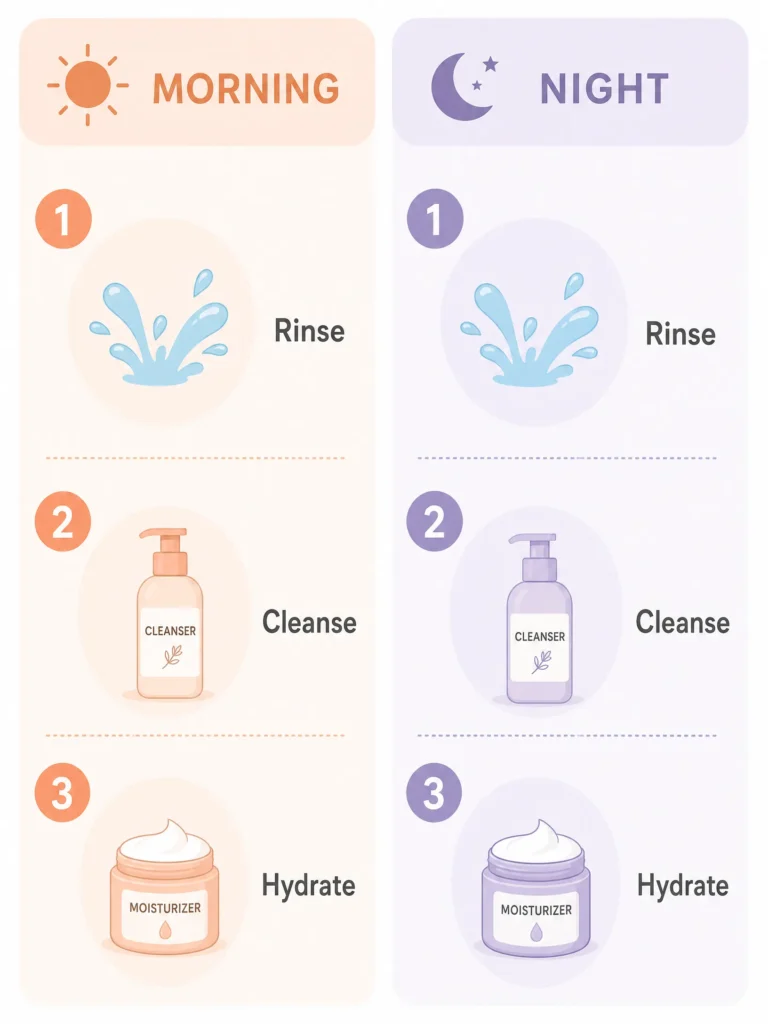
Even the best cleanser can’t do its job well if the technique around it is working against your skin. Here’s how to actually cleanse in a way that supports sensitive, acne-prone skin rather than fighting it.
- In the morning, if your skin isn’t particularly oily overnight, a simple rinse with lukewarm water — or a very light micellar cleanse — is often enough. You don’t need a full foaming cleanse twice a day if your skin didn’t accumulate much overnight.
- At night, this is when a proper cleanse matters most, since you’re removing sunscreen, makeup, pollution, and the day’s buildup. Use lukewarm (never hot) water, since heat strips natural oils and can worsen redness in already-reactive skin.
- Massage gently in soft circular motions for about 30–60 seconds — long enough for the cleanser to actually do its job, but not so long that you’re over-stimulating the skin. Aggressive scrubbing doesn’t clean better; it just irritates.
- Pat dry, don’t rub. Use a soft, clean towel and gently press it against your skin instead of dragging it across. Rubbing creates friction that sensitive skin really doesn’t need.
Know more: How to Get Rid of Pimples on Forehead Fast: I Tried 7 Methods in 48 Hours
Common Mistakes That Trigger Breakouts or Irritation
A lot of the “my skin won’t calm down” frustration isn’t actually about product choice — it’s about small daily habits quietly working against you.
- Washing more than twice a day. It feels productive, especially when you’re breaking out, but over-washing strips your barrier and often leads to that rebound oiliness and irritation cycle we talked about earlier.
- Using hot water or rough washcloths. Both feel satisfying in the moment but cause micro-damage and inflammation over time — exactly what sensitive, acne-prone skin doesn’t need.
- Skipping moisturizer because you’re breaking out. This is one of the most common — and most damaging — habits. Leaving skin unmoisturized after cleansing doesn’t prevent breakouts; it often makes your barrier weaker and your skin more reactive.
- Layering actives immediately after cleansing without a buffer. Applying strong actives (like retinoids or high-strength acids) straight after cleansing, while skin is still slightly damp and more permeable, can increase irritation. Giving your skin a few minutes to settle first can make a real difference.
How to Patch Test a New Cleanser Properly
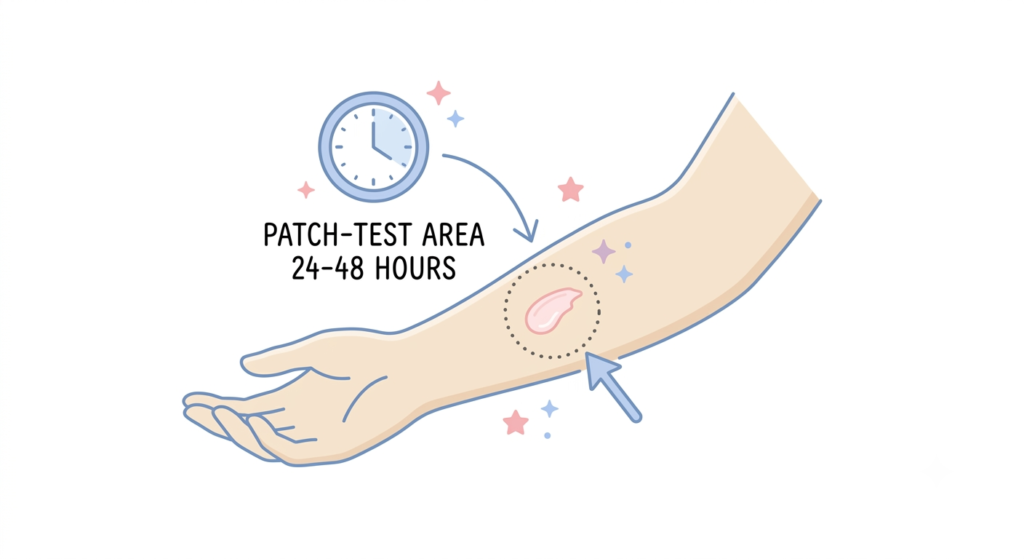
If your skin reacts easily, patch testing isn’t optional — it’s the one habit that can save you weeks of irritation and frustration.
- Apply a small amount of the new cleanser to a discreet area, like your inner forearm or just behind your ear, rather than your whole face right away.
- Leave it on (don’t rinse immediately) and wait 24–48 hours, checking periodically for redness, itching, stinging, or bumps.
- If there’s no reaction after 48 hours, it’s generally safe to try on your face — but still start with a few uses before making it a daily habit, since some reactions take slightly longer to show up with repeated use.
One thing worth understanding here: there’s a real difference between “purging” and irritation. Purging typically happens with active ingredients (like acids or retinoids) that speed up cell turnover, bringing existing congestion to the surface faster — it usually shows up in areas you already break out, and it settles within a few weeks. Irritation, on the other hand, tends to show up as redness, burning, or new breakouts in areas you don’t normally have trouble, and it doesn’t improve with continued use — it gets worse. If in doubt, it’s always safer to stop and reassess than to push through and hope it’s “just purging.”
Signs You Need Professional Help
Gentle cleansing and the right products can genuinely transform reactive, acne-prone skin — but there’s a point where self-experimentation isn’t enough, and that’s okay to recognize.
- Persistent redness, burning, or stinging that doesn’t improve within a few days of stopping the trigger product.
- Cystic, painful, or deep acne that doesn’t respond to consistent gentle skincare over several weeks.
- Reactions that keep happening across multiple “gentle” products, which can be a sign of an underlying condition like rosacea or eczema rather than just product sensitivity.
- Any uncertainty about whether what you’re seeing is normal adjustment or something that needs actual treatment — a dermatologist can diagnose in minutes what might take months of guessing on your own.
There’s no shame in needing professional input. Skincare content (including this guide) can point you in a good general direction, but it can’t replace a proper diagnosis when your skin needs more targeted care.
Know more: Patch Test for Skin Allergy: 7 Things Nobody Tells You Before You Go
About the Author

Written by Shivanshi, founder of SkinDeepGlow.com. Shivanshi shares skincare guidance rooted in her own experience managing oily, acne-prone, sensitive skin, combined with research into dermatologist-backed practices.
Disclaimer
This article is for informational purposes only and isn’t a substitute for professional medical advice. Patch test new products before use, and consult a dermatologist for persistent or severe skin concerns.