
Table of Contents
ToggleShort Introduction
Have you noticed your skin looking a little different after turning 30? Maybe it feels drier than before, fine lines are becoming more noticeable, or your usual products don’t seem to work the same way anymore. These changes are completely normal. As you get older, collagen production slows down, skin renews itself more slowly, and the effects of years of sun exposure gradually begin to show.
The good news is that you don’t need a complicated routine or expensive products to take care of your skin. A simple, consistent anti-aging skincare routine after 30 can help keep your skin healthy, hydrated, and looking its best for years to come. In this guide, you’ll learn exactly what to use, when to use it, which ingredients are worth your attention, and the common mistakes that are best avoided.
Why Does Skin Start Changing After 30?
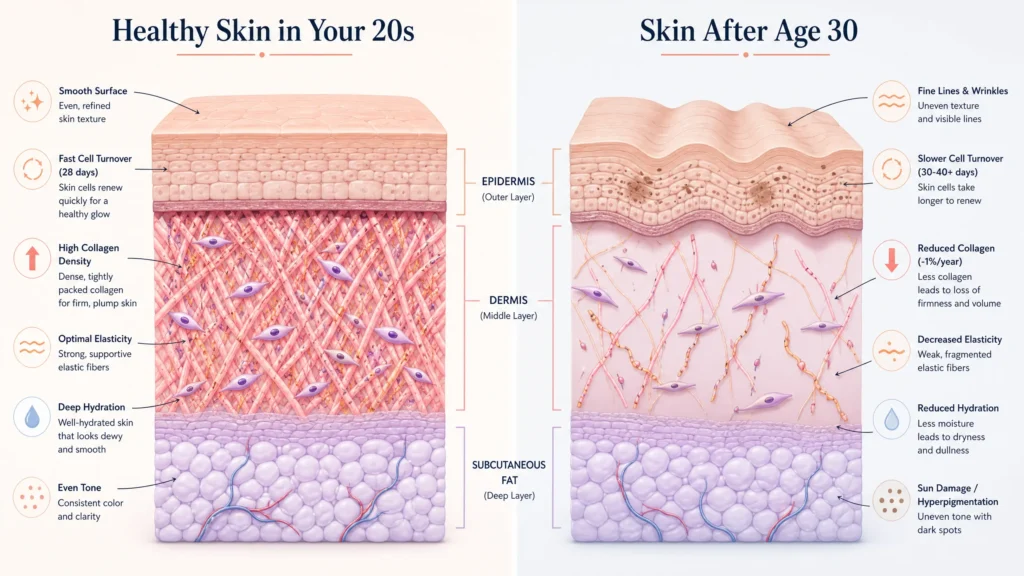
Many people think skin aging begins when wrinkles appear. In reality, the process starts much earlier. Your skin gradually changes over time, and these changes become more noticeable once you reach your 30s.
Here’s what’s happening beneath the surface:
- Collagen production slows down: Collagen is the protein that helps keep your skin firm, smooth, and elastic. As your body produces less collagen with age, your skin may start to lose some of its natural bounce, making fine lines more noticeable over time.
- Cell turnover becomes slower: In your younger years, your skin replaces old cells fairly quickly. After 30, this process takes longer, so dead skin cells stay on the surface for more time. This can make your skin look dull or feel rough.
- Your skin loses moisture more easily: As the skin barrier becomes less efficient at holding onto water, dryness and dehydration become more common. You may also notice your skin feeling tighter than it did before.
- Years of sun exposure start to show: Even if you didn’t notice sun damage in your 20s, its effects often become visible later. Dark spots, uneven skin tone, and early fine lines are some of the most common signs.
These changes are a normal part of aging, not something to be afraid of. The good news is that a consistent skincare routine can help support your skin, improve its appearance, and slow down many visible signs of aging.
Signs You Need an Anti-Aging Skincare Routine After 30
Not everyone notices skin changes in the same way. Some people see fine lines first, while others struggle with dryness or a loss of glow. If you’ve noticed any of the signs below, it may be the right time to update your skincare routine.

- Fine lines around the eyes or mouth, especially when you smile
- Skin that feels drier or tighter than it used to
- A dull, tired-looking complexion even after a good night’s sleep
- Uneven skin tone, dark spots, or mild pigmentation
- Skin that feels less firm or doesn’t bounce back as quickly
You don’t have to wait for deep wrinkles to appear before taking care of your skin. Starting an anti-aging skincare routine after 30 early is one of the best ways to keep your skin healthy and support it as it changes over time.
Quick Anti-Aging Skincare Routine After 30
If you’re looking for a simple routine, here’s a quick overview. Each step is explained in detail later in the guide.
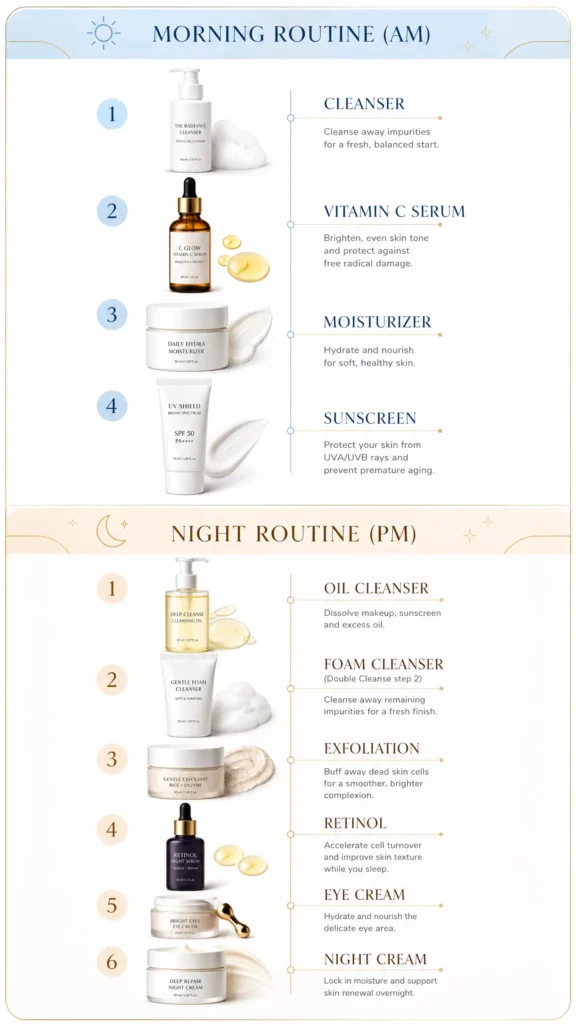
| Time | Step | Why It Matters |
|---|---|---|
| Morning | Gentle Cleanser | Removes oil, sweat, and impurities without drying the skin. |
| Morning | Vitamin C Serum | Helps brighten skin and protects against environmental damage. |
| Morning | Moisturizer | Keeps skin hydrated and supports the skin barrier. |
| Morning | Broad-Spectrum Sunscreen (SPF 30+) | Helps protect against UV damage and premature aging. |
| Night | Double Cleanse (if wearing makeup or sunscreen) | Removes makeup, sunscreen, and daily buildup thoroughly. |
| Night | Chemical Exfoliant (2–3 times a week) | Removes dead skin cells and improves skin texture. |
| Night | Retinol (Start 2–3 nights a week) | Supports collagen production and reduces the appearance of fine lines. |
| Night | Eye Cream | Hydrates the delicate skin around the eyes. |
| Night | Night Cream or Moisturizer | Locks in moisture and supports overnight skin repair. |
Building Your Morning Skincare Routine After 30
Your morning routine is all about protecting your skin. During the day, your face is exposed to sunlight, pollution, and other environmental factors that can speed up visible signs of aging. A few simple steps every morning can help keep your skin healthy and well-protected.
Step 1: Cleanse Gently
Start your day with a gentle cleanser to wash away the oil and sweat that build up overnight. There’s no need for a harsh face wash that leaves your skin feeling tight or dry. A mild cleanser removes impurities while helping your skin stay balanced.
If your skin feels dry after cleansing, switch to a hydrating formula with ingredients like glycerin, hyaluronic acid, or ceramides.
Step 2: Apply a Vitamin C Serum
After cleansing, apply a Vitamin C serum to clean, dry skin. Vitamin C is a powerful antioxidant that helps protect your skin from environmental damage, brightens uneven skin tone, and supports healthy-looking skin over time.
Give the serum about a minute to absorb before moving on to the next step.
Expert Tip: Vitamin C works well under sunscreen. Together, they help protect your skin from everyday environmental stressors.
Step 3: Moisturize
A good moisturizer keeps your skin hydrated and helps strengthen the skin barrier.
- Dry skin: Choose a rich cream with ceramides or hyaluronic acid.
- Oily skin: A lightweight, oil-free gel moisturizer usually feels more comfortable.
- Combination skin: Pick a lightweight lotion that hydrates without feeling heavy.
The right moisturizer should leave your skin feeling comfortable, not greasy.
Step 4: Finish with Sunscreen
If you only commit to one anti-aging habit, make it sunscreen. Daily UV exposure is one of the biggest reasons for premature wrinkles, dark spots, and loss of firmness.
Apply a broad-spectrum sunscreen with SPF 30 or higher every morning as the final step in your skincare routine. If you’re spending several hours outdoors, remember to reapply every two hours for continued protection.
Don’t Skip It: Even the best serums can’t undo ongoing sun damage. Consistent sunscreen use is one of the most effective ways to protect your skin over time.
Building Your Night Skincare Routine After 30
While you sleep, your skin naturally goes into repair mode. A simple nighttime routine gives it the ingredients it needs to recover from the day’s stress and maintain a healthy skin barrier.
Step 1: Double Cleanse (If Needed)
If you’ve worn sunscreen, makeup, or water-resistant products, start with an oil-based cleanser to dissolve them. Then follow with a gentle water-based cleanser to remove any remaining residue.
If you haven’t worn makeup or sunscreen, a single gentle cleanse is usually enough.
Step 2: Exfoliate 2–3 Times a Week
Dead skin cells naturally build up on the surface over time. A gentle chemical exfoliant containing AHA, BHA, or lactic acid helps remove them, leaving your skin smoother and brighter.
You don’t need to exfoliate every day. For most people, 2–3 times a week is enough. Over-exfoliating can weaken your skin barrier and lead to dryness, redness, or irritation.
Step 3: Introduce Retinol Slowly
Retinol is one of the most effective ingredients for reducing the appearance of fine lines and improving overall skin texture. It works by encouraging skin renewal and supporting collagen production over time.
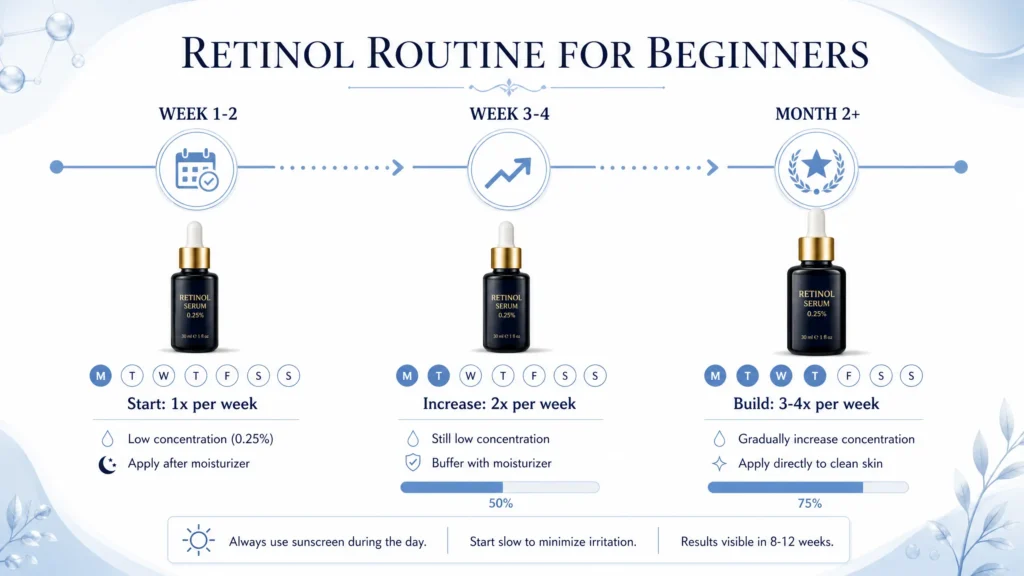
If you’re using retinol for the first time, start slowly and let your skin adjust before increasing the frequency.
Retinol Routine for Beginners
| Week | How Often | What to Do |
|---|---|---|
| Week 1–2 | 2 nights a week | Apply a small amount and watch for irritation. |
| Week 3–4 | 3 nights a week | Increase only if your skin feels comfortable. |
| Month 2 onwards | Every other night | Continue if your skin tolerates it well. |
Important: Use retinol only at night. The following morning, always apply sunscreen because retinol can make your skin more sensitive to sunlight.
Step 4: Eye Cream
The skin around your eyes is naturally thinner than the rest of your face, which is why it often shows fine lines first.
A fragrance-free eye cream with ingredients like hyaluronic acid, peptides, or ceramides can help keep this area hydrated and comfortable. Think of it as extra care rather than a quick fix.
Step 5: Lock in Moisture
Finish your routine with a nourishing moisturizer or night cream. This final step helps reduce moisture loss overnight and supports your skin barrier while you sleep.
Look for ingredients such as ceramides, peptides, niacinamide, or hyaluronic acid, depending on your skin’s needs.
How to Build Your Skincare Routine Without Overwhelming Your Skin
When you’re excited to improve your skin, it’s tempting to buy several new products and start using them all at once. The problem is, your skin doesn’t like sudden changes. A simple, steady approach usually gives better results and lowers the chance of irritation.
Here are a few habits that can make your routine easier to follow:
- Introduce one active ingredient at a time. Give your skin at least 1–2 weeks to adjust before adding another product.
- Always patch test new products. Apply a small amount behind your ear or along your jawline and wait 24–48 hours to check for any reaction.
- Start with lower strengths. If you’re using retinol for the first time, choose a beginner-friendly concentration instead of the strongest option available.
- Be patient. Most skincare products need 6–8 weeks of consistent use before you can judge the results.
- Avoid changing everything at once. If your skin becomes irritated, it’s much easier to identify the cause when you’ve introduced products gradually.
Expert Tip: Healthy skin isn’t built overnight. A simple routine that you follow every day will usually give better results than a complicated routine you can’t stick to.
Key Anti-Aging Ingredients to Look For After 30
You don’t need a shelf full of products to care for your skin. A few well-chosen ingredients can make a bigger difference than using too many products at once.
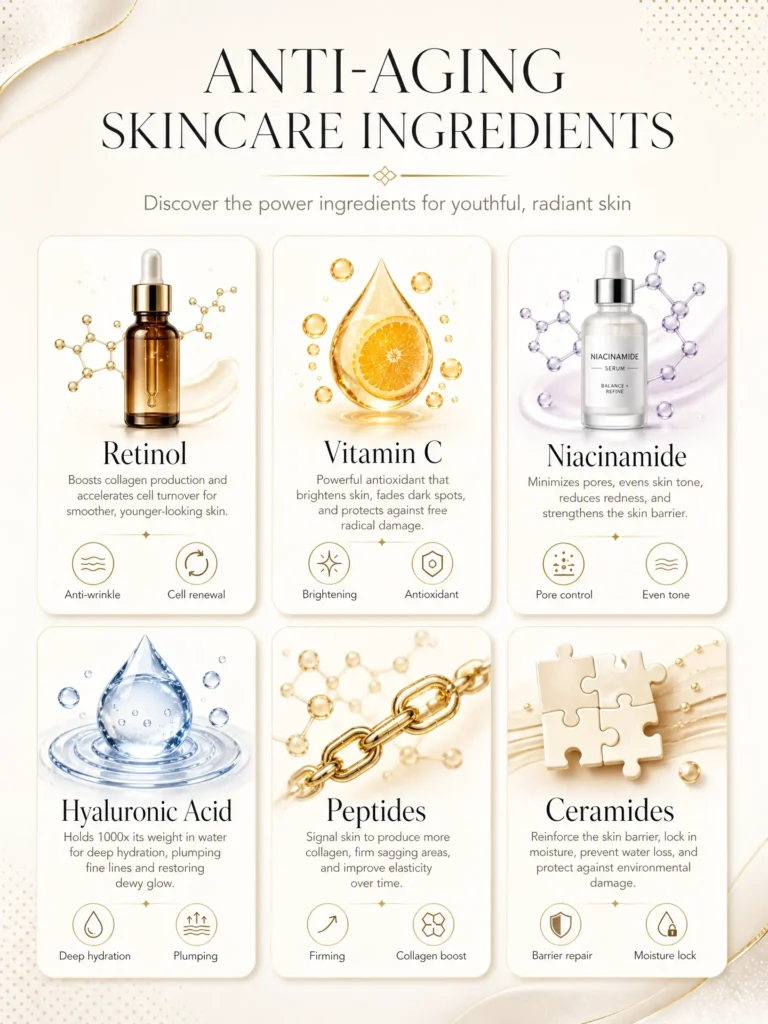
| Ingredient | How It Helps | Best For | Beginner Friendly? |
|---|---|---|---|
| Retinol | Improves skin renewal and softens the appearance of fine lines. | Early signs of aging. | ✔ Start with a low strength. |
| Vitamin C | Brightens the skin and helps protect against environmental damage. | Dull or uneven skin tone. | ✔ Yes |
| Niacinamide | Supports the skin barrier and helps balance excess oil. | Oily, combination, and sensitive skin. | ✔ Yes |
| Hyaluronic Acid | Draws moisture into the skin for long-lasting hydration. | Dry or dehydrated skin. | ✔ Yes |
| Peptides | Help support firmer, smoother-looking skin. | Loss of firmness. | ✔ Yes |
| Ceramides | Strengthen the skin barrier and reduce moisture loss. | Dry or sensitive skin. | ✔ Yes |
Remember: You don’t need every ingredient from day one. Start with the basics, see how your skin responds, and introduce new products gradually as your routine grows.
Choose Products That Match Your Skin Type
The same routine won’t work for everyone. Choosing products that suit your skin type can make your routine more effective and help prevent unnecessary irritation.
Dry Skin
Focus on hydration and barrier support. Cream-based cleansers, moisturizers with ceramides, and serums containing hyaluronic acid are good choices. Try to avoid products with high amounts of alcohol, as they can make dryness worse.
Oily Skin
Look for lightweight, non-comedogenic products that won’t leave your skin feeling heavy. Gel cleansers, oil-free moisturizers, and niacinamide-based serums are often a good fit.
Combination Skin
If your T-zone is oily but your cheeks feel dry, you may need a balanced routine. Lightweight lotions usually work well, and you can use a richer moisturizer only on the drier areas if needed.
Sensitive Skin
Keep your routine simple. Choose fragrance-free products, avoid introducing several active ingredients together, and start ingredients like retinol slowly—about once or twice a week is usually enough in the beginning.
Quick Tip: Your skin type can change with age, weather, hormones, or even the season. If your products suddenly stop working, it may be worth reviewing your routine instead of assuming the products are the problem.
Common Ingredient Mistakes to Avoid
Using the right ingredients is important, but using them the right way matters just as much. Some skincare ingredients work well together, while others can increase the risk of irritation if layered in the same routine.
Combinations to Avoid
- Retinol + AHA/BHA on the same night: Both ingredients speed up skin renewal. Using them together can leave your skin feeling dry, irritated, or overly sensitive, especially if you’re new to active ingredients.
- Retinol + Benzoyl Peroxide: These ingredients may reduce each other’s effectiveness and can increase dryness and irritation when used together.
- Too many exfoliating acids at once: Layering multiple acid-based products in one routine can weaken your skin barrier and cause redness or peeling.
Combinations That Work Well
- Vitamin C in the morning + Retinol at night: This is one of the most beginner-friendly ways to include both ingredients without overloading your skin.
- Hyaluronic Acid + Almost Any Active: Hyaluronic acid provides hydration and pairs well with ingredients like retinol, niacinamide, and vitamin C.
- Niacinamide + Most Skincare Ingredients: Niacinamide is gentle, supports the skin barrier, and works well alongside most active ingredients.
Expert Tip: If you’re ever unsure whether two products should be used together, use them on different days or alternate nights. It’s a simple way to reduce the chance of irritation.
Healthy Habits That Make Your Routine Work Better
Even the best skincare products have their limits. Healthy daily habits support your skin from the inside and can make your routine more effective over time.
- Get enough sleep. Aim for 7–9 hours each night, as your skin carries out many of its natural repair processes while you sleep.
- Eat a balanced diet. Include fruits, vegetables, healthy fats, and protein. Limiting excess sugar and ultra-processed foods may also support healthier-looking skin.
- Stay hydrated. Drinking enough water helps support your body’s overall health, while moisturizers help keep the outer layer of your skin hydrated.
- Manage stress. Ongoing stress can affect your skin and may contribute to issues such as breakouts or dullness. Even small habits like regular walks, exercise, or relaxation techniques can help.
- Avoid smoking and limit alcohol. Smoking speeds up collagen breakdown, while excessive alcohol can leave your skin looking dry and dehydrated.
Remember: Great skin isn’t built by one product alone. Daily habits and a consistent skincare routine work best together.
Common Beginner Mistakes to Avoid
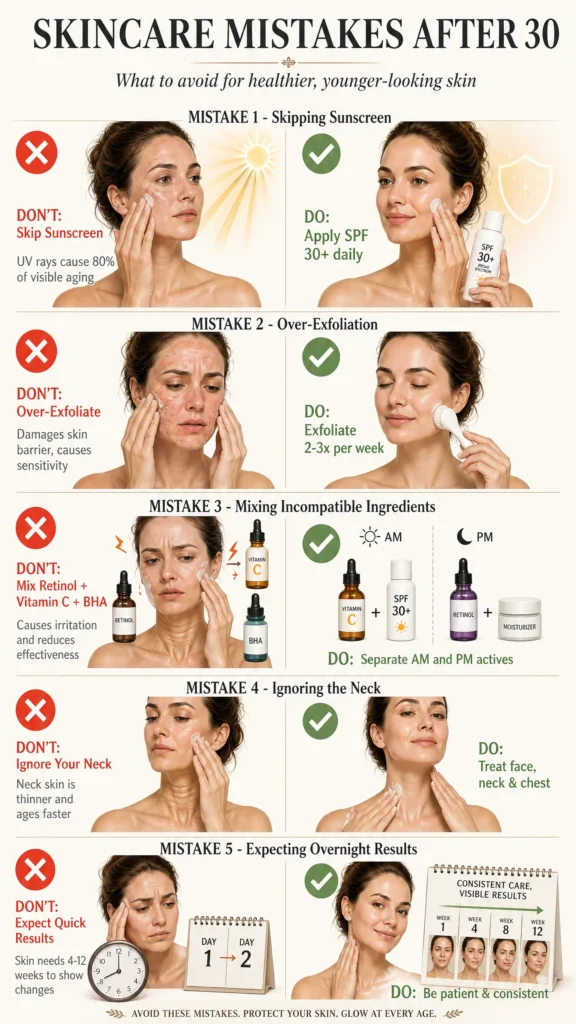
It’s easy to make a few mistakes when you’re starting a new skincare routine. Avoiding these common habits can save your skin from unnecessary irritation and disappointment.
- Skipping sunscreen because it’s cloudy or you’re staying indoors. UV rays can still reach your skin through clouds and windows.
- Expecting overnight results. Most skincare ingredients need several weeks of regular use before noticeable improvements appear.
- Using retinol too often in the beginning. Starting slowly helps your skin adjust and reduces the chance of redness or peeling.
- Ignoring your neck and hands. These areas are exposed to the sun just as often as your face and can show signs of aging over time.
- Buying too many products at once. A simple, consistent routine is usually more effective than a shelf full of products that you rarely use.
Quick Reminder: If your skin becomes irritated, don’t keep adding more products. Simplify your routine, focus on hydration and sunscreen, and give your skin time to recover before introducing anything new.
When Should You See a Dermatologist?
A basic skincare routine works well for most people, but there are times when professional advice is the better option. If your skin concerns don’t improve despite following a consistent routine, a dermatologist can help identify the cause and recommend the right treatment.
Consider booking an appointment if you notice:
- Persistent redness, irritation, or sensitivity that doesn’t improve
- Acne that continues despite regular skincare
- Dark spots or pigmentation that become more noticeable over time
- Unusual moles, skin growths, or changes in existing spots
- Severe dryness, itching, or signs of a damaged skin barrier
- You’re pregnant or breastfeeding and want advice on safe skincare ingredients, as products like retinol should be avoided during this time
- A personalised skincare plan can often save you time, money, and unnecessary trial and error.
Medical Disclaimer
This article is for educational purposes only and should not replace professional medical advice. Every person’s skin is different, so results may vary. If you have a skin condition, allergies, or concerns about using active ingredients, speak with a qualified dermatologist before starting a new skincare routine.
Frequently Asked Questions About Anti-Aging Skincare Routine After 30
1. When should I start an anti-aging skincare routine?
You don’t have to wait until wrinkles appear. Simple habits like daily sunscreen, moisturizing, and antioxidant serums can be started in your 20s. If you’re already in your 30s, it’s still a great time to build a consistent routine that helps support healthy skin for the years ahead.
2. Can I use retinol every night?
Not in the beginning. If you’re new to retinol, start by using it 2–3 nights a week. Once your skin adjusts without irritation, you can slowly increase the frequency if needed.
3. Do expensive skincare products work better?
Not necessarily. The ingredients matter far more than the price tag. Many affordable products contain effective ingredients like retinol, vitamin C, niacinamide, ceramides, and hyaluronic acid.
4. How long does it take to see results?
Some improvements, such as better hydration and smoother skin, may be noticeable within 4–6 weeks. Concerns like fine lines or uneven skin tone usually take 8–12 weeks or longer with consistent use.
5. Is sunscreen really necessary every day?
Yes. Daily sunscreen is one of the most effective ways to reduce the visible signs of premature skin aging. Even on cloudy days, UV rays can still reach your skin and contribute to wrinkles, pigmentation, and loss of firmness over time.
6. Can I use vitamin C and retinol in the same routine?
It’s usually better to separate them. Apply vitamin C in the morning and retinol at night. This approach is easier on your skin and allows both ingredients to work effectively.
7. Do I need every anti-aging ingredient at once?
No. A simple routine is often the best place to start. Begin with the basics—cleanser, moisturizer, sunscreen, and one active ingredient. As your skin adjusts, you can slowly introduce other ingredients if needed.
Your First 30 Days: What to Expect
Starting a new skincare routine takes patience. Most products don’t deliver overnight results, and that’s completely normal.
Here’s a general timeline of what you may notice with consistent skincare:
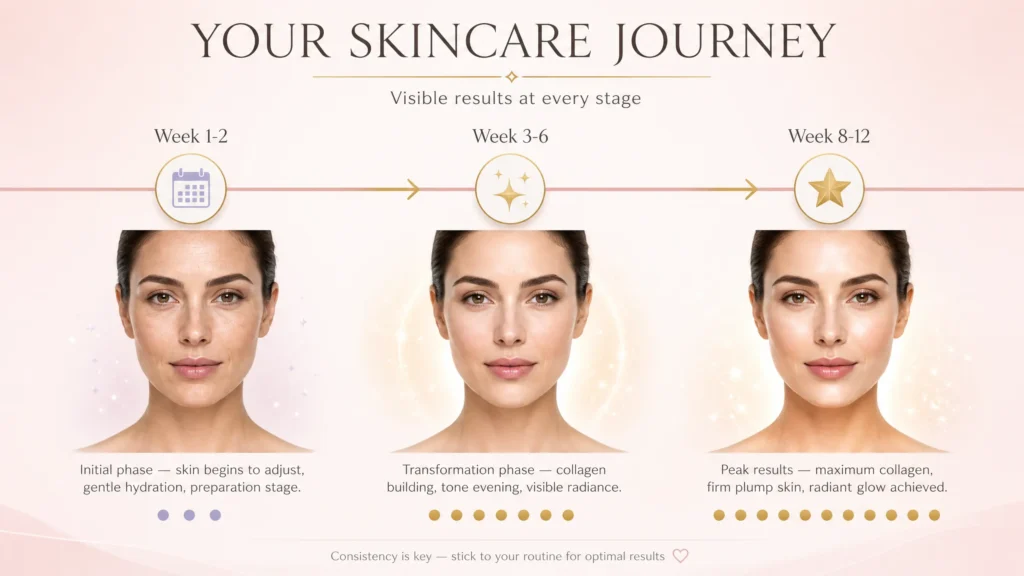
| Time | What You May Notice |
|---|---|
| Week 1–2 | Skin feels more hydrated and comfortable. |
| Week 3–6 | Texture may begin to feel smoother, and dullness can improve. |
| Week 8–12 | Fine lines and overall skin tone may gradually look better with consistent care. |
Remember: Everyone’s skin is different, so your results may vary. The most important part of any skincare routine is consistency. Give your products enough time to work before deciding whether they’re right for you.
Final Thoughts
Taking care of your skin after 30 isn’t about chasing perfect skin or trying to stop aging altogether. It’s about supporting your skin as its needs change over time.
A gentle cleanser, a good moisturizer, daily sunscreen, and a few well-chosen ingredients like vitamin C or retinol can make a real difference when used consistently. You don’t need a shelf full of products—just a routine that fits your skin and one that you can realistically follow every day.
Remember, healthy skin is built through small, consistent habits, not overnight transformations. Start with the basics, give your products time to work, and make changes only when your skin needs them.
Continue Reading
If you found this guide helpful, you may also enjoy these skincare guides:
10 Best Centella Asiatica (Cica) Serums in India (2026)
12 Best Moisturizers for Sensitive Skin
10 Best Gentle Cleansers for Sensitive, Acne-Prone Skin